


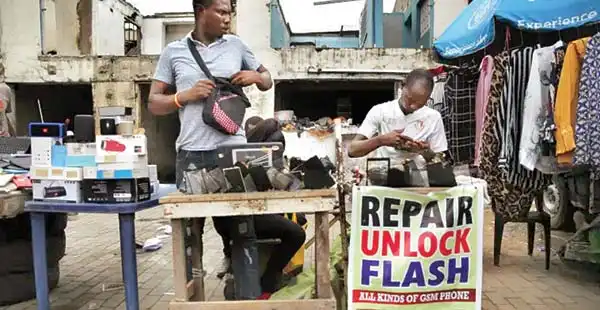
LAGOS: Kola Alawada shelters from the rain beneath the shade of a phone accessories kiosk in Computer Village in Lagos, his old Android phone with a cracked screen clutched in his hand.
The sprawling, chaotic marketplace in southwestern Nigeria is Africa’s largest technology hub, where streets lined with shopping plazas and informal stalls sell and repair a plethora of devices across a range of price points.
Alawada waits eagerly while James, a phone reseller whose real name we are not using to protect his privacy, haggles with another customer on a WhatsApp call. The 21-year-old student is ready to switch from his old device to an iPhone.
“At school, when I want to [woo] a girl, I borrow my friend’s iPhone 14 Pro Max. If she sees me with an Android, she’ll think I’m broke,” Alawada laughs, though the pressure weighs on him. Soon, he hopes he will not need to borrow any more.
For many young Nigerians, the iPhone is more than a phone – it is a status symbol. Yet, a new one still costs more than most working-class Nigerians can afford. The price of the newly released iPhone 16 is more than 3 million naira – that is more than $1,800 in a country where the minimum monthly wage is $44.
While entry-level Androids sell for as low as 25,500 naira ($15), even older model, second-hand iPhones are pricier – a used iPhone 8 Plus, for instance, can cost about 150,000 naira ($88), despite its outdated iOS.
As James continues his back and forth with the other customer over WhatsApp, Alawada waits, wondering if his father had bought his Android here. He remembers the thrill of unboxing the Tecno Phantom X in 2021 at the start of university – a family investment of more than 200,000 naira ($118).
Now, years later, that memory feels distant as he waits to sell the same phone in the hopes of affording a second-hand iPhone 12 Pro for 600,000 naira ($353) – an amount far exceeding his father’s salary and eight times Nigeria’s minimum wage.