


Blitz Bureau
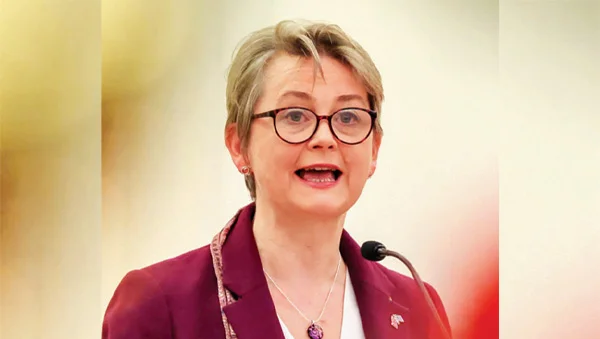
NEW DELHI: BRITISH Foreign Secretary Yvette Cooper has called on NATO to “step up its military and security presence in the Arctic”, citing that the region is becoming “a front line of geopolitical competition” as climate change opens new shipping routes and exposes strategic resources, reported IANS.
During her visit to Finland and Norway, Cooper said Arctic security was “critical to protecting Britain and NATO” and stressed the need to “strengthen regional defences to deter Russia and protect key infrastructure”, according to a press release published by the Foreign Office.
“The Arctic will become an ever more critical frontier for NATO,” Cooper said, adding that Britain and its allies were working to reinforce defences in the High North to prevent any attempts to threaten their interests and undersea infrastructure.
The High North hosts major shipping routes and vital critical national infrastructure, including undersea cables, which British officials say are increasingly vulnerable to hostile activity, Xinhua news agency reported. Cooper’s visit includes meetings with Finnish border guards defending NATO’s eastern flank with Russia and a visit to Camp Viking in northern Norway, where British Royal Marines are conducting cold-weather military training.
The press release said that Britain has “long been a leader” in the Joint Expeditionary Force, a coalition of 10 northern European nations focused on High North security. The force recently carried out its largest-ever military exercise “Tarassis,” deploying thousands of troops, dozens of ships, vehicles, and aircraft across the Baltic region and the North Atlantic.
Meanwhile, French Foreign Minister Jean-Noel Barrot has said that France will open its consulate in Greenland on February 6, a concrete move to show support for the island as the United States repeatedly vows to take it over.
In an interview with French radio RTL, Barrot said Greenland neither wants to be owned, governed, nor integrated by the United States, stressing that the island has chosen to remain within the framework of Denmark, the North Atlantic Treaty Organization (NATO) and the European Union. His remarks came amid renewed statements by US President Donald Trump, who has expressed interest in acquiring the island, hinting at the possibility of military intervention.