Blitz Bureau
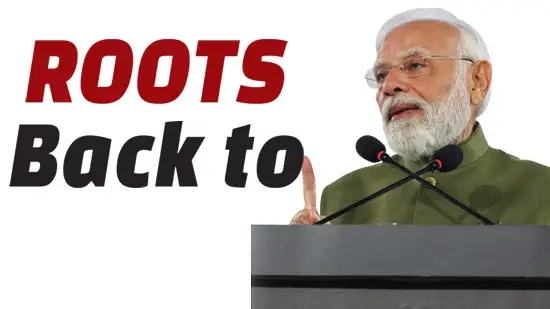
NEW DELHI: Prime Minister Narendra Modi has called for a national pledge to “put the locks on” the Western mindset embedded in India through Thomas Macaulay’s project of reshaping Indian thought by dismantling indigenous knowledge systems and enforcing colonial education.
“The coming decade is critical to break free from this mindset of slavery,” PM Modi said, delivering the sixth Ramnath Goenka Lecture in New Delhi on November 17. He set a 10-year timeframe – leading up to the 200th year of the British historian-politician’s campaign – to reverse that legacy.
The call has struck a chord with many who believe the time has come for Indians to assert, not just the political freedom, but cognitive freedom: to question inherited assumptions, value rootedness, and chart the future with more self-confidence. The impulse behind the PM’s appeal is understandable. India must certainly examine the institutional and intellectual legacies it inherited and decide which ones deserve to remain, which need reform, and which ought to be discarded.
Questioning colonial legacies in our laws, administration, and symbols offers a chance to modernise and localise governance, and if the colonial mindset means privileging imported curricula and benchmarks, then a more plural, context-sensitive education policy may help meet the diverse realities of India. In short, this is not mere nostalgia but a call for substantive reorientation.
Ever since PM Modi came to power in 2014, his Government has taken several steps to translate this resolve into reality. The effort to erase colonial influences is both symbolic and systemic. Rajpath (Kingsway in Lutyens erstwhile imperial capital) is now called Kartavya Path. The Indian Navy’s ensign has shed the colonial Saint George’s Cross, adopting a design featuring the National Flag and a navy blue-gold octagon, dedicated to Chhatrapati Shivaji Maharaj. The Rose Island in the Andaman and Nicobar Islands is not referred to as Netaji Subhash Chandra Bose Dweep.
Restoring ancient names like Prayagraj and Ayodhya reconnects India to its spiritual legacy, reinforcing cultural continuity. These name-changes go beyond pure symbolism. They have been accompanied by substantial changes in the philosophy of governance.
Education & laws For instance, India’s new education policy, NEP 2020, signifies a radical policy shift. The colonial era criminal laws drafted by Macaulay have been replaced by Bharatiya Nagarik Suraksha Sanhita, 2023, Bharatiya Nyaya Sanhita, 2023, and Bharatiya Sakshya Adhiniyam, 2023. While Macaulay should be justifiably denounced for his dismissive view of Indian knowledge systems, PM Modi is aware that his vision of Viksit Bharat should not be interpreted as a rejection of modernity. That explains his assertion that he was not opposed to English but supportive of Indian languages.
India civilisation has absorbed influences from around the world, transforming them into something distinctly Indian. To make the PM’s appeal meaningful, India must approach decolonisation with maturity. The country needs a thoughtful, calibrated reinvention – one that embraces its civilisational depth without rejecting the global connections.