Blitz Bureau
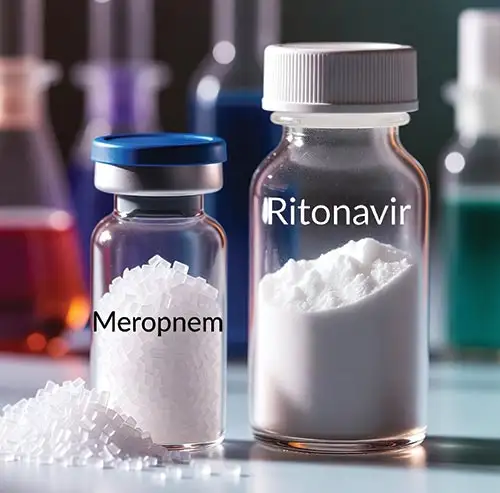
NEW DELHI: The Department of Pharmaceuticals (DoP) has invited fresh round of applications under the production linked incentive (PLI) scheme for bulk drugs, seeking to onboard manufacturers for two essential active pharmaceutical ingredients (APIs) — meropenem and ritonavir. This is part of India’s efforts to strengthen domestic production of high-value critical drugs.
Under the notification, the Government will select four manufacturers each for meropenem and ritonavir. Applicants for ritonavir must commit to a minimum installed capacity of 5 million tonne per annum (mtpa), while meropenem applicants are required to demonstrate 4 mtpa of annual output. The online application window opened on November 27 and will close on December 27.
The department has clarified that firms (or their subsidiaries / group entities) that had previously secured approval for these same products but had later withdrawn from the scheme or faced cancellation due to non-performance will not be eligible in this round.
Towards API independence
Meropenem — a last-line carbapenem antibiotic — and ritonavir — an antiretroviral used widely in HIV treatment — are among India’s most strategically sensitive bulk drugs.
Historically, India has depended heavily on Chinese imports for their key starting materials, making domestic capacity creation a priority for pharmaceutical security and supply-chain stability.
Launched with an outlay of ₹6,940 crore, the PLI scheme for bulk drugs covers 41 identified KSMs, DIs and APIs. Chemical-synthesis-based products are eligible for a 10 per cent incentive on incremental sales up to FY 2027-28.
The scheme has also contributed to a shift in India’s trade position — moving from a net importer of bulk drugs to an emerging net exporter, according to official disclosures.
Focus on health security
Industry experts note that expanding domestic production of meropenem and ritonavir will strengthen India’s preparedness against antimicrobial resistance, infectious-disease surges, and global supply disruptions.
By targeting remaining unsubscribed products, the Government aims to close critical gaps in local API manufacturing and accelerate India’s transition into a resilient, competitive and self-reliant pharma ecosystem.
• 48 projects approved under the scheme
• 34 commissioned, creating capacity for 25 key APIs / KSMs / DIs
• Actual investment: Approx. ₹4,570 crore, exceeding commitments of ₹3,938 crore
• Cumulative sales: Nearly ₹2,000 crore
• Exports: Around ₹450 crore – ₹480 crore
• Import savings: Approx. ₹1,362 crore
• Employment: More than 4,200 jobs