Blitz Bureau
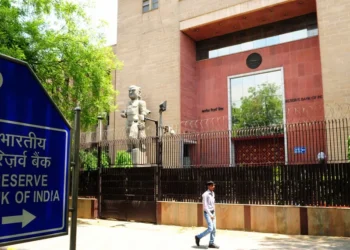
NEW DELHI: The Indian economy is moving into a stronger phase of recovery and expansion, with the Reserve Bank of India (RBI) stating that the country now stands “on the threshold of a virtuous cycle” driven by rising private investment, improving productivity, and broad-based domestic demand.
In its latest November assessment, the central bank said the measures undertaken this year—ranging from regulatory tightening to liquidity management—are helping stabilise macro fundamentals while laying the groundwork for long-term growth.
The RBI emphasised that India’s economic trajectory is increasingly supported by an improving investment climate and stronger capex activity by both private and public sectors.
Revival of private investment
The report notes a sharp rise in the overall cost and volume of capital projects under implementation and consideration. This expansion, the RBI said, reflects a renewed willingness among firms to commit to long-term investments after two years of sector-specific disruptions.
India’s consumer sentiment remains firm, aided by urban demand and a visible pick-up in commercial credit. Bank lending to the commercial sector improved in October, an early signal of expansion in corporate activity.
The central bank highlighted that favourable demand conditions, combined with moderating inflation, are strengthening the investment ecosystem across manufacturing, infrastructure, and services.
Resilience amid global headwinds
Even as global uncertainty persists, the RBI report underlined that India continues to outperform major economies on consumption, growth and financial stability. High-frequency indicators for October showed robust service-sector momentum and an improving industrial performance.
Inflation, meanwhile, has moderated to multi-year lows, easing pressure on household budgets and reducing borrowing costs in the corporate bond market. Financial conditions remain supportive, with liquidity holding above neutral levels for most of October and November.
The central bank reaffirmed that India’s macroeconomic fundamentals are strong enough to absorb external shocks arising from volatile commodity prices, geopolitical tensions and fluctuations in global capital markets.
External stability strengthens
India’s external buffers remain healthy even as the RBI intervened to manage currency volatility. The central bank sold $7.98 billion in September to limit excess rupee depreciation, with the exchange rate moving to ₹83.17 from ₹82.67 a month earlier. The real effective exchange rate (REER) crossed 103, indicating a slight overvaluation but still within historical comfort levels.
Foreign exchange reserves remain adequate to cushion any sudden external shock, while India’s external debt-to-GDP ratio continues to be low and stable. Short-term external debt has also remained contained, contributing to greater stability in the balance-of-payments outlook.
Remittances offer strong support
Foreign remittances under the Liberalised Remittance Scheme remained largely steady at $7.8 billion, with transfers for education and family maintenance forming a major portion. The RBI noted that inward remittances saw an increase, adding further stability to the current account.
Non-resident deposits were stable at $105.5 billion, supported by a modest rise in FCNR(B) deposits during the period. The banking system, the RBI said, has benefited from resilient remittance flows, robust services exports and a moderation in imports after three months of expansion.
FDI inflows improve
Gross foreign direct investment (FDI) into India rose 16 per cent to $10.6 billion in September from $6 billion in August. While net equity inflows moderated due to a temporary outflow in August, gross inflows remained strong. Singapore, Mauritius, Luxembourg, the UK and the UAE accounted for nearly 78 per cent of the total inflows.
Foreign portfolio investment also recorded net inflows this fiscal up to November 20, led by significant interest in the debt segment owing to attractive yield differentials and expectations of rupee stability.
Long-term growth
The RBI stated that India is now well-positioned to enter a sustained high-growth trajectory as inflation stabilises, capital flows strengthen and credit demand rises. The combined efforts of the Government and the central bank, it said, are helping catalyse a macroeconomic environment that encourages investment, safeguards financial stability and boosts long-term productivity.
With moderating inflation, improving financial conditions, resilient external buffers and a visible revival in private investment, the RBI concluded that the economy is “well placed to transition into a virtuous cycle” in the coming quarters.
• RBI sold $7.98 billion in September to contain rupee volatility
• Gross FDI inflows rose 16% to $10.6 billion in September
• Outward remittances steady at $7.8 billion under LRS
• NRE and FCNR(B) deposits stable at $105.5 billion
• Commercial credit flows strengthened in October, signalling investment revival
• Forex reserves remain comfortable to absorb external shocks
• FPIs record net inflows this fiscal, led by debt market participation