Harvinder Ahuja
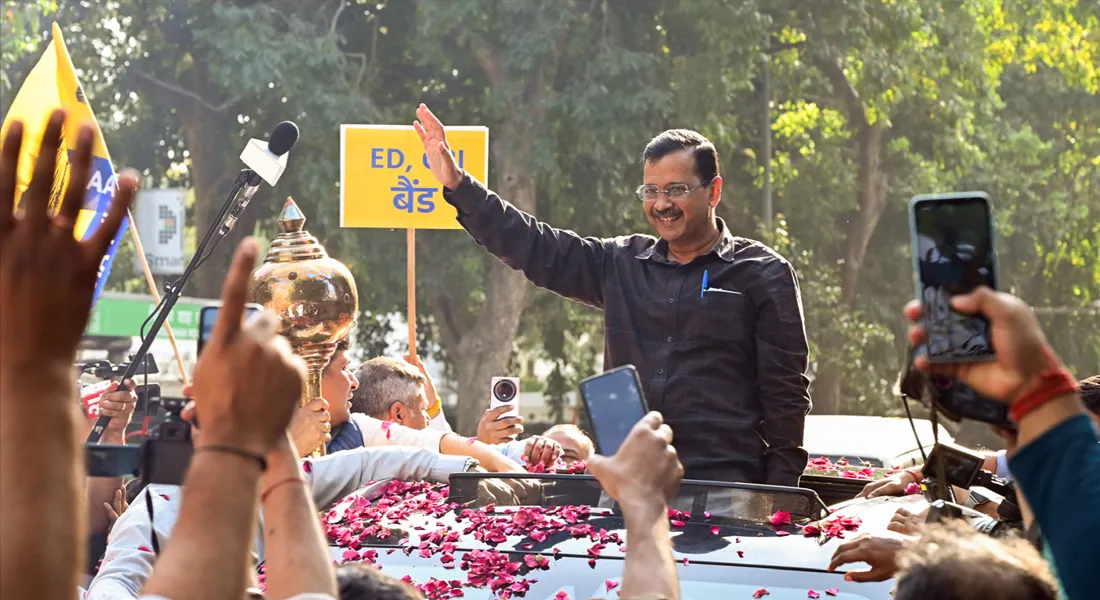
NEW DELHI: The acquittal of former Delhi Chief Minister Arvind Kejriwal, his deputy Manish Sisodia and 21 others by a trial court in the excise policy case marks a significant moment in the country’s political and legal landscape. Besides, the ‘liquorgate’ discharge along with its potential of reviving the fortunes of the Aam Aadmi Party has set off alarm bells in the BJP and the Congress. a The Rouse Avenue court verdict, delivered on February 27 after months of intense scrutiny and public debate, underscores the centrality of due process and judicial oversight in a robust and thriving democracy like India.
The case had drawn nationwide attention, not only because of the seniority of the political figures involved, but also due to the broader implications it carried for governance and accountability. While the country’s premier investigating agency CBI had alleged irregularities in the formulation and implementation of the now-scrapped excise policy in Delhi, the AAP consistently maintained that the charges were politically motivated and lacked substantive evidence.
Fundamental threshold
In acquitting the accused, the court observed that the prosecution had not established its case beyond reasonable doubt — the fundamental threshold in criminal jurisprudence. The judgment reiterates a foundational principle of law: allegations, however serious, must be supported by credible evidence that withstands judicial scrutiny. The special CBI judge’s pronouncement that there was no conspiracy or criminal intent in the much-maligned excise policy of the Kejriwal Government, is bound to help the former CM and his party regain much of the moral ground, which it had ceded over the past several months.
For the ruling establishment at the Centre, the February 27 verdict presents a complex political dynamic. While critics may view the outcome as a setback to anti-corruption messaging, it is important to note that the investigative process itself unfolded within the framework of the existing legal institutions. Agencies conducted inquiries, arrests were made, and the matter was adjudicated in court. The eventual decision was rendered by an independent judiciary, reinforcing institutional checks and balances.
For the Aam Aadmi Party, however, the acquittal offers political vindication and a morale booster. The party had framed the excise case as part of a larger pattern of political targeting. The court’s ruling is likely to strengthen that narrative ahead of future electoral contests, but how much the party gains, only time will tell.
Accountability, perception
Beyond partisan calculations, the development highlights the delicate balance between accountability and perception. In high-profile cases involving elected representatives, investigative actions inevitably attract political interpretation. This makes judicial clarity all the more essential. The lower court’s decision does not necessarily close the chapter entirely – it has already been challenged in the higher court – but it does reset the immediate discourse.
In its petition before the Delhi High Court, the CBI has said that the trial court’s order has ignored several important aspects of the investigation and that the material has not been adequately considered. At a broader level, however, the Kejriwal verdict is a reminder that democratic institutions in India continue to function through established procedures. Governments are empowered to investigate alleged wrongdoing, but it is the judiciary that ultimately determines culpability. The acquittal of Kejriwal and others is less about individual political fortunes and more about institutional resilience. It affirms that accountability must be pursued rigorously, yet adjudicated impartially, a balance that lies at the heart of constitutional governance.
Speaking to reporters soon after the court verdict, Kejriwal said, “We always had faith in the judicial system… Truth has triumphed.” He also shed a few tears in front of the TV cameras, which might bring in some electoral dividends for his party in its future outings, but there is a long way to go till curtains are finally drawn on the Delhi excise case and AAP gets its exalted perch back.