Sandeepp Saxena
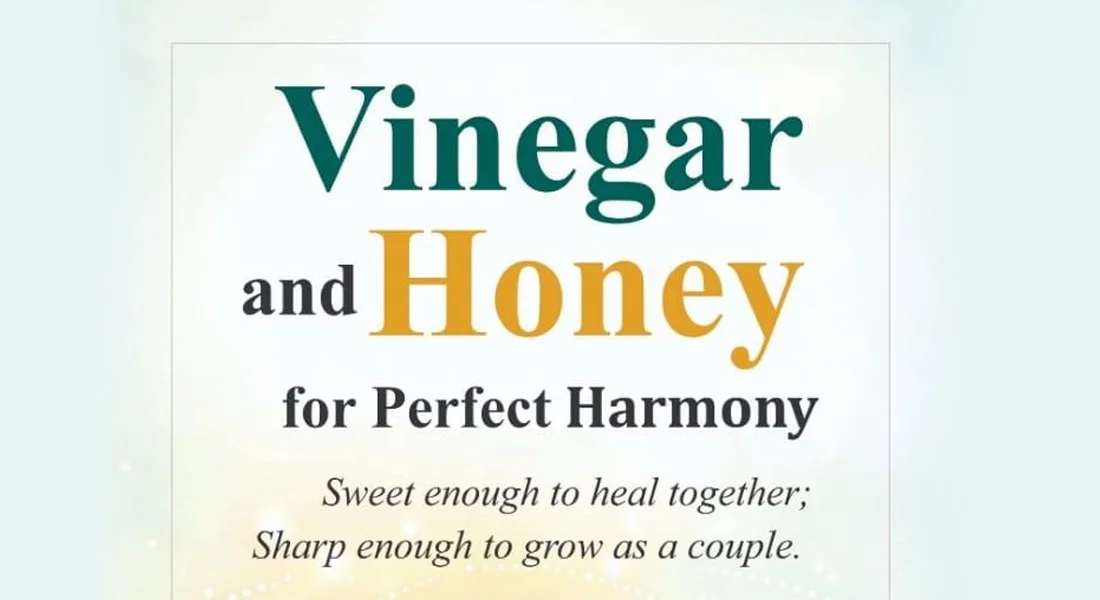
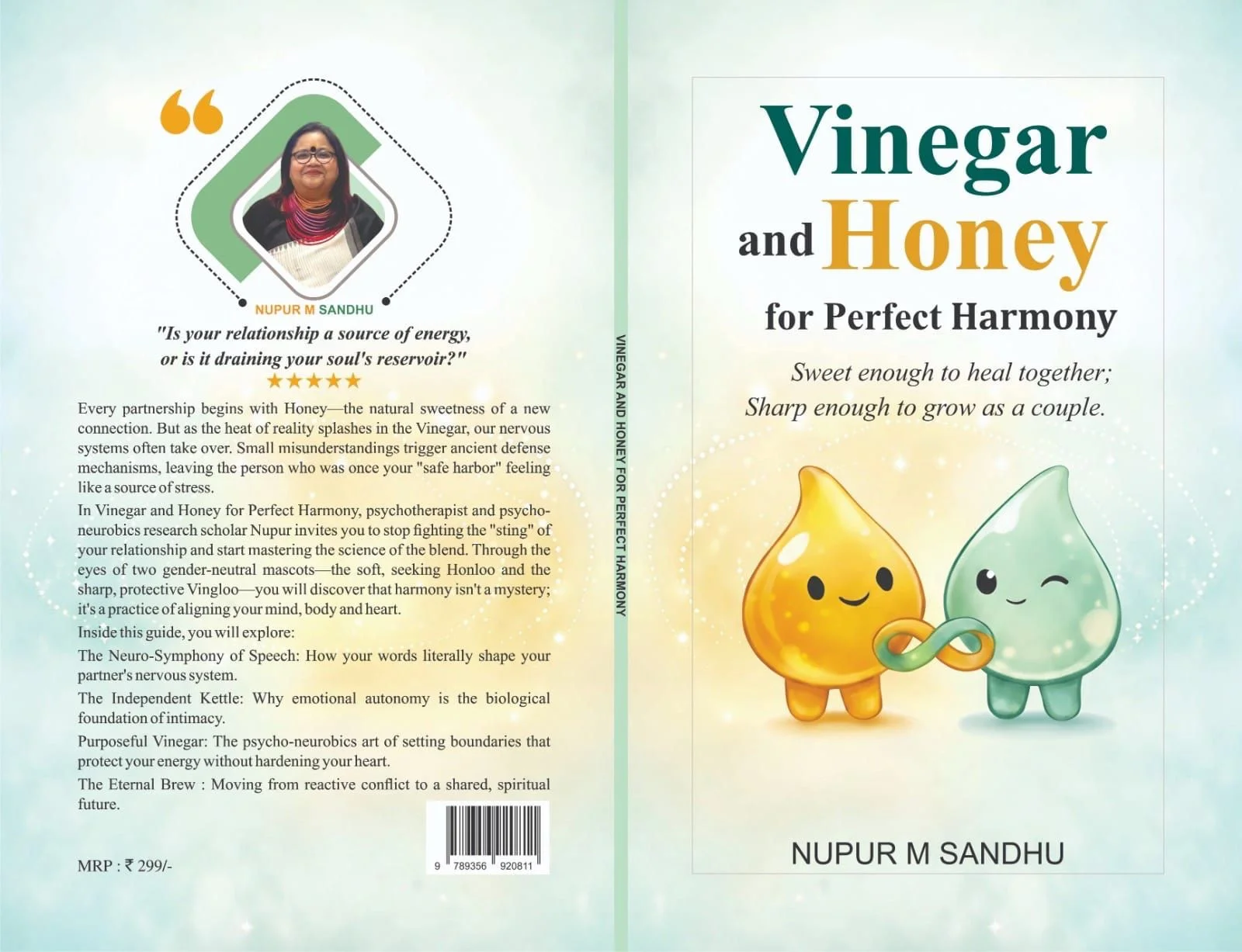
New Delhi: At a time when relationship advice often oscillates between overly clinical frameworks and idealistic fairy tales, psychotherapist and psycho-neurobics research scholar Nupur M. Sandhu offers a grounded and nuanced perspective in her latest book, Vinegar and Honey for Perfect Harmony.
Positioned as both a reflective guide and a practical handbook, the book reframes relationships as a conscious balance between emotional sensitivity and firm boundaries. Rather than prescribing rigid formulas, Sandhu adopts a conversational tone, inviting readers to engage with the complexities of modern relationships with both honesty and compassion.
A Dual Framework: Sweetness and Strength
At the centre of Sandhu’s philosophy lies the “Vinegar & Honey Principle,” which proposes that every interaction in a relationship is shaped by a choice—between reactive harshness and mindful connection.
The author illustrates this concept through two gender-neutral symbolic characters—Honloo, representing empathy and emotional warmth, and Vingloo, embodying truth, clarity, and protective boundaries.
Significantly, Sandhu departs from conventional narratives that portray emotional firmness negatively. Instead, she introduces the idea of “purposeful vinegar”—a conscious, value-driven boundary that protects individual dignity without damaging the relationship.
Integrating Psychology with Practice
A key differentiator of the book is its integration of psycho-neurobics, a discipline that examines the interplay between psychological patterns and neurological responses. Sandhu describes relationships as a “neuro-symphony,” where communication and emotional tone directly influence a partner’s nervous system.
To translate theory into practice, the book introduces two recurring tools:
- Neuro Sips, which explain the psychological and neurological basis of behaviour;
- Tea Sips, which offer actionable rituals and micro-practices for daily relationship building.
This structure allows readers to move beyond passive reading towards active self-awareness and behavioural change.
Rebuilding the Emotional Framework of Relationships
Sandhu argues that relationships rarely fail due to a lack of love; rather, they deteriorate when their emotional framework weakens. She identifies four core pillars essential to sustaining long-term harmony:
- Honesty, defined as authentic emotional presence;
- Communication, focused on understanding rather than defending;
- Responsibility, involving ownership of one’s emotional contributions;
- Emotional Safety, which creates space for vulnerability without fear.
Through narrative devices such as the “Two Lamps” metaphor, the book highlights the importance of expressing needs without conflict escalation, reinforcing vulnerability as a pathway to intimacy.
Marriage as a Reflective and Transformative Space
One of the book’s central insights is its positioning of marriage as a reflective and transformative process, rather than a fixed institution. Sandhu suggests that relationships do not create insecurities but instead reveal unresolved emotional patterns.
By reframing triggers as signals for self-awareness, the book encourages couples to shift from blame-driven conflict to collaborative healing. This perspective aligns with broader psychological frameworks that view interpersonal dynamics as extensions of individual emotional histories.
Addressing Modern Relationship Realities
Across its eleven chapters, the book systematically explores key dimensions of contemporary relationships. It examines the role of tone and communication, challenges the myth of inherent compatibility, and addresses practical concerns such as family dynamics and financial management within partnerships.
The concluding chapters expand the discussion into a broader philosophical context, presenting relationships as evolving journeys that require intentional effort and shared vision.
From Theory to Action: Structured Engagement Tools
Beyond conceptual insights, Vinegar and Honey for Perfect Harmony places strong emphasis on practical application. Through reflection exercises, mini-vows, and structured commitments, Sandhu encourages readers to actively engage with their behavioural patterns.
A notable feature is the concept of a “Relationship Contract,” which formalises unspoken expectations into clear, mutual agreements. This approach shifts the focus from reactive problem-solving to proactive relationship design.
Additionally, the inclusion of reflection prompts promotes accountability, urging individuals to examine their role in conflicts rather than assigning blame.
A Contemporary Guide for Conscious Relationships
Sandhu’s work arrives at a time when evolving social dynamics have introduced new complexities into personal relationships. By addressing phenomena such as emotional ambiguity and shifting expectations, the book resonates with both individuals and couples navigating modern relational landscapes.
Its strength lies in combining psychological depth with accessible language, making it relevant for a broad readership—from those preparing for future relationships to those seeking to strengthen existing ones.
Conclusion
Vinegar and Honey for Perfect Harmony offers a balanced and insightful framework for understanding relationships in a contemporary context. By blending emotional intelligence with practical tools, Nupur M. Sandhu presents a compelling case for viewing relationships not as static bonds, but as dynamic processes requiring continuous awareness and effort.
In doing so, the book reinforces a central idea: lasting relationships are not built on perfection, but on the ability to balance empathy with clarity, and connection with self-respect.