Blitz Bureau
NEW DELHI: As India strides toward its goal of becoming a $7 trillion economy, the 7.47 crore micro, small, and medium enterprises (MSMEs) that form its backbone are caught in a high-stakes transformation.
The narrative of the small business owner has shifted from mere survival to a complex balancing act known as the “triple challenge”: securing credit in a collateral-free world, adopting AI-native technology, and breaking into global markets through digital-first channels.
While MSMEs contribute 31.1 per cent to India’s GDP and nearly half of its total exports, the path forward is fraught with systemic friction. The “triple challenge” represents a bottleneck that, if left unaddressed, could stifle the very engine of India’s inclusive growth.
The credit conundrum
Despite a decade of financial inclusion drives, the MSME sector still grapples with a credit gap estimated at ₹30 trillion ($360 billion). Traditional banking systems, long built on the foundation of physical collateral like land or machinery, often find themselves at odds with the modern micro-enterprise — which may own little more than a digital storefront and a smartphone.
The shift towards “flow-based lending” is the primary battleground of 2026. By leveraging the Digital Public Infrastructure (DPI), particularly the account aggregator framework and GST data, fintech firms are attempting to bridge this gap.
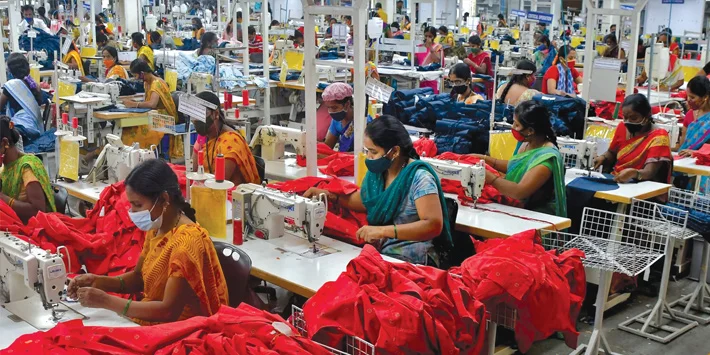
However, the cost of credit remains high. For a small manufacturing unit in Ludhiana or a textile weaver in Kanchipuram, interest rates can still hover in the double digits, eating into slim margins. The challenge is no longer just about the availability of money, but the affordability and speed of access.
The technology leap
If 2020 was about getting on WhatsApp, 2026 is about surviving the AI-native era. The digital divide has evolved. While over 90 per cent of MSMEs have adopted digital payments, a new gap has emerged: The intelligence divide.
Large corporations are using generative AI to optimise supply chains and predict consumer demand with surgical precision. Meanwhile, many MSMEs are still struggling with high implementation costs and a chronic lack of technical talent.
The “technology challenge” is two-fold: infrastructure and literacy. Even as 5G penetrates deeper into rural clusters, the ability to turn data into actionable insights remains a luxury.
Without affordable, “plug-and-play” AI tools, small businesses risk becoming invisible in an algorithm-driven marketplace.

The market frontier
The final pillar of the triple challenge is market access. Historically, MSMEs were limited by geography. Today, the challenge is the “platform tax.” Dominant e-commerce giants often charge commissions ranging from 15 per cent to 30 per cent, making it nearly impossible for a small artisan to scale profitably.
Also, the global market is changing. International trade is increasingly governed by green tariffs and ESG (environmental, social, and governance) compliance. For an MSME to export to Europe or North America, it must now prove its carbon footprint and labour standards — tasks that require sophisticated tracking systems most small firms do not possess.
The goal is to transform every MSME into a “micro-multinational,” but the friction in cross-border logistics and regulatory compliance remains a significant barrier.
The path forward
The convergence of these three challenges — credit, technology, and markets —requires a holistic rather than a piecemeal approach. Industry experts argue that the solution lies in the “digital stack” integration.
By linking credit history directly to market performance and technological efficiency, the risk for lenders decreases, and the opportunity for MSMEs expands.
As India navigates current geopolitical environment, the resilience of its MSMEs remains unquestioned. However, resilience alone is no longer enough. The “great pivot” requires a synchronised effort between the state, the financial sector, and tech innovators to ensure that the backbone of the economy does not snap under the weight of its own potential.
While MSMEs contribute 31.1 per cent to India’s GDP and nearly half of its total exports, the path forward is fraught with systemic friction. The “triple challenge” represents a bottleneck that, if left unaddressed, could stifle the very engine of India’s inclusive growth.
Digital natives
The definition of a “small business” has been entirely rewritten by the digital revolution. No longer confined to brick-and-mortar storefronts, the modern MSME is a data-driven entity.
The adoption of the Open Network for Digital Commerce (ONDC) has been a game-changer, allowing a local spice vendor in Kerala to compete on the same digital shelf as a multinational conglomerate without paying exorbitant platform fees.
However, the digital age has also brought new vulnerabilities. Cybersecurity has emerged as a top-tier threat; as MSMEs move their entire operations — from inventory management to payroll — onto the cloud, they become prime targets for ransomware and data breaches.
The shift to a “digital-first” mindset requires a cultural overhaul. Business owners who once relied on “gut feeling” are now learning to navigate dashboards and SEO analytics.
The 2026 MSME is more agile and connected than ever, but it is also operating in a hyper-competitive landscape where digital visibility is the only currency that truly matters.
*******
State support
The Government’s strategy in recent times has shifted from providing simple subsidies to building robust market-linked ecosystems. Central to this is the TEAM (Trade Enablement and Marketing) Initiative, which specifically targets the digital onboarding of 5 lakh MSMEs, providing them with the tools needed to succeed on global platforms.
To solve the liquidity crisis, the TReDS (Trade Receivables Discounting System) has been aggressively reformed. By making it mandatory for all Central public sector enterprises and large corporates to settle invoices through this platform, the Government has significantly reduced the “delayed payments” hurdle that used to haunt small suppliers.
The PM Vishwakarma scheme has revitalised traditional craftsmanship by providing ₹15,000 toolkit grants and low-interest “collateral-free” loans to millions of artisans.
The establishment of e-commerce export hubs and the removal of value caps on courier exports has simplified the “market” challenge, allowing even the smallest village-based enterprise to tap into international demand.
These schemes are not just financial lifelines; they are the architectural blueprints for a modern, formalised MSME sector.