Deepak Dwivedi
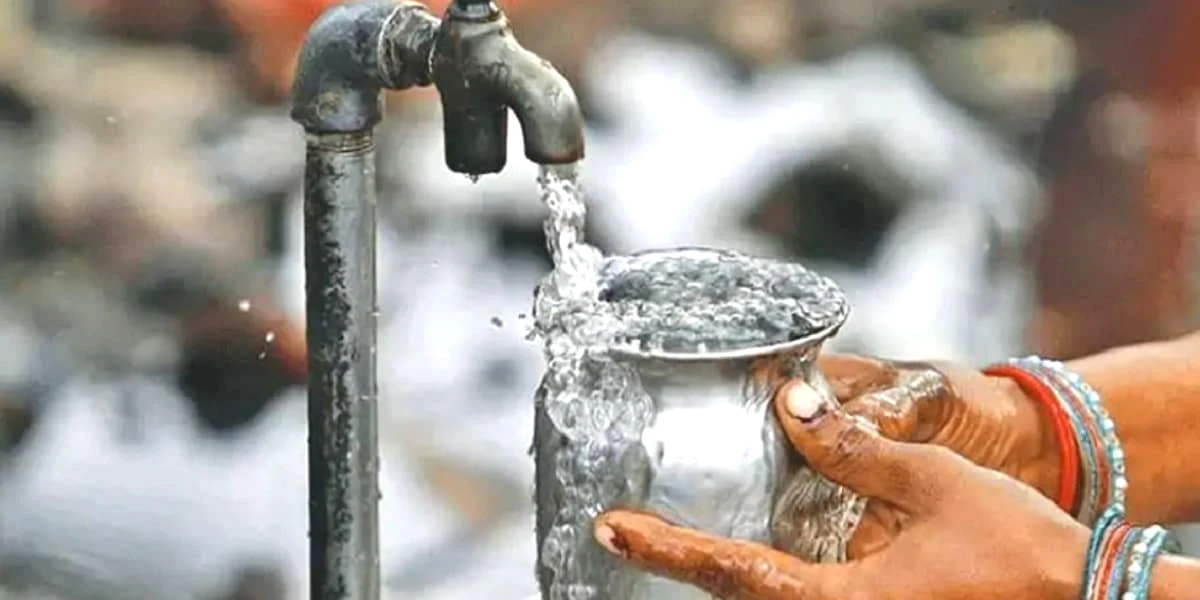
NEW DELHI: India’s growth story is usually framed around capital, labour, and policy reform. Increasingly, however, a less visible factor is emerging as a binding constraint: water. Once treated as a social or environmental concern, water scarcity is now a core economic risk, capable of slowing growth across agriculture, industry, and urban centres alike. The stress is structural. India supports nearly 18 per cent of the world’s population with barely 4 per cent of its freshwater resources.
Per capita availability has been declining steadily, and groundwater, on which both farms and cities depend, is being extracted faster than it can be replenished. What was once seen as a monsoon-linked fluctuation is now a persistent imbalance between demand and supply.
The economic consequences are already visible. Agriculture, which still employs a large share of the workforce, remains highly water-intensive. Cropping patterns such as paddy and sugarcane in water-scarce regions reflect policy incentives rather than ecological suitability. As water tables fall and rainfall becomes more erratic, farm output risks turning volatile, affecting rural incomes, consumption demand, and food inflation.
The industry faces a growing exposure as well. Water intensive sectors such as power, steel, textiles, and chemicals depend on reliable supply for uninterrupted operations. In several regions, shortages have forced shutdowns or compelled firms to invest in costly alternatives like recycling, desalination, or long-distance transport. For a country seeking to expand manufacturing, unreliable water access is fast becoming an issue of competitiveness.
Urban India adds another layer of risk. Rapid growth has outpaced water infrastructure, pushing cities towards tanker economies and unsustainable groundwater extraction. Episodes of stress in cities like Bengaluru and Chennai show how shortages can disrupt daily life, services, and business continuity. As urbanisation accelerates, these vulnerabilities are set to deepen.
Water is no longer peripheral; it is a constraint shaping outcomes across sectors
At the policy level, the contradictions are stark. Water is often underpriced or free, encouraging overuse. At the same time, governance remains fragmented across agencies, weakening accountability. Scarcity and mismanagement coexist. Addressing this requires a shift in approach. Water must be treated as a finite economic resource, with pricing that encourages efficiency while protecting vulnerable users. Technology, such as micro irrigation, recycling, and data-driven monitoring must scale rapidly. Cropping patterns also need to align with local conditions, supported by better incentives and procurement reforms.
India’s growth ambitions rest on sustainable resource use. Water is no longer peripheral; it is a constraint shaping outcomes across sectors. Ignoring it risks turning a manageable challenge into a structural brake on growth. The real test is whether policy can move fast enough to prevent scarcity from becoming the defining limit to the growth story of India. Failure to act decisively will impose rising economic costs and widen inequalities across regions and sectors alike. The stakes are, indeed, high.