Parth Nadpara
NEW DELHI: India’s plastic industry is at a turning point. For decades, plastic packaging powered the growth of consumer goods, food delivery, retail, healthcare, e-commerce and modern logistics.
It made products cheaper, lighter, safer and easier to distribute across a vast country. But the same convenience has also created one of India’s most visible environmental challenges: plastic waste scattered across streets, drains, rivers, landfills and rural landscapes.
The green transition now underway is not about eliminating plastic altogether. It is about changing the way plastic is designed, used, collected, recycled and reintroduced into the economy.
The policy direction is clear: India wants to move from a “use-and-throw” model to a circular packaging economy, where unnecessary plastic is reduced, recyclable packaging is encouraged, producers are made responsible for post-consumer waste, and recycling becomes a formal industrial activity.
India wants to move from a “use-and-throw” model to a circular packaging economy, where unnecessary plastic is reduced, recyclable packaging is encouraged, producers are made responsible for post-consumer waste, and recycling becomes a formal industrial activity.
The scale of the challenge is substantial. According to the Ministry of Environment, Forest and Climate Change, India generated 41.26 lakh tonne of plastic waste in 2020-21, 39.01 lakh tonne in 2021-22 and 41.36 lakh tonne in 2022-23, based on data from State Pollution Control Boards and Pollution Control Committees submitted to the Central Pollution Control Board.
EPR: The backbone of reform
The most important regulatory shift has been the introduction of Extended Producer Responsibility, or EPR, for plastic packaging. Under this system, producers, importers and brand owners are required to take responsibility for the plastic packaging they introduce into the market.
This includes collection, recycling, reuse, use of recycled content and environmentally sound disposal.
The EPR guidelines for plastic packaging, notified in February 2022, have created a compliance framework through a centralised online portal of the Central Pollution Control Board.
The Government has stated that the EPR framework is designed not only to improve plastic waste management but also to create market incentives for recyclers through EPR certificates. These certificates are expected to support formalisation, technology upgradation and investment in recycling capacity.
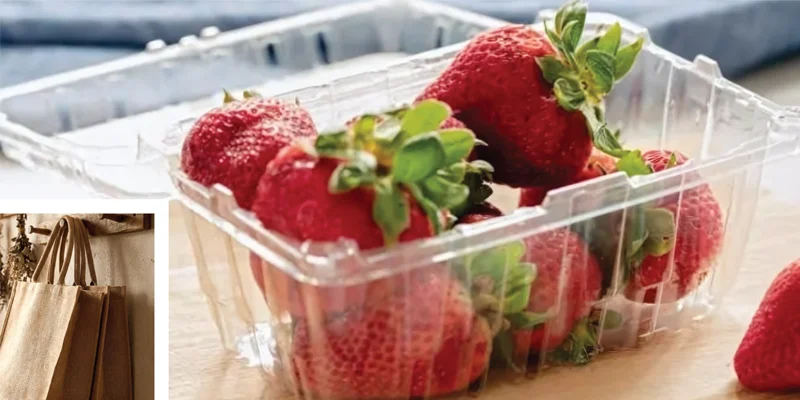
The regulatory framework has also been supported by India’s ban on identified single-use plastic items from July 1, 2022. These included items with low utility and high littering potential. The ban, however, addresses only one part of the problem.
Most plastic packaging remains legal because it serves a functional purpose in consumer and industrial supply chains. The bigger task, therefore, is to make packaging reusable, recyclable, traceable and economically recoverable.
Packaging design in focus
The next stage of reform lies in packaging design. India’s transition cannot succeed if packaging remains complex, multilayered and difficult to recycle. Sachets, laminated pouches, flexible films and mixed-material packaging are among the hardest to collect and process because they often have low resale value. Their recovery depends heavily on EPR payments, aggregation systems and local waste-management infrastructure.
This is where industry platforms such as the India Plastics Pact, launched by the Confederation of Indian Industry (CII) and WWF-India, have become important. Its Roadmap to 2030 calls for eliminating unnecessary and problematic plastic packaging, making plastic packaging reusable or recyclable, ensuring that 50 per cent of plastic packaging is effectively recycled, and achieving 25 per cent average recycled content across plastic packaging by 2030.
These targets indicate a major shift in industry thinking. Earlier, waste management was treated as an end-of-pipe issue, something to be handled after the product was sold. The new approach begins at the design table.
Companies are being pushed to ask whether a package is necessary, whether it can be made with fewer layers, whether it can be collected, whether it can be recycled, and whether recycled material can be safely used again.
A $100-billion opportunity
Ficci and Accenture have framed sustainable plastic packaging as a major economic opportunity. Their report, Strategies for Sustainable Plastic Packaging in India – A USD 100 Billion Opportunity till 2030, highlights that India consumes large volumes of plastic packaging but loses significant material value because of poor collection, low recycling efficiency and weak design for circularity.
The report’s larger message is important: sustainability is not merely a compliance burden. It can become a manufacturing, innovation and investment opportunity.
If India can improve packaging design, build collection systems, expand recycling capacity and create reliable markets for recycled plastic, the plastic value chain can generate new jobs, reduce import dependence on virgin material and support green manufacturing.
For companies, the transition will require investment in research, material science, supply-chain redesign and consumer communication. Food-grade packaging, pharmaceutical packaging and high-performance industrial packaging have stricter quality requirements, making recycled-content use more complex. But many categories — household goods, personal care, non-food packaging, logistics and secondary packaging — can move faster.
NITI Aayog’s circular economy push
NITI Aayog’s work on sustainable urban plastic waste management places the plastic transition within the broader circular economy framework. Its handbook, prepared with UNDP, emphasises technical models, material recovery facilities, behavioural change, digitisation and good governance as essential components of urban plastic waste management.
This is crucial because plastic waste is not only an industrial issue; it is also a municipal governance challenge. Even the best packaging design will fail if waste is not segregated at source, collected regularly, sorted properly and channelled to authorised processors. India’s cities need stronger material recovery facilities, decentralised aggregation centres, digital tracking and better integration of informal waste workers.
The circular economy approach also requires moving beyond recycling alone. Reuse models, refill systems, deposit-return mechanisms, lightweighting, compostable alternatives where appropriate, and better consumer behaviour must all become part of the solution. A narrow recycling-only strategy will not be enough.
Rural India enters plastic debate
Plastic waste is often seen as an urban problem, but rural India is increasingly part of the policy conversation. Under Swachh Bharat Mission-Grameen Phase II, plastic waste management has been included as a component of solid waste management.
Parliamentary and Government documents have referred to support for Plastic Waste Management Units at the block level, with funding provisions intended to help manage non-biodegradable waste in villages.
This rural focus is necessary. Packaged consumer goods have penetrated deeply into rural markets, but collection and processing systems remain weaker than in cities.
Low-value packaging often has little incentive for recovery. If rural plastic waste management is not strengthened, India’s circular packaging ambitions will remain incomplete.
Alternatives need careful evaluation
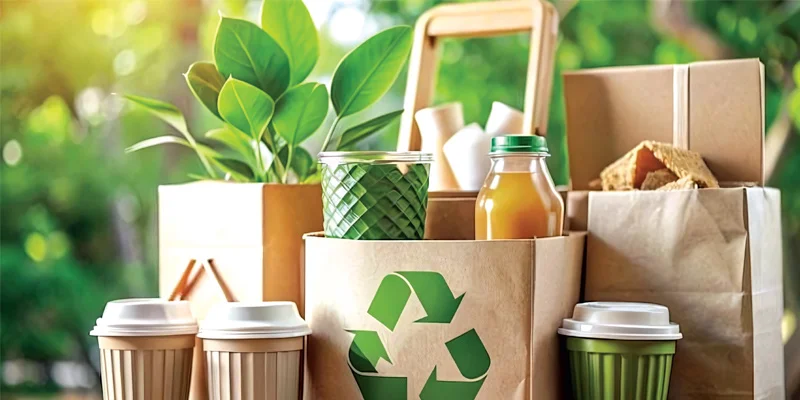
The Government has also encouraged alternatives to banned single-use plastics, including products made from bagasse, seaweed, rice and wheat bran, plant residue, banana leaves, areca leaves, jute and cloth. Start-ups and small enterprises are entering this space with biodegradable, compostable and bio-based products.
However, alternatives must be assessed carefully. Paper packaging can increase water and energy use. Compostable plastics require proper certification and industrial composting conditions.
Bio-based materials may not always be biodegradable. Cloth and jute are useful in many cases but may not replace all applications. The real test is life-cycle performance, affordability, scalability and availability of processing infrastructure.
Therefore, India’s green packaging transition should not become a simple plastic-versus-paper debate. The right approach is material-neutral but sustainability-focused: reduce what is unnecessary, use the right material for the right purpose, and ensure that every material has a viable end-of-life pathway.
India has already created the first layer of its sustainable packaging framework: Plastic Waste Management Rules, single-use plastic restrictions, EPR obligations, CPCB’s online portal, CII’s voluntary industry roadmap, Ficci’s circular economy recommendations and NITI Aayog’s urban plastic waste management guidance.
The next phase will depend on execution. EPR compliance must be credible and traceable. Recycling claims must be verifiable. Local bodies must improve segregation.
Companies must redesign packaging instead of only buying certificates. Recyclers need clean feedstock, finance and technology. Informal workers must be integrated into formal systems rather than pushed aside.
India’s plastic industry has long been a symbol of low-cost innovation and mass-market reach. Its green transition can now make it a symbol of circular manufacturing.
If policy discipline, industry investment and citizen participation come together, sustainable packaging can become one of the strongest pillars of India’s environmental and industrial transformation.
Beyond kabadiwalas
India can solve a significant part of its plastic waste challenge, but only if recycling becomes a formal, traceable and commercially viable economy.
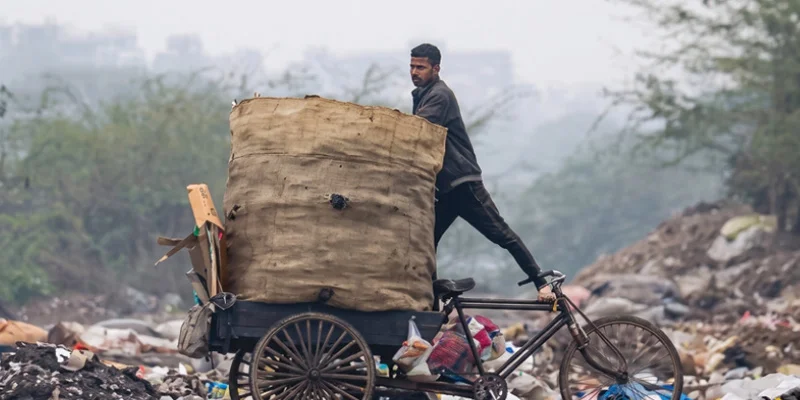
The country already has a large informal recycling network, supported by waste pickers, kabadiwalas, aggregators and small processors. This system recovers valuable materials efficiently, but it often operates without adequate safety, technology, quality control or social protection.
The new EPR framework offers an opportunity to transform this ecosystem. By making producers, importers and brand owners responsible for the plastic they place in the market, EPR can create steady demand for collection and recycling.
Government data says large volumes of plastic packaging waste have been recycled since the EPR Guidelines came into force in 2022.
But challenges remain. Segregation at source is weak, flexible and multilayered plastics have low recycling value, and recycled plastic often struggles to compete with virgin material. Many recyclers also lack access to modern technology and clean feedstock.
The way forward is clear: improve segregation, strengthen material recovery facilities, support authorised recyclers, create reliable markets for recycled plastic, and integrate informal workers with dignity.
Recycling alone will not solve the problem, but a strong recycling economy can become the backbone of India’s circular plastic future.