Blitz Bureau
NEW DELHI: India’s tourism economy is entering a decisive new phase. The country’s travel story is no longer confined to monument visits, conventional hill stations or seasonal holiday circuits. A more sophisticated and diversified tourism market is now taking shape, driven by three powerful growth segments: luxury tourism, spiritual tourism and eco-tourism. Together, they reflect a deeper shift in traveller behaviour, Government policy and private investment.
At the heart of this transformation is a simple but far-reaching change: tourists are no longer looking only for places to see; they are looking for experiences to live. They want comfort, authenticity, wellness, culture, nature, spirituality, exclusivity and sustainability.
For India, this opens an extraordinary opportunity. Few countries can offer luxury palaces, sacred rivers, Buddhist circuits, Himalayan retreats, wildlife landscapes, coastal belts, desert festivals, wellness traditions and community-led rural experiences within one national tourism ecosystem.
The Government’s policy direction has also moved in line with this opportunity. Through Swadesh Darshan, Swadesh Darshan 2.0, Prashad and special assistance for iconic tourist centres, India is increasingly treating tourism as an integrated development sector rather than a stand-alone hospitality activity.
The Ministry of Tourism says 76 projects have been sanctioned under Swadesh Darshan with an outlay of about ₹5,290 crore, while the revamped Swadesh Darshan 2.0 has sanctioned 53 projects worth about ₹2,208 crore with a sustainable and destination-centric approach.
This policy shift is important because India’s tourism challenge has never been a shortage of attractions. The real challenge has been converting attractions into globally competitive destinations. That requires infrastructure, cleanliness, quality accommodation, last-mile connectivity, trained manpower, branding, safety, digital access and environmental discipline. The new tourism segments will succeed only if India can deliver this complete visitor experience.
Luxury beyond five-star travel
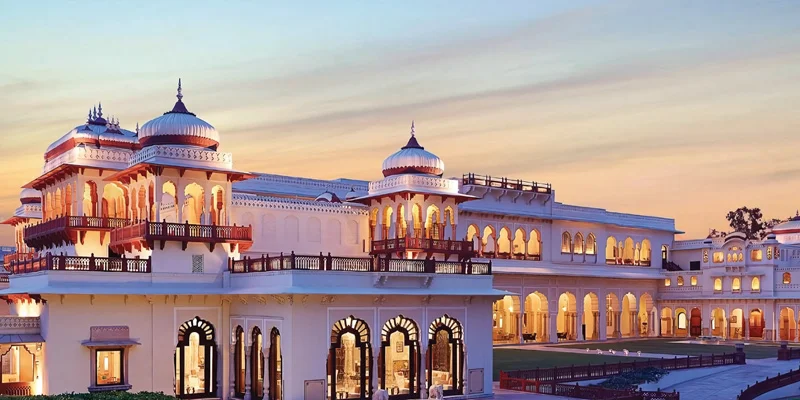
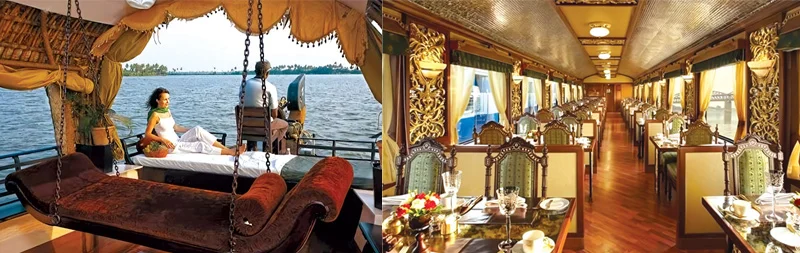
Luxury tourism in India is rapidly expanding beyond the traditional image of elite hotels and palace resorts. It now includes destination weddings, wellness retreats, luxury wildlife safaris, curated cultural journeys, private spiritual tours, premium river cruises, boutique homestays, high-end heritage stays and personalised travel experiences.
This segment is being powered by rising disposable incomes, a more aspirational middle class, high-spending domestic travellers, the Indian diaspora and foreign visitors seeking distinctive experiences.
The new luxury traveller is not merely buying a room; the traveller is buying a story. A palace hotel in Rajasthan, a wellness retreat in Kerala, a private Ganga aarti experience in Varanasi, a luxury tent stay in Gujarat or a curated Buddhist circuit can all become premium tourism products if packaged with quality, authenticity and service excellence.
For India, luxury tourism is especially valuable because it increases per-tourist spending. It supports premium hospitality, local crafts, fine dining, transport services, guides, wellness practitioners, performers and event managers. It also encourages private investment in destinations that were earlier dependent almost entirely on Government-led infrastructure.
However, luxury tourism must not become isolated from local economies. Its real strength will lie in connecting high-end travel with local culture, craft, cuisine and community enterprise.
If designed well, luxury tourism can generate employment far beyond hotels — in textiles, handlooms, organic food, transport, cultural performances, local design and heritage conservation.
Spiritual tourism
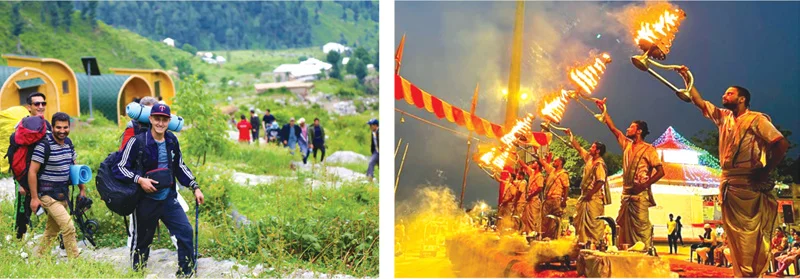
If luxury tourism brings value, spiritual tourism brings scale. India’s spiritual geography is one of the richest in the world. From Kashi, Ayodhya, Mathura, Dwarka, Somnath, Kedarnath and Badrinath to Bodh Gaya, Sarnath, Amritsar, Ajmer, Velankanni, Shirdi, Rameswaram and Puri, the country has a living network of sacred destinations across religions and regions.
Spiritual tourism has always existed in India. What is new is the attempt to formalise it through planned infrastructure, improved amenities and destination management.
The Ministry of Tourism’s Prashad scheme provides financial support to states and Union Territories for developing tourism infrastructure at religious and heritage sites. Since its launch in January 2015, the scheme has sanctioned 54 projects in 28 states and Union Territories at an estimated cost of ₹1,726.74 crore.
This is a major step because pilgrimage tourism has historically suffered from weak amenities despite heavy footfall. Many sacred destinations attract lakhs of visitors but struggle with congestion, sanitation, unplanned construction, poor signage, inadequate parking, limited budget accommodation and crowd management challenges.
The next phase of spiritual tourism must therefore focus not merely on beautification, but on the full pilgrim journey — arrival, movement, darshan, safety, rest, food, information and return.
The economic potential is enormous. Spiritual tourism supports priests, guides, flower sellers, transport operators, small hotels, restaurants, local artisans, women’s self-help groups and informal workers.
It also has the power to revitalise smaller towns. A well-developed pilgrimage circuit can spread income across districts rather than concentrating tourism revenue in a few major cities.
India also has a major global opportunity in Buddhist tourism. Sites linked to the life and teachings of Lord Buddha can attract visitors from Japan, South Korea, Thailand, Sri Lanka, Myanmar, Vietnam and other Buddhist-majority or Buddhist-influenced societies. Similarly, Sikh, Sufi, Jain, Hindu and Christian heritage circuits can be positioned for both domestic and international travellers.
Eco-tourism
Eco-tourism is emerging as another high-potential segment, especially as travellers seek nature, silence, clean environments and meaningful local experiences. India’s forests, mountains, islands, deserts, rivers, wetlands and wildlife landscapes provide a vast base for nature-based tourism.
The North-East, Himalayan states, Western Ghats, central Indian forests, coastal regions and tribal areas can all benefit from carefully designed eco-tourism.
NITI Aayog’s work on homestays highlights the importance of community-based tourism, noting that homestays can support local businesses and livelihoods while helping communities invest in sanitation and infrastructure. It also links this model to sustainable tourism and equitable economic growth.
This is significant because eco-tourism cannot be built on the same model as mass tourism. Fragile destinations need carrying-capacity assessments, waste management, local ownership, low-impact construction, responsible transport and strict environmental regulation. Without this discipline, eco-tourism can quickly become over-tourism, damaging the very natural assets it seeks to promote.
The best eco-tourism model is one where local communities are not spectators but stakeholders. Homestays, nature guides, local food, craft sales, trekking support, interpretation centres and conservation-linked livelihoods can make tourism both economically useful and environmentally responsible. This is especially important for remote and rural regions where tourism can reduce migration and create non-farm employment.
National tourism strategy
The common thread across luxury, spiritual and eco-tourism is that all three require a new level of destination planning. Luxury requires quality and exclusivity. Spiritual tourism requires scale and order. Eco-tourism requires discipline and sustainability. India must therefore move from fragmented project execution to destination management.
NITI Aayog’s tourism division has identified responsible and sustainable tourism, niche tourism, eco-tourism, wellness tourism, infrastructure development, capacity building and increasing tourist footfalls as key focus areas.
Parliamentary committees have also stressed the need for better connectivity through roads, railways, ports and air to make Indian tourism more globally competitive.
This integrated approach is visible in the Government’s recent focus on iconic tourist centres. In 2024-25, the Centre sanctioned 40 projects across 23 states for ₹3,295.76 crore under the Special Assistance to States for Capital Investment scheme for developing tourist centres to global scale. These projects show that tourism is being placed within a wider development framework linked to infrastructure, investment and employment.
India’s opportunity
India’s tourism future will not be built by one segment alone. Luxury tourism can raise spending. Spiritual tourism can bring mass movement and cultural depth. Eco-tourism can expand tourism into rural, tribal and nature-rich regions. Together, they can create a more balanced and resilient tourism economy.
The opportunity is also deeply aligned with the vision of Viksit Bharat. Tourism creates jobs across skill levels, supports women and youth, strengthens small businesses, promotes local culture and brings income to regions that may not attract large industrial investment. It is one of the few sectors where heritage, environment, entrepreneurship and infrastructure can work together.
But the test will be execution. India must ensure clean destinations, safe travel, trained guides, reliable transport, quality accommodation, digital information, multilingual support and responsible environmental practices. Promotion alone cannot build tourism. A destination must first be ready to receive, serve and satisfy visitors.
The next decade can make India one of the world’s most compelling tourism economies. The country already has the civilisational depth, natural diversity and cultural richness. What it now needs is world-class management.
If luxury, spiritual and eco-tourism are developed with quality, sustainability and community participation, they can become the new growth engines of Indian tourism — and a powerful symbol of India’s rise as a confident, experience-rich global destination.
Infrastructure, connectivity and promotion: The winning formula
India’s tourism growth will depend not merely on attractions, but on the quality of the complete visitor experience. The winning formula is clear: infrastructure, connectivity and promotion must move together.
Infrastructure means clean public amenities, quality accommodation, signage, parking, drinking water, toilets, safety systems, digital information, interpretation centres and trained local service providers. Connectivity means smooth access through airports, railways, highways, ports, inland waterways and reliable last-mile transport.
Promotion means sharp branding, digital campaigns, global roadshows, domestic tourism drives, diaspora outreach and destination-specific storytelling.
Parliamentary committees have repeatedly underlined the importance of roads, railways, ports and air connectivity in strengthening India’s tourism competitiveness. They have also recommended better roadside amenities, improved rail access and stronger connectivity to major tourist sites.
The Government’s Swadesh Darshan 2.0 and iconic tourist centre initiatives reflect this integrated approach. The aim is no longer only to create isolated assets, but to develop destinations that are sustainable, tourist-friendly and globally marketable. Under the 2024-25 special assistance scheme, 40 projects in 23 states were sanctioned for ₹3,295.76 crore to develop iconic tourist centres at global scale.
For India, the message is simple: promotion brings tourists once; infrastructure and experience bring them back.