Blitz Bureau
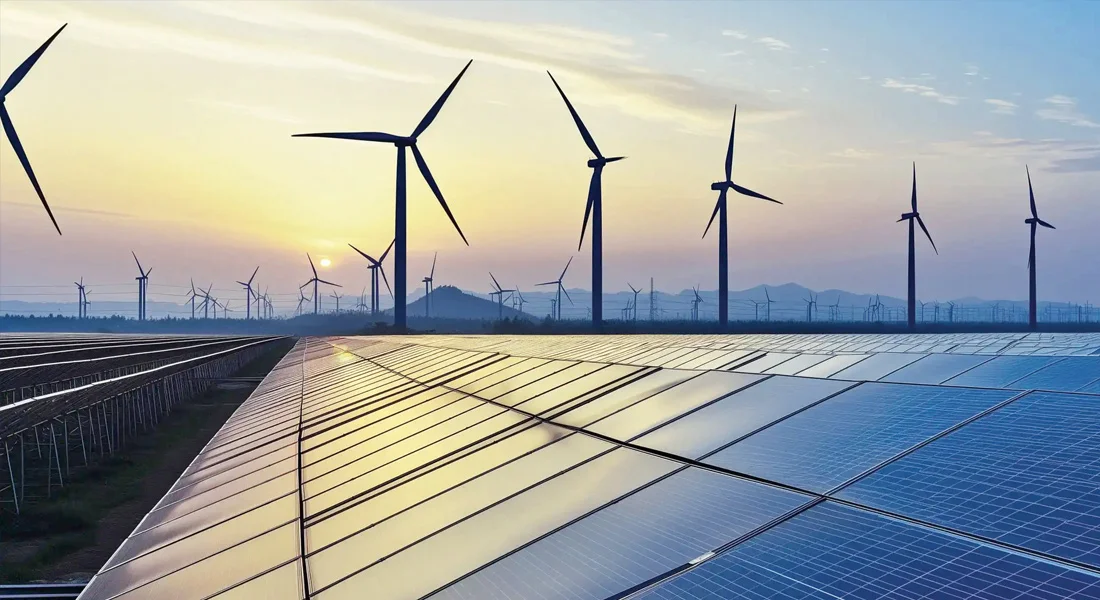
India has just closed its strongest year yet for clean energy. In 2025–26 the country added a record 44.61 GW of solar capacity — well above the 34 GW target and nearly double the previous year — carrying its total solar fleet past 150 GW and its non-fossil capacity to about 283 GW, third-largest in the world.
The build-out is broad. Across all non-fossil sources — solar, wind, hydro, bio-power and nuclear — India added a record 55.3 GW in the year, again nearly doubling the prior year’s expansion. The momentum is now extending into next-generation fuels under the National Green Hydrogen Mission, a programme backed by close to ₹19,744 crore and aimed at 5 million tonnes of green hydrogen a year by 2030.
A record-breaking year of additions is not a finish line but a foundation — the base on which storage, grids and green fuels now have to be built.
At a Glance
- Solar added (FY26): 44.61 GW (record; target 34 GW)
- Solar installed: ~150 GW; non-fossil ~283 GW (3rd globally)
- Non-fossil added: Record 55.3 GW in one year
- Green hydrogen: ₹19,744 cr mission; 5 MT/yr target by 2030
The honest next challenge is turning capacity into round-the-clock power. Variable solar needs battery storage, firm-power contracts and stronger transmission to deliver reliably after dark, and green hydrogen still costs more than the fossil fuels it aims to replace. Each is a solvable engineering and financing task rather than a barrier.
The constructive read is a lengthening clean-energy value chain — storage, grids, electrolysers and localised manufacturing — that turns a capacity milestone into an industrial base. Sustained through the decade, this is how India meets rising demand while keeping power affordable and its climate commitments on track.