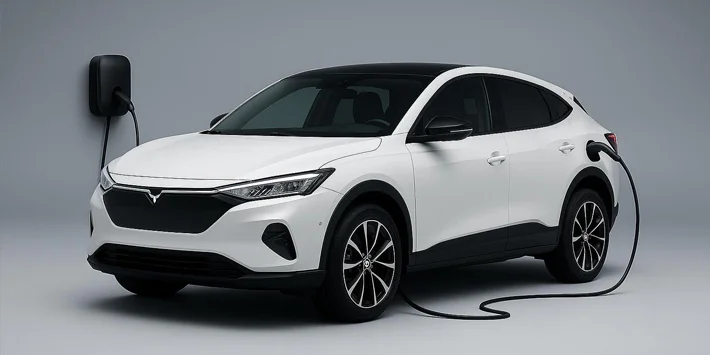
India’s move to electric has crossed a line it had never reached before. In June, the country’s monthly electric-vehicle retail sales topped three lakh units for the first time — a record 3,06,220 vehicles, according to dealer-body FADA — lifting the EV share of all vehicles sold past 12%. It is the clearest sign yet that the electric transition has moved from early adopters to the mainstream of the Indian road.
The breadth is as striking as the headline. Electric two-wheelers, the workhorse of the shift, rose about 75% from a year earlier to 1,93,735 units; electric passenger cars more than doubled to a record 31,823, with Tata Motors alone selling 12,187 and holding close to a 38% share; and electric commercial vehicles grew fastest of all, up more than 160%. Three-wheelers remain the most electrified segment on the road, with EVs now making up nearly two-thirds of sales. The overall market was strong too — total retail up 21.8% to 2.56 million units, the best June on record.
When a technology stops being a statement and starts being a default, you see it first in the two-wheeler on the daily commute. India just crossed that line.
The engine beneath the numbers is a maturing ecosystem: a widening choice of affordable models, a charging network filling in along highways and cities, and running costs that undercut petrol at a time of firm fuel prices. The gaps are equally clear — charging density outside big metros, the financing and resale value of used EVs, and a battery supply chain India is still building. None is a reason to slow; each is the next problem to solve.
The constructive read is that a milestone month is a floor, not a ceiling. The way forward is to convert momentum into permanence — denser charging in smaller cities, local cell and battery manufacturing to cut import dependence, and stable, predictable policy so buyers and makers can plan for years, not quarters. Handled well, three lakh a month becomes the base of a cleaner, quieter, largely home-built mobility industry — and a serious dent in the oil-import bill.