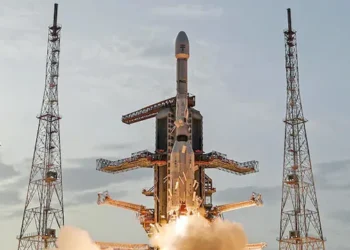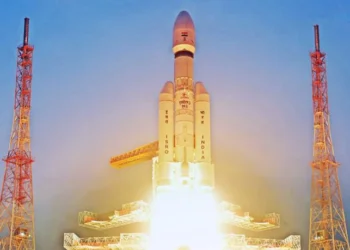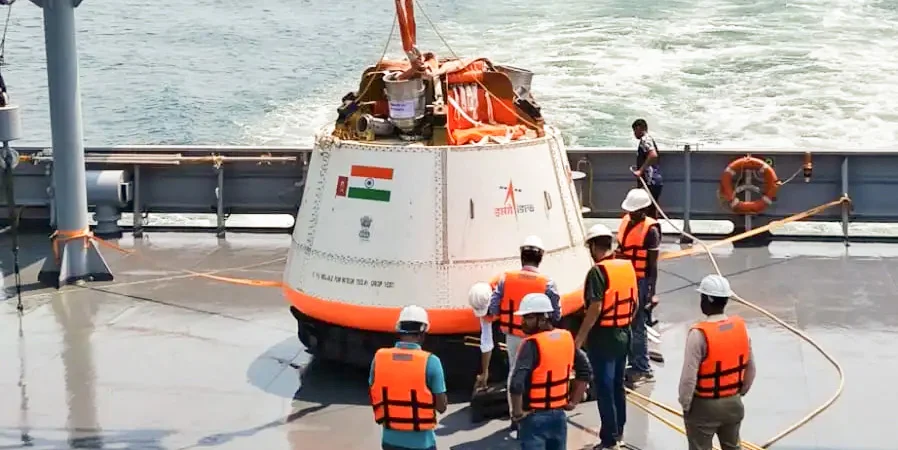
India’s first crewed space mission is being built the way astronauts come home — carefully, from the splashdown up. The Indian Space Research Organisation has cleared three key qualification tests on the Gaganyaan crew module, validating the systems that keep a crew safe at the most dangerous moments of a flight. It is an unshowy but decisive step toward making India only the fourth nation to launch its own people into orbit.
The tests target the descent. One qualified the system that turns the capsule upright after it lands in the sea; a second validated the clean separation of the crew and service modules; a third checked that the structure can bear the loads when the cover shielding the parachutes is jettisoned. None makes a dramatic headline — and that is exactly the point of human-rating a spacecraft, where the boring test passed is the real
A human spaceflight programme is judged not by the launch but by the landing. India is qualifying the way home before it sends anyone up.
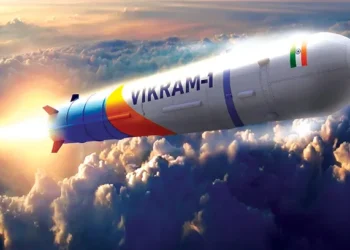
The sequence from here is deliberate. The uncrewed G1 flight will carry the half-humanoid robot Vyommitra to check life-support and safety systems before any human flies; only after such trials succeed will the first crewed mission lift off, currently planned for 2027. Around it sits a widening agenda — a bigger space budget for the year, plans for major new astronomy facilities including large solar and optical-infrared telescopes, and a private launch industry maturing behind the state agency.
The constructive read is that India is building an entire space capability, not a one-off flag-plant. Every qualification test forges skills in materials, avionics and recovery that will outlast the mission and seed a wider space economy — from launch services to satellites for farming, weather and disaster response. Refusing to rush safety is not a delay; it is the discipline on which a durable programme, and a generation of Indian engineers, is built.