Beneath the day’s headlines runs one of India’s most consequential long games: the digital public infrastructure that now underpins ordinary life. A billion-plus digital identities, instant bank-to-bank payments made with a phone, and a common set of open rails for money and documents have, over a decade, quietly rewired how Indians transact, receive support and prove who they are. It rarely makes a front page — and that ubiquity is precisely the achievement.
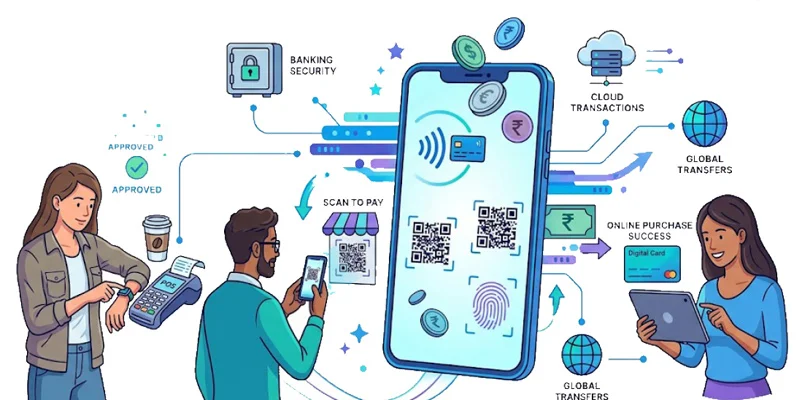
The design choice was to build public rails rather than a walled garden. Instant payments run on an open network any bank or app can plug into; identity and document layers let a citizen open an account, receive a benefit or sign a form in minutes; and welfare increasingly flows as direct transfers straight to bank accounts, trimming leakage. Together they have folded hundreds of millions of first-time users into the formal economy — the street vendor with a QR code as much as the salaried professional.
The measure of good public infrastructure is that you stop noticing it. India’s digital rails have reached the stage where a whole economy simply assumes they are there.
The honest account names what comes next. The frontier is moving from payments to credit, commerce and health — extending open rails to small-business lending and an open network for digital commerce — and each new layer raises the stakes on data protection, cyber-security and fraud prevention. Getting inclusion right is only half the task; getting trust, privacy and resilience right is the other, and the harder, half.
The constructive, long-view read is that this is compounding infrastructure: each layer makes the next more valuable, and the whole lowers the cost of reaching a citizen or a customer anywhere in the country. The way forward is to treat safeguards as seriously as scale — strong privacy rules, robust security and open competition — so the quiet backbone that already moves benefits and payments becomes the platform for the next decade of inclusive, home-grown growth, and a template India can share with the world.