Blitz Bureau
NEW DELHI:
India’s space agency has set itself a crowded and telling calendar. The Indian Space Research Organisation is targeting seven launches this financial year, with the next mission expected within about two months, Chairman V. Narayanan said this week. It is the sort of cadence — not a single showpiece flight, but a steady drumbeat of them — that turns a space programme from a source of national pride into a working piece of national infrastructure.
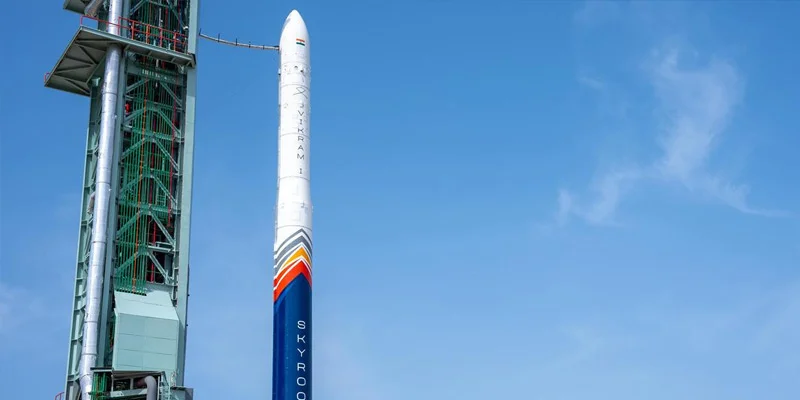
The list is a mix of the practical and the historic. High on it is GISAT-2, a geo-imaging satellite designed to send back pictures quickly when a flood, cyclone or landslide strikes — an eye in the sky trained on disaster relief. ISRO says two of its satellites are already fully built and five or six more are in the final phase of integration. Further out sit the two milestones that will define the year: the first uncrewed test flight of the Gaganyaan human-spaceflight programme, and the commissioning of a second launch complex at Kulasekarapattinam in Tamil Nadu, expected within six months. The roadmap arrives days after Skyroot’s Vikram-1 became the first privately built Indian rocket to reach orbit — the state agency and the young private sector now climbing in parallel.
A drumbeat, not a one-off: ISRO’s plan for seven launches this fiscal — from a disaster-imaging satellite to the first uncrewed Gaganyaan test — is about turning spaceflight into steady, dependable capability.
A space power is not measured by one launch but by how often it can launch again. A busy, on-time calendar is the quiet mark of a programme coming of age.
At a Glance
• Target: seven launches this financial year; next mission within ~2 months
• In the queue: GISAT-2, a geo-imaging satellite for rapid disaster imaging
• Milestone: first uncrewed test flight of the Gaganyaan human-spaceflight programme
• New pad: second launch complex at Kulasekarapattinam, Tamil Nadu, within ~6 months
Why does the schedule matter beyond the space community? Because much of it points back at everyday life on the ground. Earth-observation satellites such as GISAT-2 feed the flood and cyclone warnings that protect coastal and riverine communities; a second spaceport at Kulasekarapattinam eases the load on Sriharikota and suits the small, southward launches a growing satellite market wants; and the uncrewed Gaganyaan flight is the careful first step toward carrying Indians to orbit. Each launch is also a pull on the wider economy — propulsion, avionics, materials and skilled jobs in the firms that supply the agency.
The constructive read is that ambition here is best judged by delivery. A calendar of seven launches is a promise; the value is realised only when the flights leave the pad on time, mission after mission. The way forward is steady funding, a deeper supplier base, and the public–private partnership now taking shape, so that India’s engineers build not just satellites but a dependable launch capability the whole region can lean on. Handled with that patience, a crowded year in orbit becomes the foundation of many more.