Blitz Bureau
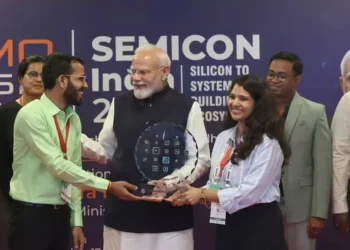
NEW DELHI: India has raised its stake in the most strategic industry of the age. The government has launched the second phase of its semiconductor programme — Semicon 2.0 — with an outlay of about ₹1.275 lakh crore ($13 billion), widening the mission from building fabrication plants to cultivating the whole ecosystem around them: chip design, display manufacturing, advanced packaging, the equipment and specialty materials that fabs consume, research, and the specialised talent the sector runs on.
The push is already becoming physical. Five semiconductor plants are expected to be operational across the country by the end of 2026, with three now in commercial production and two more due to be inaugurated in the months ahead. The flagship is Tata Electronics’ fabrication plant at Dholera in Gujarat — India’s first large-scale commercial fab — being built with equipment and technology from the Dutch major ASML. Together they mark the shift from assembling and testing chips designed elsewhere toward making them on Indian soil.
From assembly to fabrication: Semicon 2.0 commits ~₹1.275 lakh crore across design, fabs, packaging, equipment and talent — with five plants due on stream by end-2026, led by Tata Electronics’ Dholera fab.
A country that can make its own chips holds a piece of every phone, car and satellite it builds. This is India buying into that leverage.
At a Glance
• Programme: Semicon 2.0, outlay ~₹1.275 lakh crore ($13 bn)
• Scope: design, fabrication, display, packaging, equipment, materials, R&D, talent
• On the ground: five fabs expected operational by end-2026; three already in commercial production
• Flagship: Tata Electronics’ Dholera (Gujarat) fab, built with ASML technology
Why does a factory programme belong beside the day’s headlines? Because semiconductors are the grain of the modern economy — the invisible ingredient in cars, phones, appliances, defence systems and the AI build-out — and the years of pandemic-era shortages showed how costly it is to depend entirely on distant supply. Every stage India can localise, from design to packaging, is a link in a chain it no longer has to import in full, and a cluster of high-skill jobs and suppliers that tends to grow around a fab once it takes root.
The constructive read is that this is patient, correctly sequenced industrial policy: chip fabs take years to reach yield and demand deep, steady commitment rather than quick wins. The way forward is to hold that patience — secure the water, power and ultra-clean logistics a fab needs, keep widening the design and talent base through the country’s engineering schools, and deepen the equipment-and-materials ecosystem so more of each chip’s value is captured at home. Handled with that discipline, Semicon 2.0 is less a single announcement than the second rung on a long climb toward genuine technological self-reliance.