Blitz Bureau
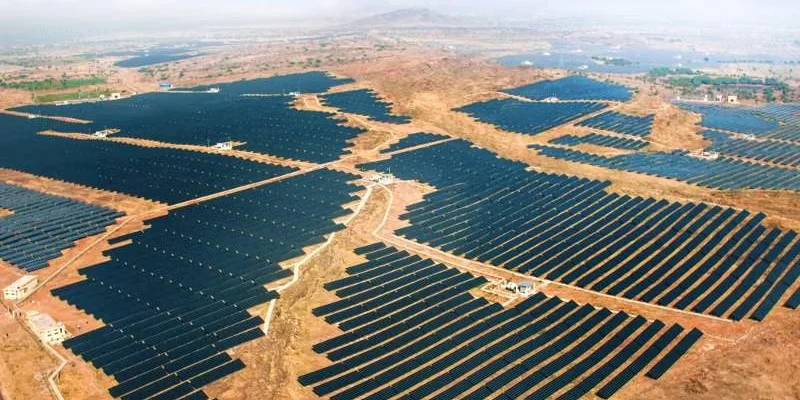
NEW DELHI: Away from the day’s headlines, India is assembling clean-power capacity at a pace that has quietly become one of the world’s fastest. Total renewable-energy capacity has climbed to roughly 288 gigawatts, and the first half of 2026 alone added a record of close to 29 GW of new solar and wind — a surge led by solar and by the rooftop boom under the household solar scheme. Cumulative solar capacity has crossed 150 GW, and India now ranks third in the world for installed solar. This is not a single milestone; it is a curve that keeps bending upward.
The economics are what make the transition self-reinforcing. Solar and wind have become the cheapest new power India can build, so every gigawatt added tends to lower, not raise, the long-run cost of electricity — while trimming an oil-and-coal import bill that weighs on the trade balance and cleaning the air in the bargain. The rooftop push spreads the benefit to households and small businesses, turning consumers into producers and easing the load on a grid straining under a hotter, more electrified economy.
A curve that keeps bending: India’s renewable capacity is near 288 GW, with a record ~29 GW of solar and wind added in H1 2026 and cumulative solar past 150 GW — third in the world.
The cleanest unit of energy is also becoming the cheapest. India’s advantage is that, for once, doing the right thing and the affordable thing point the same way.
The Long View
• Total renewables: ~288 GW installed capacity
• H1 2026: record ~29 GW of new solar and wind added
• Solar: cumulative capacity past 150 GW; India third globally
• Next frontier: storage, grid strength and domestic manufacturing of cells and modules
The honest account names what must still be built for the curve to hold. Sun and wind are variable, so the harder half of the transition is the plumbing around them — battery and pumped-hydro storage, stronger transmission to move power from the sunny, windy states to the demand centres, and a grid smart enough to balance it all. Alongside sits the industrial task of making more of the cells, modules and batteries in India rather than importing them, so the clean-energy build-out anchors factories and jobs at home instead of abroad.
The constructive, long-view read is that this is among the highest-return investments India is making: a shared foundation that lowers energy costs, cuts import dependence and improves public health all at once, and compounds a little more with every gigawatt. The way forward is to keep the momentum while deliberately building the storage, grids and domestic supply chains that turn record installations into round-the-clock reliable power. Handled with that care, the quiet build-out of 2026 becomes the backbone of a cleaner, cheaper and more self-reliant energy system for decades.