Blitz Bureau
NEW DELHI: India sold more abroad in June than it ever has in the month, and still ended it with the widest goods gap since January. Both facts come from the same release. Merchandise exports rose 15.5% year on year to $40.41 billion in June 2026, while merchandise imports climbed roughly 31% to $70.84 billion — leaving a goods trade deficit of $30.43 billion, about 59% wider than a year earlier and the highest in five months, according to Ministry of Commerce and Industry figures.
Three import lines account for most of the widening. Petroleum and crude oil imports rose 23% to $19.32 billion; electronic goods imports rose 43.76% to $13.36 billion; and gold imports rose 47.1% to $1.96 billion. Two of those three are worth separating from the third. Crude and gold are largely price and demand phenomena that India absorbs rather than chooses. Electronics is different: a substantial share of that bill is components and intermediates flowing into factories that will export the finished product later, which is why an electronics import surge in a manufacturing-expansion phase tends to precede an export surge rather than substitute for one.
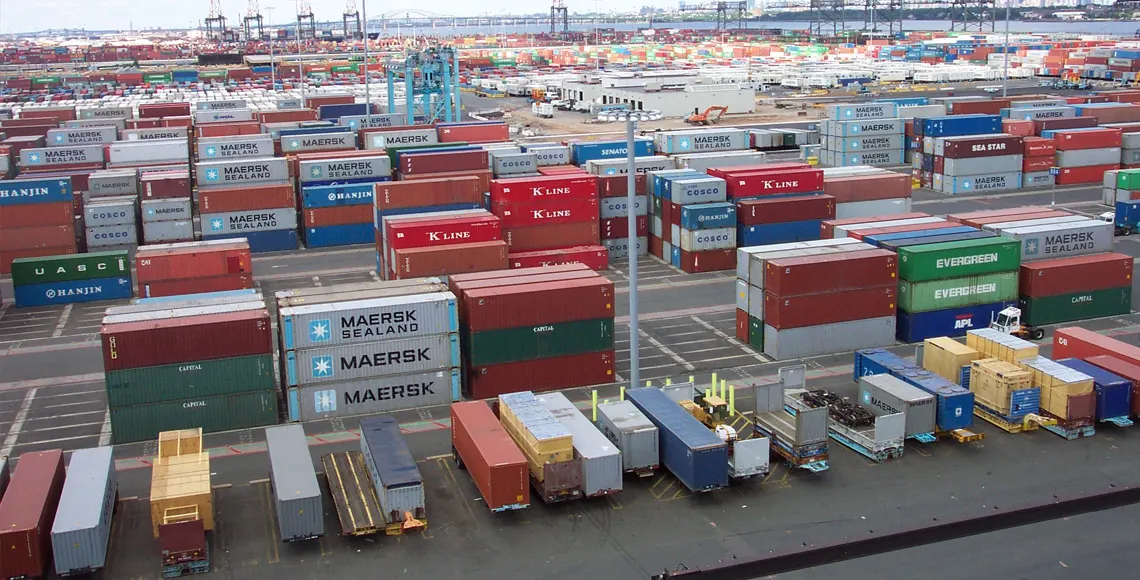
Both directions at once: record June exports of $40.41 billion, against imports of $70.84 billion driven by crude, electronics and gold.
A deficit driven by components arriving for factories reads very differently from one driven by finished goods arriving for shops. India’s is mostly the first kind.
At a Glance
• June merchandise exports: $40.41 billion, up 15.5% year on year
• June merchandise imports: $70.84 billion, up about 31%
• Goods trade deficit: $30.43 billion — a five-month high, about 59% wider year on year
• Crude and petroleum imports: $19.32 billion, up 23%
• Electronic goods imports: $13.36 billion, up 43.76%
• Gold imports: $1.96 billion, up 47.1%
• Services: exports $33.03 billion (up nearly 3%), imports $17.92 billion (up nearly 13%), surplus $15.11 billion
• Q1 FY27 merchandise exports: $129.32 billion, up 15.92%
• Q1 FY27 overall exports: a record $232.73 billion including services, up 11.37%
The services account is what keeps the overall picture in proportion, and it is routinely under-read. Services exports were an estimated $33.03 billion in June against imports of $17.92 billion, producing a surplus of $15.11 billion that offsets roughly half the goods deficit in a single month. Taken together, India’s overall exports for the April–June quarter reached a record $232.73 billion, up 11.37%. That combination — a large and growing services surplus financing a goods deficit driven substantially by energy and industrial inputs — is a recognisable and reasonably healthy structure for a fast-industrialising economy, provided the goods side is genuinely converting imports into exports over time.
The constructive work sits in three places, all of them well identified. On energy, every gigawatt of domestic renewable generation and every percentage point of electric vehicle penetration reduces the crude bill permanently rather than cyclically — which makes the energy transition a trade policy as much as a climate policy. On electronics, the test is domestic value addition: the component and semiconductor investments now under construction are precisely the mechanism by which an import line becomes a domestic supply line, and the first meaningful evidence arrives as those plants come on stream. On services, the surplus is real but narrowly based, and widening it into design, healthcare, education, legal and financial services is largely a question of mutual recognition of qualifications and market access in trade agreements — which is why each new agreement’s services chapter is worth as much attention as its tariff schedule. India’s export machine is running at record volume. Making the import side structurally smaller is the more patient half of the same project.