Blitz Bureau
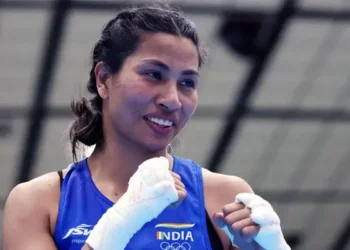
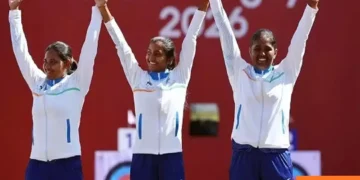
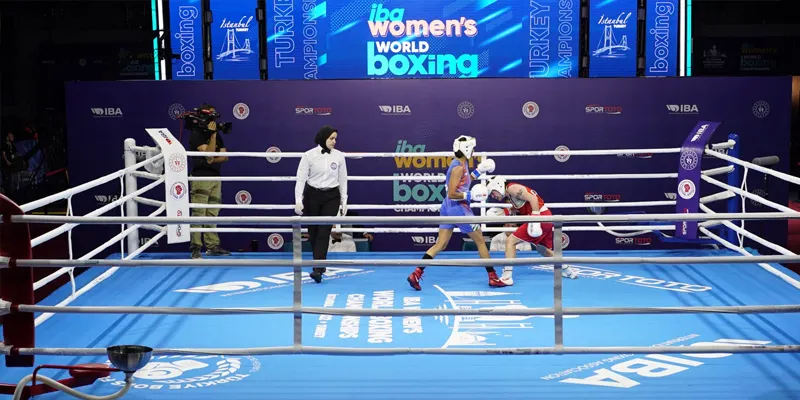
NEW DELHI: Ten Indian boxers walked into the SEC Centre in Glasgow on Saturday with a silver already guaranteed and only the colour left to decide. The first two came back with gold. Preeti Pawar won the women’s 54kg final against Canada’s Scarlett Delgado by a unanimous 5–0 decision, taking India’s first boxing gold of these Games and the country’s sixth gold overall. Jaismine Lamboria followed in the women’s 57kg, also on a unanimous decision, for India’s seventh.
Preeti’s win was as one-sided as a boxing scorecard can be: all five judges awarded her every round. Jaismine, the reigning world champion at her weight, boxed with the control the ranking implies. Their victories opened a day on which India had a record ten finalists across nine weight categories — six women and four men, among them Lovlina Borgohain in the women’s 75kg, Sakshi Chaudhary, Priya Ghanghas and Arundhati Choudhary, and Jadumani Singh Mandengbam, Sachin Siwach, Ankush Panghal and Narender Berwal in the men’s draw. India’s overall tally passed 25 medals with the Games closing on Sunday.
Unanimous both times: Preeti Pawar and Jaismine Lamboria each won 5–0, opening a finals day in which India had ten boxers contesting gold.
A silver guaranteed before the bell is a nice statistic. Converting it is a different skill, and the first two women through showed what it looks like.
At a Glance
• Preeti Pawar: gold, women’s 54kg — beat Scarlett Delgado (Canada) 5–0
• Jaismine Lamboria: gold, women’s 57kg — unanimous decision
• Firsts: India’s first boxing gold of these Games; the country’s sixth and seventh golds overall
• Finalists: ten Indian boxers across nine weight categories — six women, four men
• Also in finals: Lovlina Borgohain (75kg), Sakshi Chaudhary (51kg), Priya Ghanghas (60kg), Arundhati Choudhary (70kg), Jadumani Singh Mandengbam (55kg), Sachin Siwach (60kg), Ankush Panghal (80kg), Narender Berwal (+90kg)
• India’s tally: past 25 medals, with the Games closing on Sunday
The depth on display is the more durable achievement. Reaching a Commonwealth final requires surviving a draw, a quarter-final and a semi-final in the space of a week, and India managed it ten times over in a single squad. That is not the profile of a country with one or two exceptional boxers; it is the profile of a country with a competition ladder, a coaching pipeline and enough international exposure that the tenth-best boxer in the team is still good enough for a gold-medal bout. Six of the ten are women, which continues the pattern of the last decade: India’s women’s boxing programme has been its most productive Olympic-sport pipeline, and its output is now broad rather than concentrated in a handful of celebrated careers.
The useful work begins after the closing ceremony. A performance like this is evidence about a method, and evidence is only valuable if it is written down. What the boxing federation has been doing — how junior competitions feed senior selection, how sparring abroad is scheduled, how coaches and support staff are retained between cycles — deserves to be documented properly and tested in two or three other disciplines before the next Games. The timing is unusually good: the revamped Khelo India framework cleared this week is precisely the instrument through which such a method could be funded and scaled. India has just produced the proof that the architecture works. The opportunity is to treat it as a template rather than a good week.