• About us
  • Team
  • Privacy Policy
  • Contact
Saturday, August 1, 2026
  • Login
No Result
View All Result
World's first weekly chronicle of development news
  • Blitz Highlights
    • Special
    • Spotlight
    • Insight
    • Entertainment
    • Sports
  • Opinion
  • Legal
  • Perspective
  • Nation
    • East
    • West
    • North
    • South
  • Business & Economy
  • World
  • Hindi Edition
  • International Editions
    • Dubai
    • Tanzania
    • United Kingdom
    • USA
  • Blitz India Business
  • Blitz Highlights
    • Special
    • Spotlight
    • Insight
    • Entertainment
    • Sports
  • Opinion
  • Legal
  • Perspective
  • Nation
    • East
    • West
    • North
    • South
  • Business & Economy
  • World
  • Hindi Edition
  • International Editions
    • Dubai
    • Tanzania
    • United Kingdom
    • USA
  • Blitz India Business
No Result
View All Result
World's first weekly chronicle of development news
No Result
View All Result

India Has Drilled Very Little of Its Own Sea. A ₹84,084 Crore Scheme Is an Attempt to Change That

by Blitz India Media
August 1, 2026
in News
0
oil

Blitz Bureau

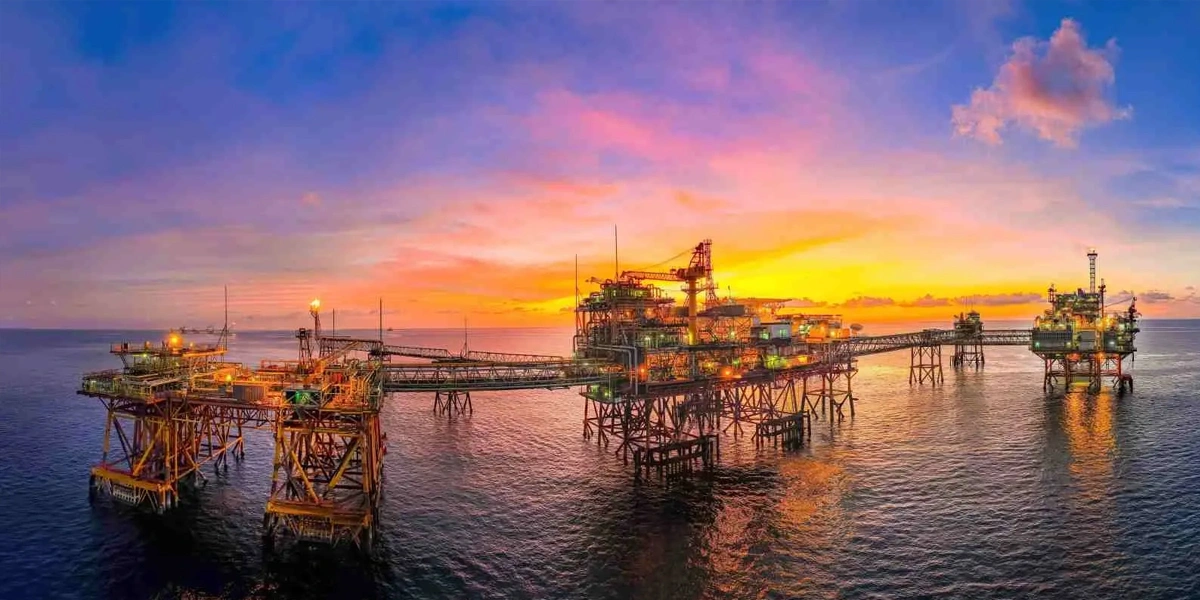
NEW DELHI: The single largest line item in India’s import bill is oil, and the single least explored part of India is the water around it. A scheme cleared this week tries to connect those two facts. The Union Cabinet has approved ‘Samudra Manthan’, the National Offshore Exploration Scheme, a central sector scheme of the Ministry of Petroleum and Natural Gas with an outlay of ₹84,084 crore, running to financial year 2030–31.

The scheme is built around three activities rather than one. The first is seismic data acquisition — the surveying that tells a company where it is worth drilling before it spends anything on a well. The second is deepwater drilling itself, the most expensive and technically demanding part of the exercise. The third, and the one most often missing from Indian resource programmes, is common infrastructure: the shared platforms, pipelines, supply bases and support facilities that make it economic for a second and third operator to follow the first into a basin. The government’s stated expectation is reserve accretion of more than 600 million metric tonnes of oil equivalent, alongside higher domestic production and large-scale employment. The scheme gives formal shape to the “modern-day Samudra Manthan” the Prime Minister described from the Red Fort on Independence Day 2025.

Where the money goes: seismic survey, deepwater drilling and shared offshore infrastructure — the third being the item that decides whether a second operator follows the first.

A country does not import oil because it has none. It imports oil because it has not yet looked hard enough, or cheaply enough, at what it has.

At a Glance

• Scheme: ‘Samudra Manthan’ — National Offshore Exploration Scheme
• Outlay: ₹84,084 crore, running to FY 2030–31
• Type: central sector scheme, Ministry of Petroleum and Natural Gas
• Three components: seismic data acquisition, deepwater drilling, common offshore infrastructure
• Target: reserve accretion of over 600 million metric tonnes of oil equivalent
• Stated aims: higher domestic oil and gas output, reduced import dependence, large-scale employment
• Origin: gives effect to the “modern-day Samudra Manthan” announced from the Red Fort in 2025
Exploration economics explain why a scheme of this size is needed at all. A deepwater well can cost tens of millions of dollars and has a high probability of finding nothing; that risk is the reason private capital tends to concentrate in basins where somebody else has already proved a discovery. India’s producing offshore fields are mature and well understood, but large stretches of its sedimentary basins — particularly in deep and ultra-deep water — have been surveyed thinly or not at all. Public money spent on seismic data changes the arithmetic for everyone who comes afterwards, because the most valuable thing a government can give an explorer is not a subsidy but information. That is the quiet logic of the first component, and it is the one most likely to pay for itself.

Two honest caveats belong alongside the ambition, and neither is a reason to hesitate. The first is time: offshore exploration works on a decade-long clock, and a scheme approved in 2026 with reserve targets attached will be judged on production that arrives well into the 2030s. Managing expectations about that lag is itself part of good policy. The second is that hydrocarbons and the energy transition have to be planned together rather than in separate rooms — India is simultaneously building towards 500 GW of non-fossil capacity by 2030, and had 297.36 GW of non-fossil electricity capacity in place at the end of June. The constructive way to read the two together is that domestic gas in particular is the bridge fuel that makes a renewables-heavy grid workable, because it can be dispatched at short notice when the sun sets and the wind drops. If Samudra Manthan is designed with the gas half of its mandate taken as seriously as the oil half, it will do more for India’s transition than for its import bill — and both would count as a success.


Related Posts

PM Surya Sarovar Yojana
News

Solar Panels That Float, Batteries That Wait: A ₹5,070 Crore Scheme Aimed at India’s Real Bottleneck

August 1, 2026
IMD Forecasts Below-Normal July Rainfall Across India
News

Five More Years and ₹3.15 Lakh Crore: India’s Largest Direct Cash Transfer Gets Its Second Decade

August 1, 2026
athletics stadium
News

Nearly Eight Times the Money: What the ₹36,441 Crore Rebuild of Khelo India Actually Changes

August 1, 2026
boxing
News

Two Golds Before Lunch: India’s Boxers Begin Converting the Biggest Finals Day They Have Ever Had

August 1, 2026
Indian Cinema July 2026
News

A Quiet July at the Multiplex, and What the Indian Film Business Has Learned From Its Loud Ones

August 1, 2026
India's 166 major reservoirs held 70.432 BCM of water, or 38.37% of live capacity, highlighting the need for stronger water storage and management.
News

India Has a Third of the Water It Had at Independence. That, Not Rainfall, Is the Number to Watch

August 1, 2026
Load More

Recent News

oil
News

India Has Drilled Very Little of Its Own Sea. A ₹84,084 Crore Scheme Is an Attempt to Change That

by Blitz India Media
August 1, 2026
0

Blitz Bureau NEW DELHI: The single largest line item in India's import bill is oil, and the single least explored...

Read moreDetails
PM Surya Sarovar Yojana

Solar Panels That Float, Batteries That Wait: A ₹5,070 Crore Scheme Aimed at India’s Real Bottleneck

August 1, 2026
IMD Forecasts Below-Normal July Rainfall Across India

Five More Years and ₹3.15 Lakh Crore: India’s Largest Direct Cash Transfer Gets Its Second Decade

August 1, 2026
athletics stadium

Nearly Eight Times the Money: What the ₹36,441 Crore Rebuild of Khelo India Actually Changes

August 1, 2026
boxing

Two Golds Before Lunch: India’s Boxers Begin Converting the Biggest Finals Day They Have Ever Had

August 1, 2026

Blitz Highlights

  • Special
  • Spotlight
  • Insight
  • Entertainment
  • Health

International Editions

  • US (New York)
  • UK (London)
  • Middle East (Dubai)
  • Tanzania (Africa)

Nation

  • East
  • West
  • South
  • North
  • Hindi Edition

E-paper

  • India
  • Hindi E-paper
  • Dubai E-Paper
  • USA E-Paper
  • UK-Epaper
  • Tanzania E-paper

Useful Links

  • About us
  • Team
  • Privacy Policy
  • Contact

©2024 Blitz India Media -Building A New Nation

Welcome Back!

Login to your account below

Forgotten Password?

Retrieve your password

Please enter your username or email address to reset your password.

Log In

    No Result
    View All Result
    • Blitz Highlights
      • Special
      • Spotlight
      • Insight
      • Entertainment
      • Sports
    • Opinion
    • Legal
    • Perspective
    • Nation
      • East
      • West
      • North
      • South
    • Business & Economy
    • World
    • Hindi Edition
    • International Editions
      • Dubai
      • Tanzania
      • United Kingdom
      • USA
    • Blitz India Business

    ©2024 Blitz India Media -Building A New Nation