Blitz Bureau
NEW DELHI: A medal table is a photograph of the past. A hosting handover is a contract with the future. India collected both in the same building on the same day. India’s Commonwealth Games campaign in Glasgow closes with 39 medals — 13 gold, 17 silver and nine bronze — with judo and track cycling supplying the last events of the programme before the closing ceremony, at which the Commonwealth Games flag passes to Ahmedabad for 2030.
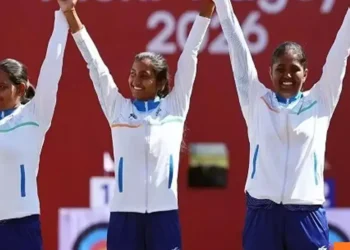
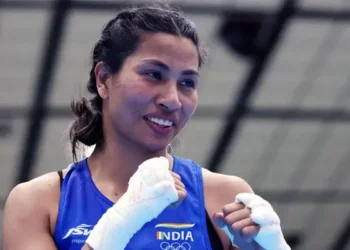
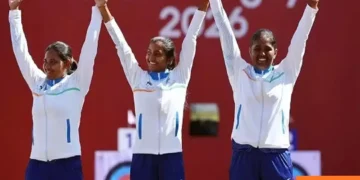
The composition of those 39 is more instructive than the total. Boxing produced the single best ring campaign India has had at these Games, returning 10 medals of which seven were gold — a conversion rate that is unusual anywhere and almost unheard of for India, which has historically reached finals more often than it has won them. Athletics returned 10 medals, five silver and five bronze, without a gold; the para-athletics contingent added six including three golds. Mirabai Chanu opened India’s account in Glasgow with a weightlifting gold that completed a hat-trick of Commonwealth titles, and Asmita Dey took India’s first Commonwealth Games gold in judo — a discipline in which the country had never previously topped a podium at this competition. Those two facts sit at opposite ends of a sporting system: one is the reward of a long career sustained, the other is the first return on a sport being built.
Four years, not four weeks: the flag handed over at Glasgow’s closing ceremony starts a build cycle in Ahmedabad that will be judged on what remains standing in 2031.
Winning a Games is a fortnight’s work. Hosting one is a decade’s, and the part that outlives the fortnight is the part nobody televises.
At a Glance
• India’s tally: 39 medals — 13 gold, 17 silver, nine bronze
• Boxing: best-ever Games return — 10 medals, seven of them gold
• Athletics: 10 medals — five silver, five bronze
• Para-athletics: six medals, including three golds
• Firsts: Asmita Dey takes India’s first Commonwealth Games gold in judo
• Mirabai Chanu: India’s first gold of Glasgow, completing a hat-trick of Commonwealth titles
• Next: the Games flag passes to Ahmedabad, host city for 2030, at the closing ceremony
• Handover set piece: a 20-minute Indian cultural showcase led by Shankar Mahadevan and Manushi Chhillar
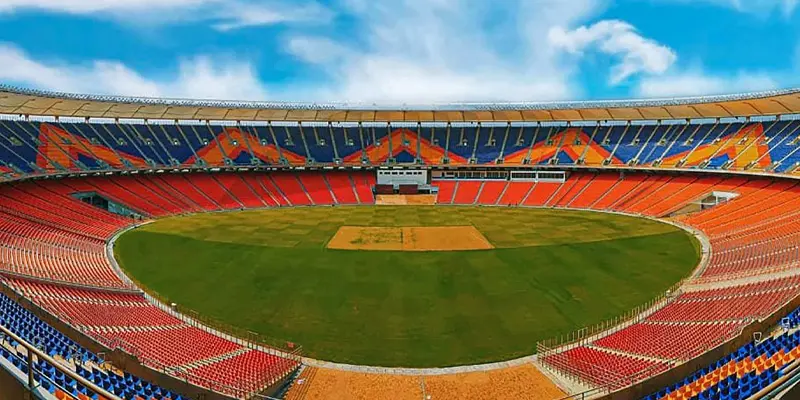
Hosting is where the arithmetic changes. A visiting team needs athletes; a host city needs venues, transport, accommodation, officials, volunteers, broadcast infrastructure and a plan for what all of it becomes afterwards. The international record on that last item is uneven, and the countries that came out well — rather than with a decade of maintenance bills — are almost always the ones that decided the after-use before laying the first foundation. Ahmedabad starts with real advantages: an existing large-stadium core in the Sardar Patel Sports Enclave, a metro network already running, and four full years, which is more preparation time than several recent hosts enjoyed. The advantage is only banked if the planning documents name the tenant for every new building before it is built.
There is a second dividend available, and it is the one India should be most deliberate about. Hosting concentrates money and attention on sports that normally struggle for both, and Glasgow has just identified exactly where that attention would pay. Judo has a podium finish and no pipeline behind it; boxing has a pipeline and has now proved it converts; athletics reached ten podiums and stopped one step short on every one of them, which is a coaching and competition-exposure problem rather than a talent problem. Those three diagnoses are worth more than the medal count, because each is fixable with money that has already been committed under the five-year sports framework cleared this week. Ahmedabad 2030 will be judged on the ceremonies. It should be planned around the fifteen-year-olds who will be twenty-one when it opens.