Blitz Bureau
NEW DELHI: India has 288.58 gigawatts of installed renewable capacity, nearly four times the 76.38 GW it had in 2014. Solar alone accounts for 162.15 GW. Add nuclear and the country’s non-fossil electricity capacity stands at 297.36 GW, against a target of 500 GW by 2030. The first half of this calendar year added close to 29 GW of new solar and wind — a record six months, and roughly the rate the 2030 target actually requires. By any reasonable measure, the part of the energy transition that involves building things in sunlight is working.
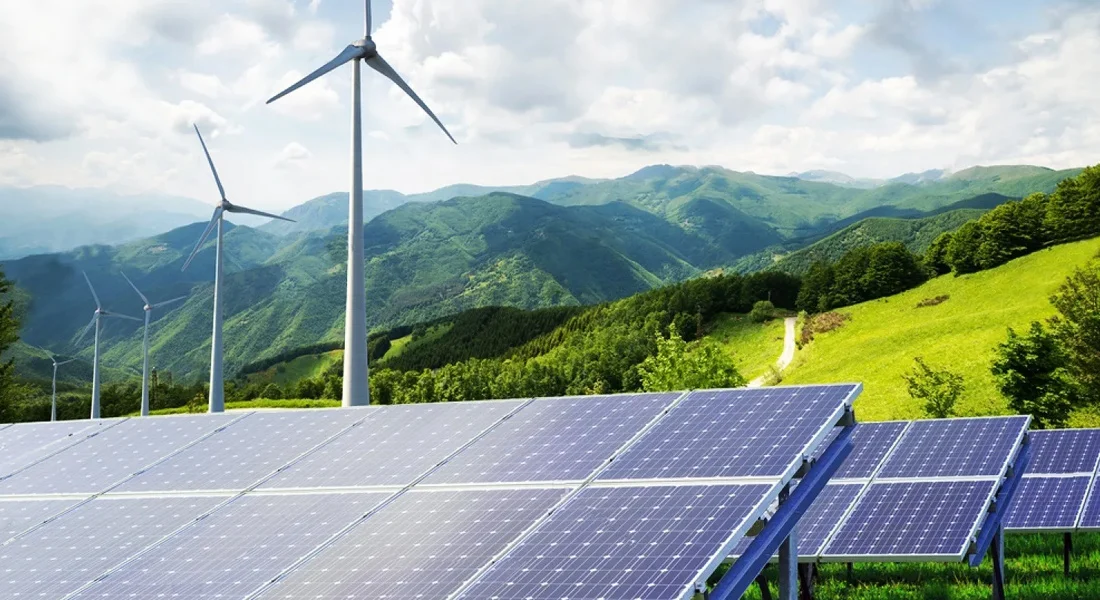
Which is precisely why the most important clean-energy decision of the past week was not about panels at all. On Friday the Cabinet approved the Pradhan Mantri Surya Sarovar Yojana, a ₹5,070 crore scheme for 5,000 MW of floating solar photovoltaic projects. Read the fine print and the interesting clause is the second one: every project must come with a co-located energy storage system of at least two hours — 10,000 megawatt-hours in total. The scheme does not fund solar. It funds solar that can still be delivered after the sun has gone.
The easy half, at scale: Utility-scale solar parks such as Pavagada in Karnataka took India from 76 GW of renewable capacity in 2014 to 288.58 GW this June. The harder half is not generating the electricity — it is having it available at seven in the evening.
A solar panel produces its last unit of the day at about the moment an Indian household switches on its first light. Everything that closes that gap — a battery, a reservoir, a transmission line — is now worth more to the grid than another panel.
Why It Matters
• 288.58 GW renewable capacity at June 30; solar 162.15 GW, wind 57.44 GW, large hydro 57.24 GW, bio-power 11.75 GW
• Non-fossil capacity 297.36 GW including 8.78 GW nuclear, against 500 GW by 2030
• PM Surya Sarovar Yojana: ₹5,070 crore, 5,000 MW floating solar plus 10,000 MWh of storage; ₹1 crore per MW paid only after commissioning
• Grid-scale battery storage stood at about 5.9 GWh in March 2026; projected need is 47.24 GW / 236 GWh by 2031–32
• Floating projects use reservoir and pond surfaces, avoiding competition for farmland
The physics behind that clause is straightforward and unforgiving. Solar generation peaks around midday and falls to zero by dusk. Indian electricity demand does the opposite: it climbs through the evening, peaking after dark when fans, lights, cookers and air-conditioners come on together. Grid engineers call the resulting shape the duck curve, and India is now far enough along its solar build-out to be living inside it. The country does not have a shortage of clean electrons. It has a shortage of clean electrons at 7.30 in the evening — and that gap is currently filled by coal.
Storage is the answer, and the numbers show a market that has just started moving very fast from a very small base. India added 4.6 gigawatt-hours of battery storage in the first quarter of 2026 alone, against 442.7 megawatt-hours in the preceding quarter, taking cumulative installed battery capacity to about 5.9 GWh by March. That is a step change; it is also roughly an eighth of what the system is projected to need by 2026–27, and about 2.5% of the 236 GWh estimated for 2031–32. Viability gap funding has become the instrument of choice — the model behind Satluj Jal Vidyut Nigam’s 265 MW / 530 MWh tender in Haryana in late July, and now behind the floating-solar scheme’s ₹1 crore per megawatt, payable only once a project is actually commissioned.
The second bottleneck is less discussed and harder to fix, because it is made of steel and right-of-way rather than chemistry. Renewable generation is built where the sun and wind are — Rajasthan, Gujarat, Karnataka, Tamil Nadu — and consumed where the factories and cities are. Analysis by the energy think-tank Ember found roughly 300 gigawatt-hours of clean generation in the first quarter of this year was constrained by transmission limits, concentrated at northern and western regional pooling stations. A solar farm can be built in a year; a transmission corridor takes considerably longer to permit and construct. When the two timelines diverge, the generation is real and the delivery is not.
None of this diminishes what has been achieved — it is the natural next problem of a programme that succeeded at its first one, and the policy response has been notably quick to recognise it. Floating solar answers three constraints at once: it uses reservoir surface rather than farmland, it reduces evaporation from the water beneath, and under this scheme it arrives with its own battery. The government estimates the programme will avoid about 10 million tonnes of carbon dioxide a year and create 16,000 to 17,000 jobs. The path from here is legible and well within reach: keep the storage mandate attached to every new tender rather than treating batteries as an optional extra; sequence transmission approvals ahead of generation approvals in the high-resource states so the wires arrive before the electrons; and use the long tail of these five-year schemes to build a domestic battery-manufacturing base rather than importing the solution. India built the world’s third-largest solar fleet in a decade. Making it useful after sunset is a smaller engineering problem than the one it has already solved.
India & The World
United Kingdom: The India–UK Comprehensive Economic and Trade Agreement completed its first full fortnight in force, having taken effect on July 15. The pact gives close to 99% of India’s exports duty-free access to Britain; more than $140 million of goods moved duty-free on day one alone, across some fifty consignments from over twenty ports, airports, inland container depots and special economic zones. Textiles, where Indian exporters have long competed against duty-free rivals, are the sector expected to gain most.
United States: Talks toward a bilateral trade agreement continued through the week, with textiles among the sectors India is pressing hardest on. The American tariff position itself remains in legal flux following the Supreme Court’s February ruling on emergency tariff powers, and a further round of duties announced in late July has added to the uncertainty exporters are pricing. New Delhi’s stated posture has not changed: keep negotiating, and keep diversifying.
Multilateral: The International Monetary Fund’s July update trimmed India’s growth forecast for 2026–27 to 6.4% from 6.5%, attributing the revision largely to higher energy prices, while raising its 2027–28 projection to 6.7%. India remains, on the Fund’s own numbers, among the fastest-growing major economies — and the variable driving the downgrade is precisely the one this week’s energy decisions are aimed at.
Energy & the seabed: The ‘Samudra Manthan’ scheme approved this week is as much a foreign-policy instrument as an industrial one. India imports the large majority of the crude it burns; a ₹84,084 crore programme of seismic surveying, deepwater drilling and shared offshore infrastructure, targeting more than 600 million tonnes of oil-equivalent in reserve accretion, is an attempt to convert an import dependence into a domestic geology problem. Its most valuable component may be the cheapest: survey data, once paid for, is usable by every bidder that follows.
The Week Ahead
• RBI monetary policy (Aug 3–5) — the Monetary Policy Committee meets Monday to Wednesday, with Governor Sanjay Malhotra announcing the decision on Wednesday, August 5. The repo rate has stood at 5.25% since June; most forecasters expect a hold, with the inflation path and energy prices the debate.
• Commonwealth Games close (Aug 2) — Glasgow’s closing ceremony ends a Games in which India took 39 medals, and turns attention to how the newly funded ₹36,441 crore Khelo India rebuild feeds the next cycle.
• Final PMI readings — the definitive Manufacturing and Services purchasing managers’ indices for July land early in the week, testing whether the flash composite’s dip to 54.3 was a services blip or something broader.
• Q1 FY27 earnings — the reporting season continues across banks, autos, energy and consumer names, with the read-across from July’s 28.6% jump in vehicle retail sales a particular focus.
• Monsoon and sowing — weekly rainfall and kharif acreage data will show whether August is tracking the IMD’s 97%-of-normal forecast, and whether the recovery from June’s deficit is holding in the east.
• Scheme rollouts — watch for implementation guidelines on the floating-solar and offshore-exploration schemes cleared this week — the tender design, not the outlay, is what will decide their pace.