Blitz Bureau
NEW DELHI: Cash transfers to farmers are argued about in India as if the only question is the size of the cheque. That argument misses what the instrument is actually for, and why extending it for another five years is a structural decision rather than a fiscal one. The Cabinet has approved the continuation of PM-KISAN from 2026–27 to 2030–31 with an outlay of ₹3.15 lakh crore, covering more than 9.49 crore farmer families at ₹6,000 a year in three instalments.
Begin with the arithmetic, because it is rarely done. ₹3.15 lakh crore across five years is about ₹63,000 crore a year — close to the scheme’s existing annual run rate, which means the decision funds continuity rather than an expansion. Since inception the scheme has transferred over ₹4.47 lakh crore across 23 instalments, of which more than ₹1.06 lakh crore has gone to women farmers, who make up close to one beneficiary in four. Per family, ₹6,000 a year is ₹500 a month. Nobody, including the government, has ever suggested that this is a living income. It is not designed to be one.
Timed for the sowing week: the instalment’s value to a small farmer lies less in its size than in its arrival before the season’s first input purchase, when the alternative source of cash is an informal lender.
Five hundred rupees a month is not an income. Arriving in the right week, in the farmer’s own account, it is something more useful: a substitute for the first loan of the season.
At a Glance
• Extension: 2026–27 to 2030–31, approved July 31, 2026
• Outlay: ₹3.15 lakh crore — roughly ₹63,000 crore a year
• Coverage: more than 9.49 crore farmer families
• Benefit: ₹6,000 a year in three instalments of ₹2,000, by direct benefit transfer
• Transferred since inception: over ₹4.47 lakh crore across 23 instalments
• To women farmers: more than ₹1.06 lakh crore; close to one beneficiary in four
• Structural context: the majority of Indian holdings are small or marginal, with seasonal rather than monthly cash flow
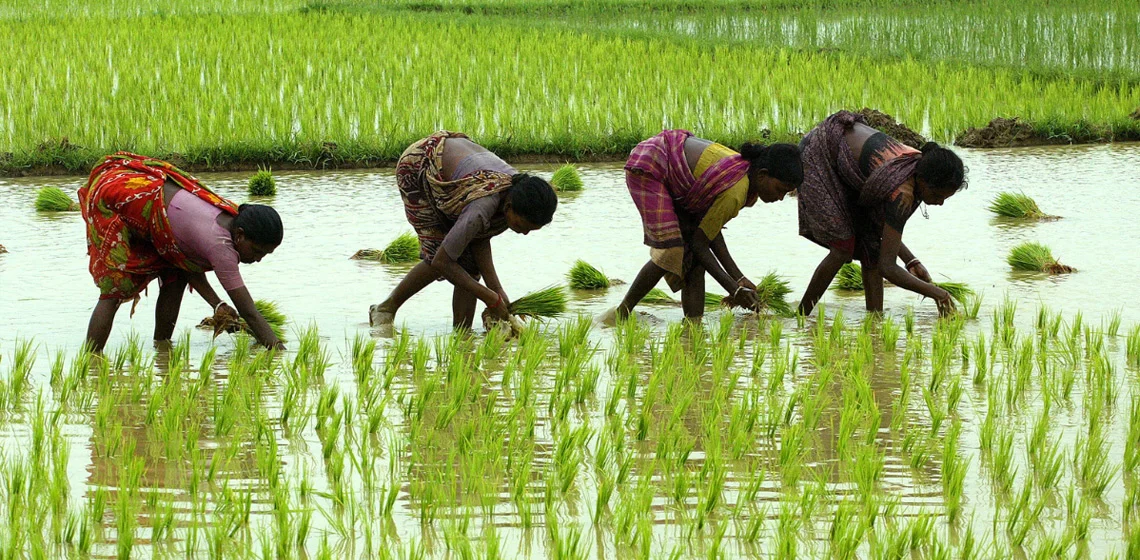
What the transfer actually does is address timing, not magnitude. Indian farm income is seasonal — it arrives twice a year at harvest — while farm expenditure is front-loaded into the weeks before sowing, when seed, fertiliser and diesel must be bought. That mismatch is the single most reliable driver of informal borrowing in rural India, at interest rates that can consume a meaningful share of the eventual crop. A ₹2,000 instalment credited directly into a bank account before the season is small against the total input bill and large against the specific gap it fills. It also does something a subsidy on fertiliser cannot: it reaches the farmer as cash, which means it works equally for a household that needs urea and one that needs a repair to a pump. And because it is a direct benefit transfer against a digitised land record and an Aadhaar-linked account, it has built, almost as a by-product, the most comprehensive verified register of Indian landholding farmers that has ever existed.
That register is where the constructive opportunity now lies, and it is worth stating carefully rather than as criticism. Income support of this design necessarily follows land title, which means tenant farmers and landless agricultural labourers — a very large share of the people who actually work Indian fields — sit outside it by construction. Several states have begun building tenancy registries that could, over time, extend coverage without disturbing the scheme’s simplicity; a five-year funded horizon is exactly the window in which that groundwork can be done. The second opportunity is to use the register for more than transfers: a verified, near-universal database of landholding farmers is the natural spine for crop insurance enrolment, soil-health advisories, weather alerts and credit scoring, each of which addresses a different part of the same income problem. The cheque will remain modest. The infrastructure built to deliver it need not be, and the most valuable thing PM-KISAN has produced in seven years may turn out to be the list rather than the money.