Blitz Bureau
NEW DELHI: The medal table has been reported everywhere. The Cabinet approval that landed two days before the closing ceremony has barely been read. Put them side by side and a fairly precise statement becomes possible about what India has just decided to buy. On July 31 the Union Cabinet approved a revamped Khelo India Scheme together with enhanced Assistance to National Sports Federations, at a combined outlay of ₹36,441 crore for 2026–27 to 2030–31. On August 2 the Glasgow Commonwealth Games closed with India fourth on the table — 39 medals, of which 13 gold, 17 silver and nine bronze.
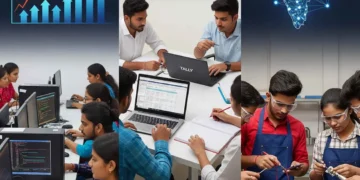
Take the approval document first, because the headline figure alone is not the interesting part. An outlay of ₹36,441 crore is close to eight times the previous Khelo India allocation, which by itself only tells you the government has decided to spend more. What it decided to spend it on is where the design shows. Two components matter above the rest. The first is a set of Khelo India Feeder Schools and Utkrishta Vidyalayas — that is, sport delivered inside the school system rather than alongside it, at the age when an athlete is either found or lost. The second is an Emerging Khelo India Athletes category that expands the supported athlete pool close to ten-fold. Everything else in the package — coaching, sports science, equipment, foreign experts, international exposure, training camps — is money spent on athletes already identified. These two are money spent on finding more of them. That is a bet on the width of the base, not the height of the peak, and it is the correct bet for a country whose problem has never been talent but detection.
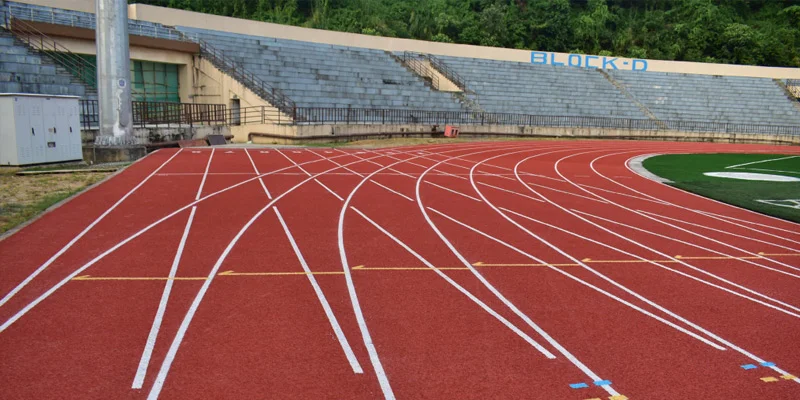
Where medals are actually decided: the new scheme puts its two structural components — feeder schools and a ten-fold wider athlete pool — at the entry end of the pipeline rather than the podium end.
Seven boxing golds is not a lucky draw. It is what a discipline looks like eight to twelve years after somebody decided to fund it properly.
At a Glance
• Glasgow 2026: India fourth with 39 medals — 13 gold, 17 silver, nine bronze
• Boxing: a record 10 medals including seven golds — the most by any nation in the sport at a single Commonwealth Games
• Para athletes: seven medals (three gold, two silver, two bronze) — matching India’s combined total from all previous editions
• Mirabai Chanu: a third successive Commonwealth Games title
• Cabinet approval: July 31 — revamped Khelo India plus enhanced federation assistance, ₹36,441 crore
• Period: 2026–27 to 2030–31; roughly eight times the previous Khelo India outlay
• New components: Khelo India Feeder Schools, Utkrishta Vidyalayas, an Emerging Khelo India Athletes category expanding the pool close to ten-fold
Now read Glasgow through that lens, because the medal table contains an argument for the design. Boxing produced ten medals and seven golds — the most any nation has won in the sport at a single Commonwealth Games. That did not happen because of anything done in 2026. It happened because boxing has had a decade of consistent camp funding, foreign coaching and a competition calendar dense enough that a fighter arrives at a major games having already boxed the styles she will meet there. The para contingent tells the same story in compressed form: seven medals in Glasgow, matching India’s entire para haul from every previous edition combined. Both are examples of the same mechanism — a discipline that received sustained, unglamorous investment eight to twelve years before the result showed up on a scoreboard. The corollary is uncomfortable but useful: the disciplines that did not medal in Glasgow are, for the most part, the ones that have not yet had their decade.
Which is why the honest way to read ₹36,441 crore is as a claim about 2034 rather than 2030. Money moves quickly; pipelines do not. The constructive work over the next twenty-four months is almost entirely administrative rather than financial: getting feeder schools designated in districts that currently have no organised sport rather than in cities that already do, publishing a transparent selection route into the Emerging Athletes category so that a talented fifteen-year-old in a small town knows exactly what she has to do to be seen, and reporting utilisation federation by federation so the eightfold increase does not quietly become an eightfold increase for the four or five bodies already best at drawing down funds. India has just proved, in boxing and in para sport, that it knows how to convert patient money into medals. The task now is to run that same conversion in fifteen more disciplines at once — and this week it has, for the first time, been given the budget to try.