Blitz Bureau
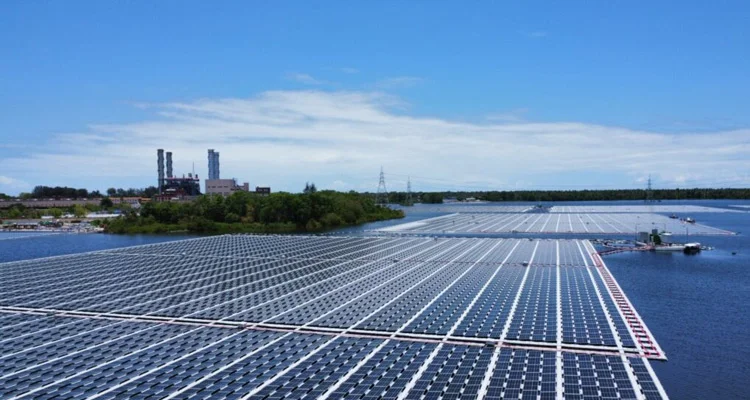
NEW DELHI: There is a moment in every infrastructure transition when the argument stops being about whether and starts being about where the crane goes. India’s energy transition passed that moment some time ago, and the numbers now read like a construction diary rather than a policy document. That change of genre is worth pausing on, because it relocates the hard problems. India’s installed renewable capacity stood at 288.58 GW on June 30, 2026 — solar 162.15 GW, wind 57.44 GW, large hydro 57.24 GW and bio power 11.75 GW. In 2014 the same figure was 76.38 GW. Renewables now account for about 52 per cent of India’s total installed generating capacity, and the 50 per cent non-fossil milestone under India’s Paris commitment was reached in June 2025, five years before the 2030 deadline.
The rate of addition is what has changed most recently. India added a record 29 GW of solar and wind capacity in the first half of 2026 alone, with solar volumes up 43 per cent, driven substantially by rooftop installations rather than utility-scale parks. Rooftop growth is a different kind of number from a large park commissioning: it is thousands of separate decisions by households, housing societies and small businesses, which makes it slower to start, much harder to stop, and far more evenly distributed than a single 2 GW project in a desert. When the rooftop line accelerates, a transition has stopped depending on the state and started depending on the customer.
Geography is the new constraint: Gujarat and Rajasthan together built 54 per cent of India’s new renewable capacity in the first half of 2026 — capacity that has to be moved to where the demand is.
India has solved the question of whether it can build the generation. The unsolved questions are now about wires, hours and states.
At a Glance
• Renewable capacity, June 30, 2026: 288.58 GW — up from 76.38 GW in 2014
• Composition: solar 162.15 GW; wind 57.44 GW; large hydro 57.24 GW; bio power 11.75 GW
• Share: about 52 per cent of India’s total installed generating capacity
• Paris milestone: 50 per cent non-fossil installed capacity reached June 2025 — five years early
• H1 2026 additions: a record 29 GW of solar and wind; solar up 43 per cent on a rooftop surge
• Concentration: Gujarat 7.6 GW (29 per cent of national additions); Rajasthan 6.6 GW (25 per cent)
• Target: 500 GW of non-fossil installed capacity by 2030
• Global position: India ranks third worldwide in installed renewable capacity
Which brings the argument to the two constraints that now matter more than panel prices. The first is geography. Gujarat contributed 7.6 GW and Rajasthan 6.6 GW of the first half’s additions — 29 and 25 per cent of the national total respectively. More than half of India’s new renewable capacity is being built in two states, neither of which is where most of India’s industrial and residential load sits. Electricity generated in Kutch and consumed in Uttar Pradesh has to travel, and transmission corridors take longer to build and are harder to finance than the generation they carry. The second constraint is time of day. Solar produces during daylight; Indian demand peaks after sunset. Every additional gigawatt of solar sharpens that mismatch until storage — battery, pumped hydro, or both — is built alongside it rather than after it.
Neither constraint is a reason for pessimism; both are reasons for a shift of attention. The distance from 288.58 GW to the 2030 target of 500 GW is roughly 211 GW over four and a half years, or about 47 GW a year against a current run rate that annualises close to 58 GW. On capacity alone the target is comfortably within reach. What decides whether that capacity is useful is whether transmission approvals, storage tenders and distribution-company balance sheets keep pace with the panels. India has already demonstrated it can build faster than its own targets. The constructive task for the second half of this decade is to make sure the wires and the batteries are procured on the same schedule as the modules — and to spread the building across more than two states, so that the transition strengthens the grid instead of straining it.