Blitz Bureau
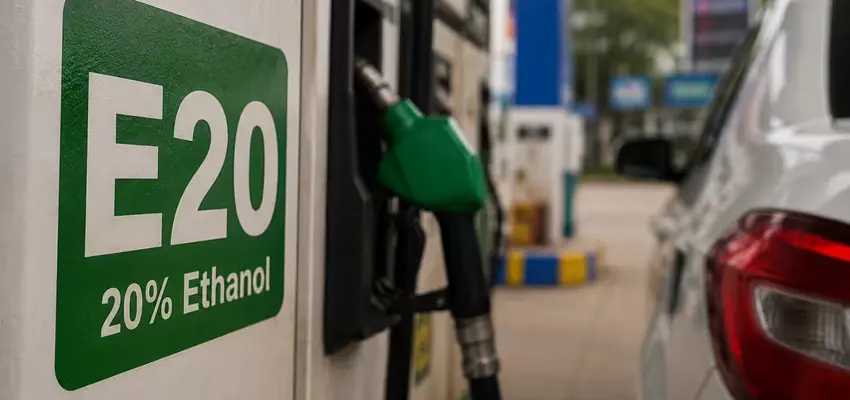
NEW DELHI: The Government’s ambitious programme of ethanol-blended petrol faced a fresh challenge with top auto industry body SIAM raising a technical red flag, warning that contamination in E20 fuel could damage vehicle components unless stricter standards are enforced.
Reporting instances of elevated chloride and moisture levels in E20 petrol available at retail outlets, the Society of Indian Automobile Manufacturers (SIAM) has urged the Centre and the Bureau of Indian Standards (BIS) to introduce mandatory chloride limits.
The Government, on its part, acted swiftly, reassuring vehicle owners that extensive quality checks are in place and that such cases remain extremely rare. The Ministry of Petroleum and Natural Gas said that oil marketing companies regularly monitor fuel quality and have strengthened testing protocols across the country.
Regular testing
It further said that water-ingress tests are now conducted eight to 12 times daily at more than 87,000 petrol pumps. The Government insisted that over 2,000 fuel samples had recently been tested for chloride and sulphide contamination and only two instances of chloride contamination were detected nationwide, adding that fuel sales at those outlets were suspended immediately.
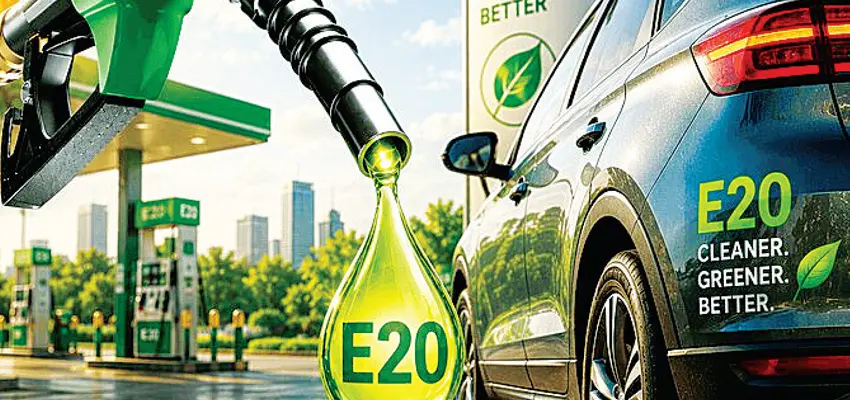
The Ministry of Petroleum and Natural Gas stated that oil marketing companies regularly monitor fuel quality and have strengthened testing protocols across the country
To further reassure consumers, OMCs have also been directed to monitor the entire fuel supply chain – from storage depots and transportation to retail outlets – to detect and eliminate contamination before fuel reaches customers.
SIAM’s field investigations found chloride contamination levels of up to 500 mg/kg in fuel collected from vehicle tanks and up to 350 mg/kg in samples from petrol pumps. The industry body reportedly concluded that chloride-induced corrosion was causing abnormal w e a r a n d prema – ture failure of fuel injectors, fuel pumps, exhaust gas recirculation valves and other engine and exhaust components.
SIAM also flagged excessive moisture in some E20 fuel samples. Because ethanol readily absorbs water, high moisture levels can trigger phase separation, potentially causing vehicles to stall soon after refuelling. The industry body was reported to have identified ageing underground storage tanks and pipelines as possible sources of contamination and recommended stricter inspections and tighter quality standards.
Major contributions
The Government, however, maintains that contamination cases are isolated and said enhanced testing, continuous monitoring and swift enforcement are sufficient to safeguard consumers while sustaining India’s transition to cleaner fuels. It has all along defended gradual shift to blended fuel, highlighting the flagship programme’s contribution to reducing crude oil imports, improving farmer incomes and lowering carbon emissions.
India has already achieved its target of 20 per cent ethanol blending ahead of schedule, making it one of the world’s fastest-growing biofuel programmes. The latest concerns however, indicate that the next phase of the initiative may depend less on increasing ethanol volumes and more on ensuring consistent fuel quality.