Blitz Bureau
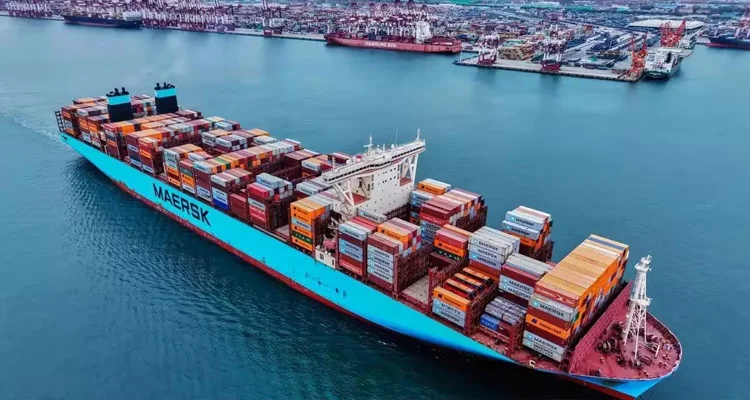
NEW DELHI: Two-way trade with Africa reached $93.69 billion in 2025-26, up 14.39 per cent. Read the two halves separately and the surprise appears: India imported $48.27 billion and exported $45.42 billion. On this continent, India is the net buyer.
That inversion is worth sitting with, because it contradicts the way the relationship is usually described. India is routinely presented as a supplier to Africa — of pharmaceuticals, of vehicles, of refined fuel, of engineering goods — and it is. But it is also, and slightly more, a customer: for crude and gas, for gold, for fertiliser inputs, for pulses and edible oils, and for the minerals that sit at the start of every battery and every transformer. A $2.85 billion deficit on a $93.69 billion book is small in percentage terms, about three per cent, and it is precisely that smallness that makes the relationship unusual. Most of India’s large trading partnerships are lopsided in one direction or the other. This one is close to balanced, which is a far more durable footing than surplus.
Close to even: a $2.85 billion gap on a $93.69 billion book is about three per cent — near-balance rather than dependence, and the reason the relationship is less exposed to a swing in either direction.
A balanced trade relationship survives a bad year in a way a lopsided one does not. Both sides have something to lose, so both sides keep negotiating.
At a Glance
• Total trade: $93.69 billion in 2025-26, up 14.39 per cent on the previous year
• India’s exports: $45.42 billion
• India’s imports: $48.27 billion — a deficit of about $2.85 billion, roughly 3 per cent of two-way trade
• Stated target: the commerce ministry aims to double total trade by 2030
• Arithmetic of that target: doubling from $93.69 billion within four years needs compound growth near 19 per cent a year, against 14.39 per cent achieved last year
• Priority sectors named: agriculture, renewable energy and digital infrastructure
• Stated direction: moving beyond raw-material trade towards higher-value and technology-led exchange
The stated ambition is to double the total by 2030, and the arithmetic of that goal is the most useful thing an Indian reader can take from the figures. Doubling $93.69 billion inside four financial years requires compound growth of a little under 19 per cent a year. Last year delivered 14.39. The gap is not embarrassing — it is the ordinary distance between a target and a trend, and it is closeable — but it will not close on the existing product mix, because the existing mix is dominated by commodities whose volumes cannot simply be willed upward. It closes on the categories the commerce ministry has itself named: agriculture, renewable energy and digital infrastructure, all three of which are sold as systems and services rather than as shiploads.
For a reader in India the corridor shows up in less abstract places than a trade table. It is in the pharmaceutical plant in Gujarat or Himachal whose second-largest order book is African, and in the fact that generic medicine priced for an Indian household is also the medicine a clinic in Nairobi or Accra can afford — the scale that keeps prices low at home is partly built abroad. It is in the young engineer posted to a solar or transmission project in East Africa on a two-year contract, and in the fees paid by African students at Indian universities, who form one of the larger foreign cohorts on Indian campuses. The constructive step now is unglamorous and entirely within India’s control: aligning standards, customs procedures and product certification so that a consignment cleared in Mumbai is not re-tested on arrival. Tariffs are negotiated between governments. Paperwork is fixed at home, and it is usually the bigger cost.