Blitz Bureau
NEW DELHI:India matched its best-ever haul at the World Athletics Under-20 Championships. Look at where the three medals came from and a pattern emerges that says more about the country’s athletics pipeline than the tally does.
The championships closed on August 9 at Hayward Field in Eugene, Oregon, with India 27th on the table and three medals: two silver and one bronze. Ashish Yadav, 19, threw 74.09 m for silver in the javelin, behind South Africa’s Jan-Hendrik Heymans, whose 80.50 m was a world under-20 leading mark. Basant Kumar Meghwal took silver in the high jump, clearing 2.21 m to equal his personal best and become the first Indian to win a high jump medal at these championships. Shahnavaz Khan took bronze in the long jump. Three medals equals India’s best return at this meet, matching the 2021 and 2022 editions, which also produced two silvers and a bronze.
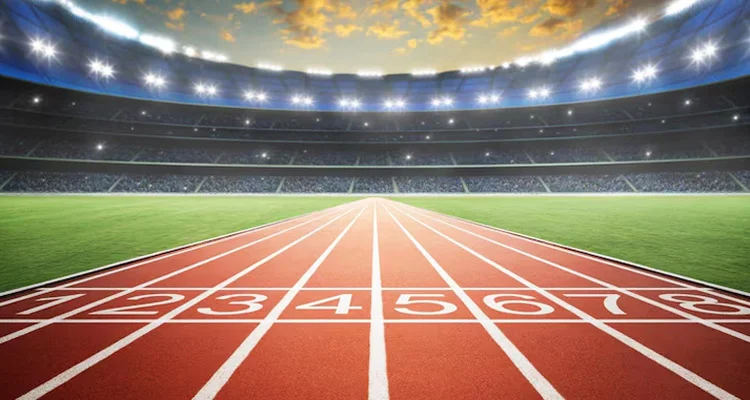
Inside the oval, not on it: a javelin runway, a high jump apron and a long jump pit — the three places India’s junior athletes reached the podium.
A throw and a jump are settled by one athlete against a measuring tape. That is a contest a thin system can win while it is still building depth.
At a Glance
• Event: World Athletics U20 Championships, Eugene, Oregon, August 5-9, 2026
• India’s tally: two silver, one bronze — 27th overall
• Ashish Yadav, 19: javelin silver, 74.09 m
• Gold in that event: Jan-Hendrik Heymans (South Africa), 80.50 m — a world U20 lead
• Basant Kumar Meghwal: high jump silver, 2.21 m, equalling his personal best
• A first: no Indian had won a high jump medal at this championship before
• Shahnavaz Khan: long jump bronze
• Equals: India’s best tally here, from 2021 and 2022
• Common thread: all three medals came in field events
Now the pattern. Every one of the three came from a field event — one throw, two jumps. Not a single one came from the track. That is not a coincidence and it is not a criticism; it is a description of how a developing athletics system produces its first international results. Throws and jumps are individual, measurable and technique-led. An athlete with the right build, a competent coach and a runway can reach a world-class mark without a training group around them, without an altitude camp, and without the years of accumulated aerobic base that a middle-distance runner needs before they are even competitive. Neeraj Chopra’s javelin gold at this same championship a decade ago was the first proof of that route; a national programme grew around the event afterwards. The high jump medal on Saturday is the same phenomenon reaching a second discipline.
The constructive question is what to do with that knowledge. The honest answer is: press the advantage and build the harder thing in parallel. Field events give India its quickest route to junior podiums, and every one of those podiums funds attention, coaching posts and facilities in the discipline that produced it — a self-reinforcing loop the javelin programme has already demonstrated. Track medals, especially in the middle and long distances, need something slower to build: dense competition calendars so that juniors race often, sports science that survives an athlete’s transition out of the junior ranks, and coaching depth at district level rather than at national camps alone. Both projects are already national policy in outline. What Eugene supplies is evidence about sequencing — and three athletes, aged 19 and under, who have four years to the next Olympic cycle.