Blitz Bureau
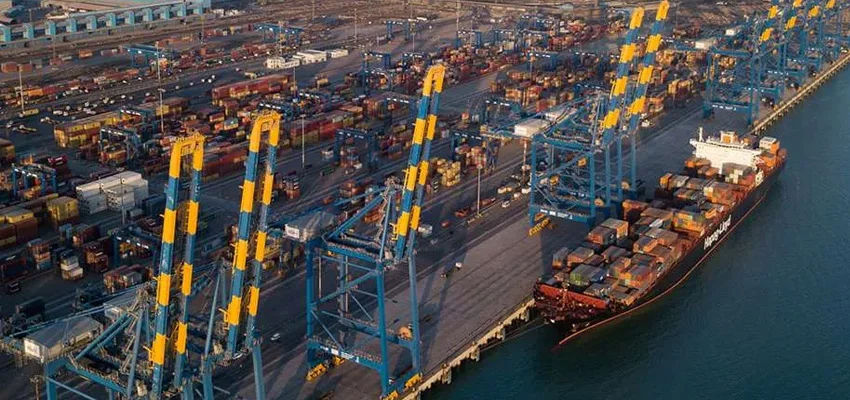
NEW DELHI: Two-way trade with Africa reached $93.69 billion in 2025-26, up 14.39 per cent. The line that changes how you should read that total is the split: India’s imports from the continent now exceed its exports to it.
India exported $45.42 billion of goods to Africa in 2025-26 and imported $48.27 billion — a gap of a little under $3 billion in the continent’s favour. For a relationship that spent two decades being described in Indian commentary as a market to be won, that reversal is the most interesting fact in the table. It reflects what India is now buying: crude and gas from West and North Africa, gold and phosphates, and increasingly the critical minerals that battery and electronics supply chains cannot be built without. Commerce Minister Piyush Goyal has been discussing precisely that with South Africa, alongside the terms of reference for a preferential trade agreement with the Southern African Customs Union.
Two ways, not one: India’s imports from Africa exceeded its exports to the continent in 2025-26, a reversal of the long-assumed direction of the relationship.
For twenty years Africa was described in Delhi as a market. The 2025-26 numbers describe it as a supplier.
At a Glance
• Total trade, 2025-26: $93.69 bn, up 14.39 per cent
• India’s exports to Africa: $45.42 bn
• India’s imports from Africa: $48.27 bn
• Balance: about $2.85 bn in Africa’s favour
• Stated target: double total trade by 2030
• In negotiation: India-SACU preferential trade agreement, terms of reference under discussion
• Named priorities: critical minerals, value addition, technology-led farming, renewables, healthcare
For the ordinary Indian reader, the practical stake sits in three places. The first is medicine: Indian generic manufacturers supply a very large share of Africa’s essential drugs, and preferential access negotiated now determines whether that position holds against competitors over the next decade. The second is the diaspora and the workforce — Indian firms in African construction, telecom, mining services and agri-processing employ Indians abroad and remit earnings home. The third is the battery in a scooter that has not been built yet. Cobalt, manganese, graphite and the rest are geological accidents, and Africa has more of them than India does; a preferential agreement is the cheapest available insurance against paying spot prices for them in 2032.
Doubling trade to roughly $187 billion by 2030 is an ambitious target, and the constructive way to read it is as a statement about composition rather than volume. Adding shipments is easy while commodity prices are high; the harder task, and the one the commerce ministry has named, is aligning standards, customs procedures and business practice so that smaller Indian exporters — the ones without a Nairobi office — can actually use the corridor. That is administrative work rather than diplomatic work, and it is where the next $90 billion will be won or lost.