Blitz Bureau
NEW DELHI: The Rajya Sabha cleared the Tribunals Reforms Bill, 2026 yesterday, a day after the Lok Sabha. What that completes is not a routine amendment. It is the institution the Supreme Court asked for in Madras Bar Association v. Union of India, and India’s tribunals have waited the better part of a decade for it.
The Bill creates a National Tribunals Commission — a Chairperson, two Judicial Members and two Technical Members — to run the search and selection of chairpersons and members across Central statutory tribunals, review their performance, and oversee inquiries into complaints against them. Read past the appointments machinery, however, and the provision that may matter most to an ordinary litigant is the quieter one: a National Tribunals Data Grid, holding case information on how the tribunals are actually functioning.
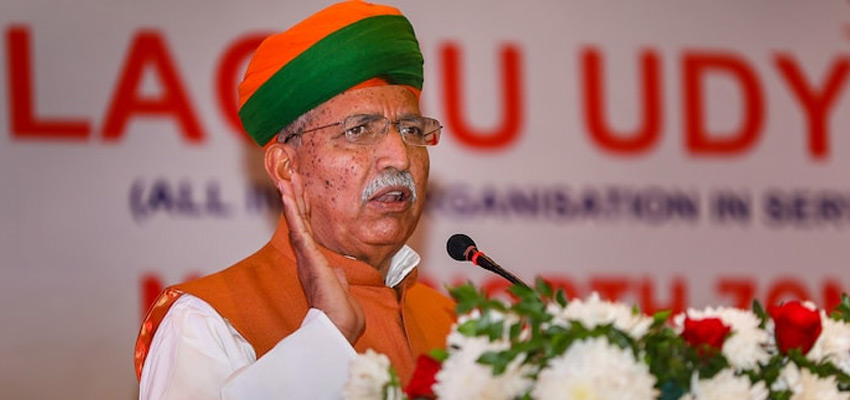
Union Minister of Law & Justice Arjun Ram Meghwal, who moved the Bill. Photo: Press Information Bureau, Government of India (GODL-India), via Wikimedia Commons.
Uniform tenures and transparent appointments are the headline. A public record of how long a tribunal actually takes is the reform that a citizen will feel.
At a Glance
• Passed Lok Sabha, August 10; Rajya Sabha, August 11, 2026
• Creates National Tribunals Commission — Chairperson, 2 Judicial, 2 Technical Members
• Also creates National Tribunals Data Grid on tribunal functioning
• Traces to Supreme Court directions in Madras Bar Association v. Union of India
• Moved by Union Law & Justice Minister Arjun Ram Meghwal
India’s tribunals carry an enormous share of the country’s specialised disputes — company law, taxation, electricity, telecom, armed forces, environment. Their weakness has rarely been the law they apply. It has been vacancy, uneven tenure and a selection process that varied from tribunal to tribunal. A litigant before one bench and a litigant before another have not been able to assume the same standard of independence.
The Commission is designed to close exactly that gap, and the Data Grid is what will let anyone check whether it has. The test now moves from the statute book to the appointment file: how quickly the Commission is constituted, how fast the standing vacancies are filled, and whether the Grid is published in a form a citizen can actually read. Those are the numbers Blitz India will be following.