Blitz Bureau
NEW DELHI: At the Vidhan Sabha on Monday, Delhi Chief Minister Rekha Gupta handed bicycles to around 200 Class IX girl students from Zone 7 of North Delhi under the Vidya Vahini Yojana. The scheme reaches roughly 1.40 lakh Class IX girl students across Delhi government schools this year.
The Chief Minister framed it precisely: a bicycle here is not merely a mode of transport, but a means of supporting a girl’s education and her independence. The stated purpose of the scheme is an easier commute, continuity of education, lower dropout rates and better attendance — four outcomes that a transport intervention can genuinely move.
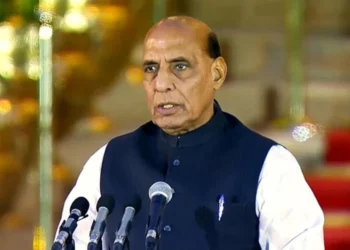
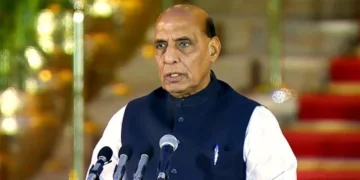
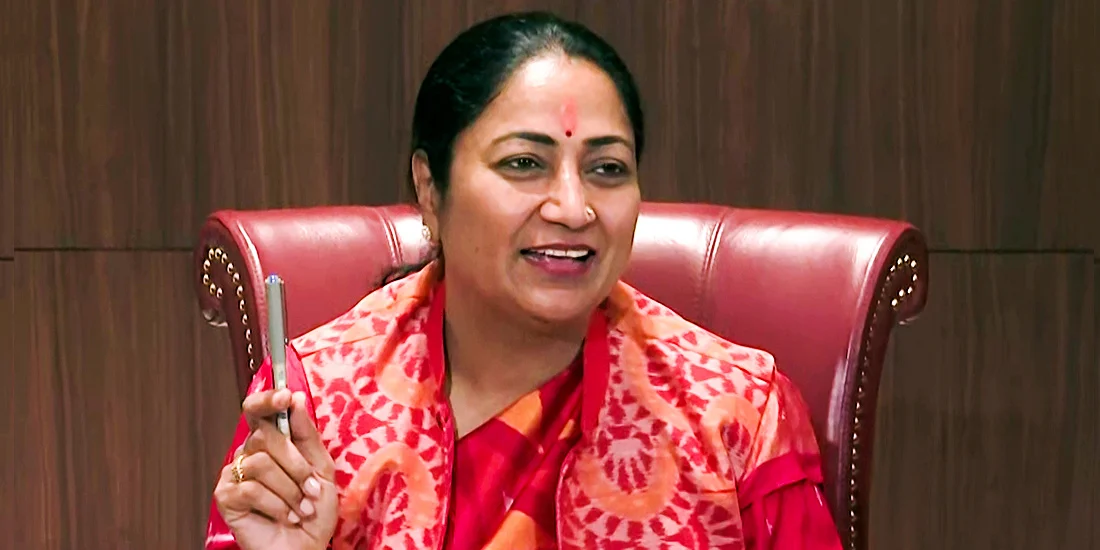
Delhi Chief Minister Rekha Gupta. Photo: Government of India / Government of NCT of Delhi (GODL-India), via Wikimedia Commons.
The distance between a girl and her school is not always measured in kilometres. Sometimes it is measured in whether the family thinks the journey is safe and affordable.
At a Glance
• Scheme Vidya Vahini Yojana, Government of Delhi
• Event Vidhan Sabha, August 10, 2026
• Distributed ~200 bicycles, Class IX girls, Zone 7, North Delhi
• Scheme reach ~1.40 lakh Class IX girl students this year
• Stated aims Commute, retention, attendance, confidence
Cycle-distribution schemes have a long record in India, and the evidence from earlier state programmes is reasonably consistent: the effect on girls’ secondary enrolment is real where the school is beyond comfortable walking distance and the household has no second vehicle. That is precisely the profile of a large share of Delhi government school families.
The measurement that would settle it is available and worth asking for: Class IX to Class X transition rates for the cohorts covered, set against the years before. If the Delhi government publishes that series, it will have done more than distribute bicycles — it will have shown, with its own data, what the intervention is worth.