Blitz Bureau
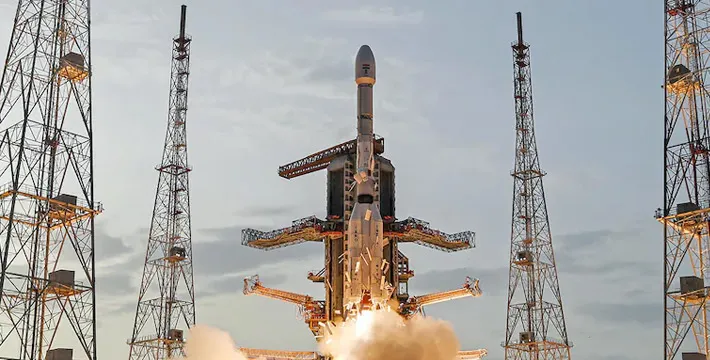
NEW DELHI: India’s first uncrewed Gaganyaan flight has no confirmed launch date, and that is the correct way to read the programme rather than a disappointment. What it does have is a testing calendar, and this summer it has been ticking.
The ISRO Chairman, Dr V Narayanan, said on 27 June 2026 that the agency was working towards the uncrewed G1 mission by the end of the year. Two ground milestones followed within a fortnight of each other: the SOLVE test on 3 July, and crew module systems validation on 12 July. G1 will carry Vyommitra, the half-humanoid robot built to occupy the crew seat and report back on what a human body would have experienced — life support, cabin environment, the loads of ascent and re-entry.
Human-rating is slow by design: the uncrewed G1 mission will fly the half-humanoid Vyommitra to validate life support and cabin systems before any Indian astronaut boards.
Every schedule a human-spaceflight programme has ever announced has slipped. The ones that did not slip are the ones nobody wants to imitate.
At a Glance
• Mission: Gaganyaan G1, the first uncrewed orbital test flight
• Payload: Vyommitra, a half-humanoid robot in the crew position
• Stated target: end-2026, per ISRO Chairman Dr V Narayanan, 27 June 2026
• SOLVE ground test: 3 July 2026
• Crew module systems validation: 12 July 2026
• Crewed flight: now indicated for 2027
• Purpose of G1: validate life support, cabin environment, ascent and re-entry loads
It is worth being clear with readers about why the date keeps moving, because the alternative is a public that reads every revision as a setback. Human-rating a launch vehicle is a different discipline from launching satellites, and ISRO has an unusually strong satellite record precisely because it does not fly until the ground data says it can. The abort systems, the parachute sequence, the crew escape tower and the environmental control loop each have to be demonstrated separately and then together. A programme that flies to meet an announced date, rather than to meet a test result, is a programme with a very different risk profile.
The forward look is therefore a calendar of tests rather than a countdown clock. G1 validates the systems; a crewed flight is now indicated for 2027; and beyond that sits the Bharatiya Antariksh Station architecture. India will be the fourth country to put its own citizens in orbit on its own vehicle, and the value of that is not the flag — it is the supplier base, the materials qualification and the test infrastructure that a human-rated programme forces a country to build and then keeps. Those assets stay whether the launch is in December or the following spring. That is the case for patience, and it is a good one.