Blitz Bureau
NEW DELHI: India’s solar fleet has grown eighty-fold in twelve years. The Prime Minister used that number this morning to justify a harder one: a hundred gigawatts of nuclear power by 2047.
Speaking from the Red Fort, the Prime Minister said India’s solar capacity had risen from roughly 2 GW to about 160 GW over the past twelve years, and that around 50 lakh households now generate their own electricity under the PM Surya Ghar Muft Bijli Yojana. He then attached a target to the other end of the energy mix: 100 GW of nuclear capacity by 2047, framed explicitly against the electricity appetite of data centres and semiconductor fabrication plants — the two industries the rest of the address was built around.
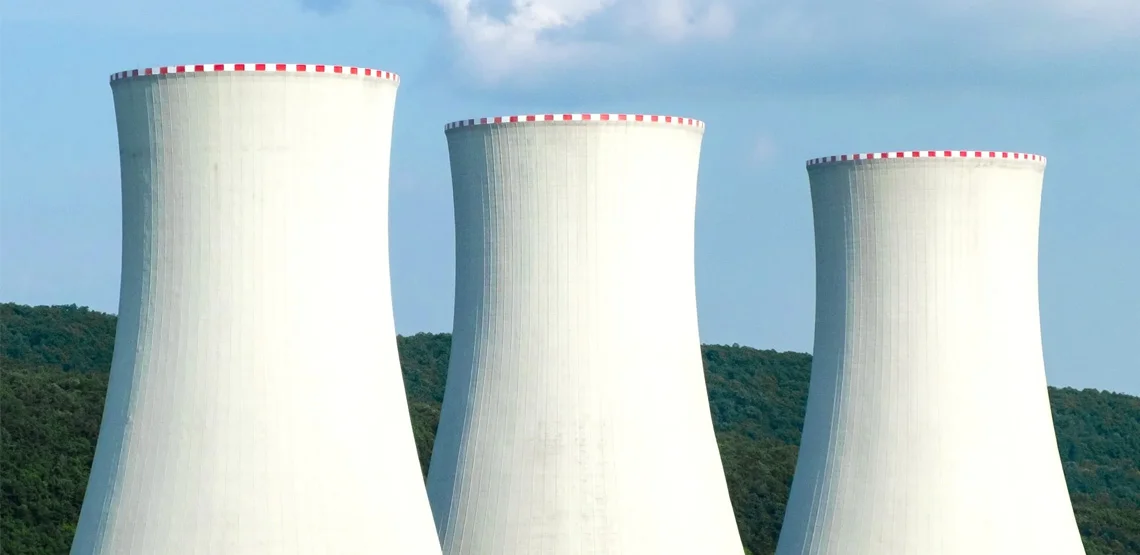
Putting those two numbers side by side is the point, because they do different jobs. Solar is cheap, quick to build and intermittent. A fabrication plant cannot be intermittent: a chip fab that loses power mid-process scraps the wafers in the line, which is why fabs are sited where the grid does not blink. Data centres are the same case with a service-level agreement attached. So an economy that wants to make chips and host data must buy firm, dispatchable power alongside its solar — and nuclear is the only large low-carbon source that supplies it around the clock. The 100 GW target is not a rival to the solar number. It is the condition that makes the solar number usable by heavy industry.
Cheap, fast and intermittent: solar has carried India’s capacity addition for a decade — which is precisely why the firm-power question now falls to nuclear.
A chip fab that loses power scraps the wafers in the line. That single sentence is the whole case for firm capacity.
At a Glance
• Solar capacity: from about 2 GW to about 160 GW in twelve years
• Rooftop solar: around 50 lakh households under PM Surya Ghar Muft Bijli Yojana
• Nuclear target: 100 GW by 2047
• Stated reason: the power demand of data centres and semiconductor fabs
• Piped gas: about 70 cities before 2014, around 700 now
• Gas connections: from 20–22 lakh households to nearly 1.75 crore
• Railways: 100 per cent electrification achieved over the past decade
• Hydrogen: India’s hydrogen-powered train cited as the world’s longest and most powerful
• Exploration: 99 per cent of the coastline, earlier a “no-go” area, now opened
The rest of the energy passage filled in the middle of the mix. Piped natural gas has gone from about 70 cities before 2014 to roughly 700, and from 20–22 lakh household connections to nearly 1.75 crore — a distribution story rather than a generation one, and the reason a kitchen in a district town now runs on the same fuel as a kitchen in a metro. The railway network has completed 100 per cent electrification over the past decade, against about 30 per cent achieved in the ninety years to 2014. And 99 per cent of India’s coastline, previously classified off-limits to exploration, has been opened up, a decision the Prime Minister described as correcting a poverty of thought.
None of this is finished, and the honest framing is that each item is a capability rather than an outcome. Rooftop solar at 50 lakh homes is a start against a housing stock counted in crores. Nuclear at 100 GW by 2047 requires a build rate India has never sustained, which means fuel supply, small modular reactor policy and public confidence all have to move together. The constructive path runs through the unglamorous middle: grid capacity to move power from where the sun shines to where the factory is, storage to hold it overnight, and a regulatory calendar predictable enough that private capital will finance the next tranche without a sovereign guarantee.