Blitz Bureau
NEW DELHI: A sixth list of defence items to be made in India was notified on Tuesday. The headline number is 405. The number that tells you what has changed is ₹7.58 crore — the average business value of a single item on it.
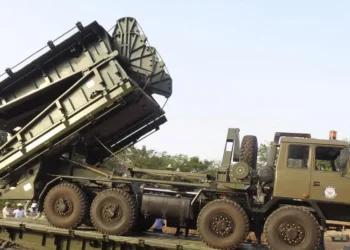
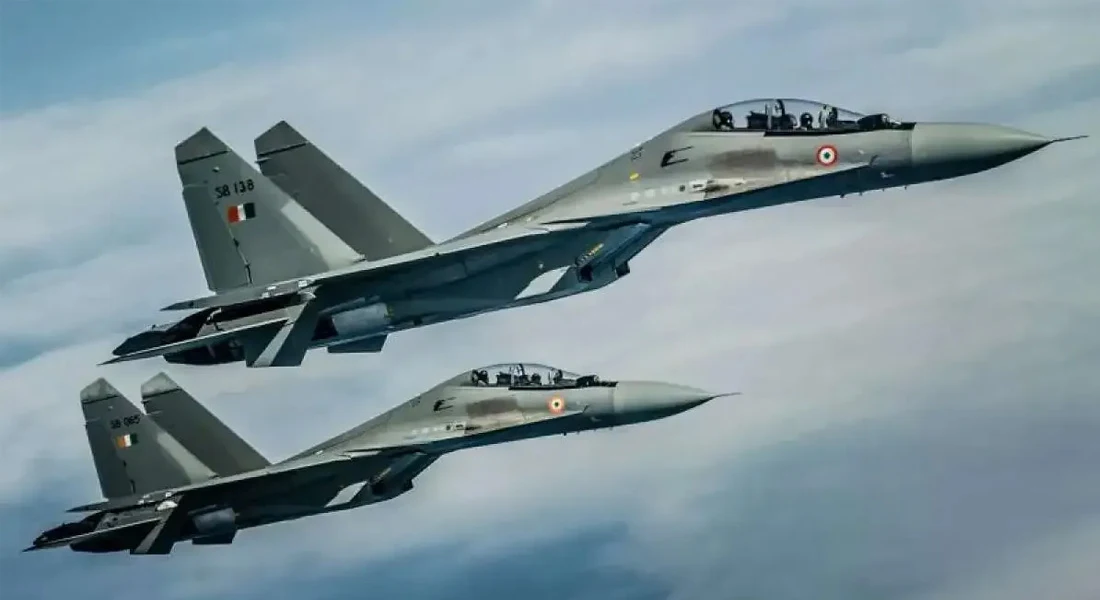
The Department of Defence Production notified the sixth Positive Indigenisation List on 18 August, covering 405 items with an estimated business potential of ₹3,070 crore. Of those, 389 are linked to Defence Public Sector Undertakings and 16 to the Indian Coast Guard. The items are Line Replaceable Units, sub-systems, sub-assemblies, spares, components and raw materials for platforms that include the Advanced Light Helicopter, the Light Utility Helicopter, the Su-30MKI, the Light Combat Aircraft, the AL-31FP engine, the T-72, T-90 and BMP-II armoured vehicles, warships and missile systems. Each carries an indicative timeline, and the detailed list sits on the SRIJAN portal.
Named on the list: the Light Combat Aircraft. Alongside it sit the Su-30MKI, the AL-31FP engine, the ALH and LUH helicopters, the T-72, T-90 and BMP-II, warships and missile systems — but the items being indigenised are the parts inside them, not the platforms themselves.
Divide ₹3,070 crore by 405 and you get ₹7.58 crore an item. This is not a list of aircraft. It is a list of the small, awkward parts that keep aircraft flying.
At a Glance
• Notified: 18 August 2026, by the Department of Defence Production
• Items: 405 · Business potential: ₹3,070 crore
• Split: 389 DPSU-linked, 16 for the Indian Coast Guard
• Average value per item: about ₹7.58 crore
• Category: Line Replaceable Units, sub-systems, sub-assemblies, spares, components, raw materials
• Previous list: the fifth PIL carried 346 items
• Where to find it: the SRIJAN portal, each item with an indicative timeline
Read the six lists as a series and the direction is unmistakable. The early lists were about platforms — whole systems that India would stop importing. This one is about the tail: the bearing, the seal, the actuator card, the alloy that a Russian or French supplier still ships in a box. That tail is where a fleet actually lives or dies. An air force does not lose availability because it lacks aircraft; it loses availability because a single Line Replaceable Unit is on back-order in another time zone. Bringing 405 such items home is worth less in rupees than one squadron, and considerably more in flying hours. It is also the part of self-reliance that is genuinely hard, because a spare has to qualify to the original specification before anyone will fit it to a combat aircraft.
The other consequence is about who gets the work. At an average of ₹7.58 crore, most of these items are too small for a large integrator to chase and exactly the right size for a precision engineering MSME in Coimbatore, Pune, Hyderabad or Rajkot. That is the design intent, and the Department has said the indigenisation will run through the ‘Make’ procedure and in-house development with industry participation, particularly by MSMEs. The constructive test now is not the notification but the qualification cycle: how quickly a small firm that builds a part to specification can get it tested, certified and on to a DPSU purchase order. Publishing, alongside the SRIJAN entries, the median time from an indigenised part being offered to being accepted would turn this list from an announcement into a scoreboard — and would tell every workshop owner in the country whether the door is genuinely open.