Blitz Bureau
NEW DELHI: India sold US$37.36 billion of goods to the United Arab Emirates last year. It sold US$38.42 billion to the ten countries of ASEAN combined. One country is now worth 97 per cent of a bloc.
Commerce Ministry figures published in a government backgrounder on 18 August put India’s merchandise exports to the UAE at US$37,359.11 million in 2025-26, making it India’s largest single-country free trade agreement export market — ahead of Singapore at US$11,863.66 million, Australia at US$7,284.17 million and the United Kingdom at US$13,444.19 million. Bilateral trade with the UAE crossed US$100.06 billion in 2024-25, growing 19.6 per cent, three years after the Comprehensive Economic Partnership Agreement came into force on 1 May 2022. The two governments have since set a target of US$200 billion by 2032.
For a country of 1.4 billion people, the striking part is how small the negotiating window was. The UAE CEPA was concluded in 88 days, and was India’s first full trade agreement in a decade. What followed was not a slow ramp but a step change.
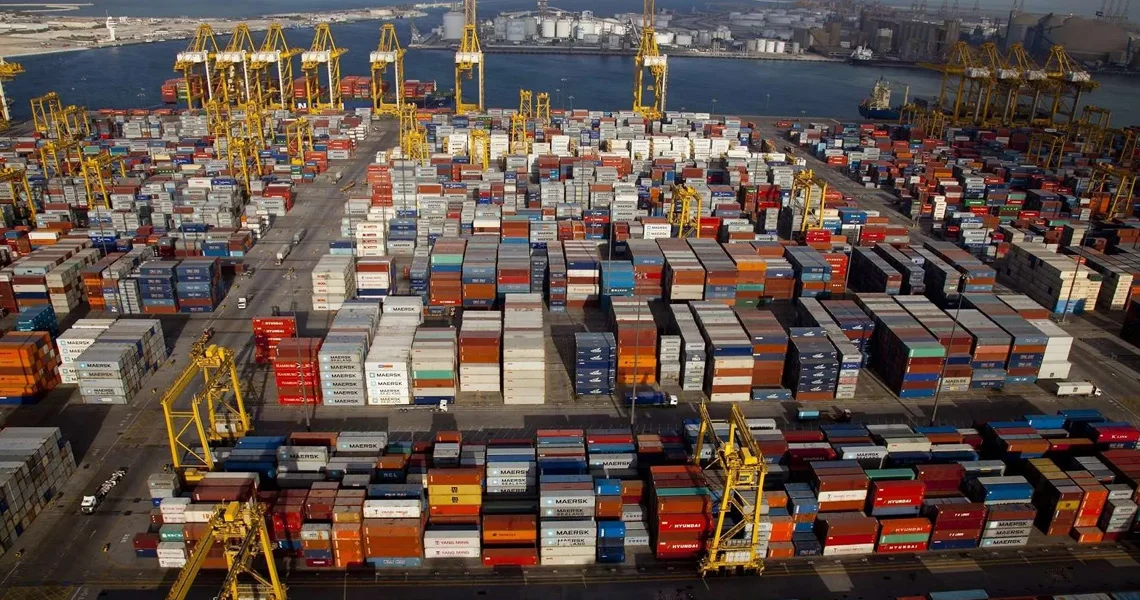
Where the trade lands: container operations at Jebel Ali Port, Dubai. The UAE took US$37.36 billion of Indian merchandise in 2025-26 — more than any other single free trade agreement partner, and 2.8 times what the United Kingdom bought.
Oman is the number to watch. In the first month of its trade agreement, the range of Indian products entering the country widened from 2,879 tariff lines to 3,371 — 492 new lines in thirty days.
At a Glance
• UAE exports 2025-26: US$37,359.11 million — India’s largest single-country FTA market
• ASEAN, all ten countries: US$38,416.33 million
• UAE bilateral trade: crossed US$100.06 billion in 2024-25, up 19.6 per cent
• Target: US$200 billion by 2032
• CEPA in force: 1 May 2022 · negotiated in 88 days
• Coverage: 97 per cent of UAE tariff lines, covering 99 per cent of Indian exports
• Oman CEPA: in force June 2026 · 783 preferential certificates of origin issued
What does this change for an ordinary reader? Three things. For an exporter, the Gulf is now the least friction-heavy market India has: 97 per cent of UAE tariff lines carry concessions, covering 99 per cent of what India ships. For a worker, the CEPA sits alongside the largest Indian labour corridor in the world, and the services chapters open roughly 111 sub-sectors across eleven broad areas to Indian providers — which is the difference between sending remittances home and building a business there. And for a household, the corridor runs both ways: a large share of India’s crude, fertiliser and edible-oil imports arrive through it, so tariff and shipping conditions in the Gulf reach the kitchen before they reach the trade data.
The forward look belongs to Oman. Its agreement came into force only in June 2026, and the early product-diversification rate is the fastest of any recent Indian trade deal — a 17.08 per cent widening in exported tariff lines within a single month. Oman’s concessions cover 98 per cent of its tariff lines, and the agreement provides for the temporary entry of intra-corporate transferees, contractual suppliers, business visitors and independent professionals. If that early rate holds even partly through the year, the Gulf will have given India two working templates rather than one — and the case for finishing the remaining West Asian negotiations gets made in numbers rather than communiqués.