Blitz Bureau
NEW DELHI: Environment ministers in New Delhi, communications ministers in Pune. Under India’s BRICS chairship the meetings have stopped being ceremonial and started being technical.
At the 12th BRICS Environment Ministers’ Meeting in New Delhi on 18 August, the Union Minister for Environment, Forest and Climate Change, Bhupender Yadav, set out a position India has argued consistently in multilateral forums: that environmental action must remain people-centric, sustainable and responsive to the realities of developing countries. The grouping reaffirmed its commitment to environmental protection and sustainable development.
Two hundred kilometres and one working week away, the Department of Telecommunications has been running the BRICS ICT Track at Pune from 17 to 21 August under the theme “Innovate, Cooperate and Transform (ICT) for a Resilient Future”. The 7th BRICS Working Group for Cooperation in ICTs met from 17 to 19 August; the Digital BRICS Forum and Expo follows on 20 August, and the 12th BRICS Communications Ministers’ Meeting on 21 August, with Union Minister Jyotiraditya M. Scindia representing India.
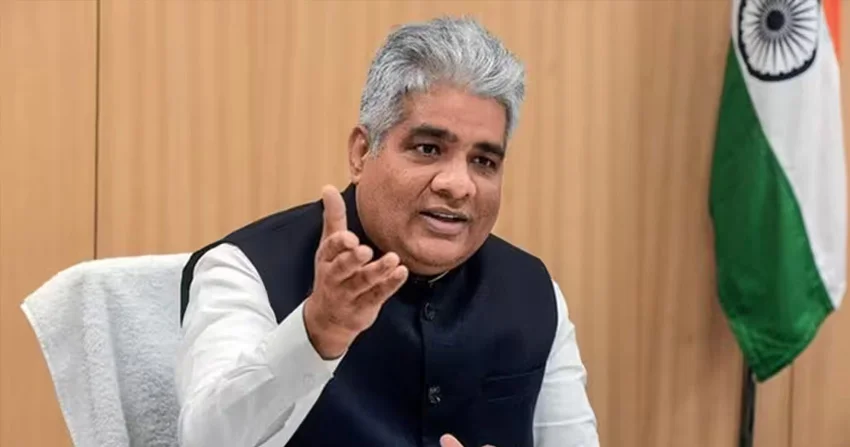
At the environment track: Bhupender Yadav, Union Minister for Environment, Forest and Climate Change, who told the 12th BRICS Environment Ministers’ Meeting in New Delhi on 18 August that environmental action must stay people-centric and responsive to developing-country realities.
BRICS is now eleven countries, not five. Brazil, China, Egypt, Ethiopia, India, Indonesia, Iran, Russia, Saudi Arabia, South Africa and the United Arab Emirates — and India is chairing all of it in 2026.
At a Glance
• Environment track: 12th BRICS Environment Ministers’ Meeting, New Delhi, 18 August 2026
• ICT track: Pune, 17–21 August 2026, led by the Department of Telecommunications
• ICT theme: ‘Innovate, Cooperate and Transform (ICT) for a Resilient Future’
• 7th ICT Working Group: 17–19 August
• Digital BRICS Forum and Expo: 20 August
• 12th Communications Ministers’ Meeting: 21 August
• Membership: eleven countries under India’s 2026 chairship
What makes this week’s agenda different from a communiqué exercise is the specificity of the items. The ICT working group’s priority list runs to universal, meaningful, affordable, sustainable and resilient connectivity; trusted, secure and human-centric digital environments; digital skills and capacity development; and innovation, start-ups and entrepreneurship in ICT, including artificial intelligence, next-generation communications, digital public infrastructure, cybersecurity and child online protection. Those are not slogans. Each is a workstream with national implementations to compare, and India arrives at that table with implementations to show.
Child online protection is the item most likely to be underestimated. It appears both on the working group’s list and as a thematic panel at the Digital BRICS Forum on 20 August. For a grouping of eleven countries with very large young populations coming online through inexpensive smartphones, an agreed baseline on child safety online has more practical reach than most technology diplomacy. It is also the kind of standard that travels: platforms build once and deploy everywhere.
The developmental argument India is making across both tracks is the same one, in two vocabularies. On environment it is that climate action has to work for economies still building basic infrastructure. On technology it is that digital public infrastructure lets a developing country get modern services without waiting for private platforms to find it profitable. The chairship year gives India a full calendar to make that case with evidence rather than assertion, and the meetings at Delhi and Pune this week are where the evidence is being tabled.