Prabhu Chawla
Democracy does not die only when elections are abandoned. Or governments are overthrown, or constitutions are suspended. It can also be crippled when the constitutional institutions created to make democracy work stop performing the functions for which they were designed. It also breaks down when argument is replaced by assertion, negotiation by confrontation, and deliberation by the arithmetic of a majority. Democracy without a constructive chaos acquires the contours of an invisible dictatorship.
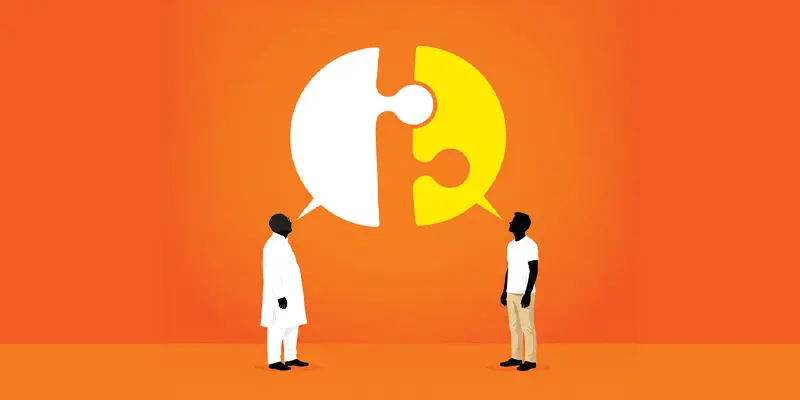
A healthy democracy rests on three essential Ds: dialogue, debate and deliberation. After which a fourth D, decision, must follow, whether by majority or consensus. The purpose of the first three is not to prevent the fourth, but to ensure that when a decision is finally taken, it has been tested against competing arguments and subjected to public scrutiny. The cardinal principle of a robust democratic architecture is well settled. The Opposition must have its say. The Government must have its way.
India is just killing this spirit. The just-concluded monsoon session exposed the malaise. Eleven Bills were passed by both the Houses. Seven of them received five minutes or less of discussion in the Lok Sabha, a total of 28 minutes. Nine of the 11 were passed with no member speaking except the minister in charge.
The last day of the session captured the decline perfectly. Prime Minister Narendra Modi was present. Home Minister Amit Shah was present after weeks of Opposition demand that he answer questions about police action against students. The Leader of the Opposition Rahul Gandhi and senior colleagues were present, too. Yet the House could not turn that gathering into a debate.
Outside, rival groups of MPs staged protests against each other. Inside, slogans drowned speech until the Speaker adjourned the House sine die. The exchange between the Home Minister and the Opposition was revealing. He offered a full debate and said he was ready to answer questions. The Opposition rejected the Government’s terms and insisted on its own.
Short-term politics
The LOP later said sustained pressure on the Prime Minister and Home Minister was the only way to enforce accountability. The Government accused the Opposition of running away from debate. Both claims may have served short-term politics. Together they showed that the middle ground where negotiation once happened has almost vanished. Personal style has sharpened the problem.
On the other hand, the LOP chose open confrontation as a tool of effective resistance. But these instruments become dangerous when firmness hardens into refusal to give an inch and political combat replaces the work of the House. An older generation of political managers understood the difference between election season and parliamentary season.
Men such as Pramod Mahajan, Kamal Nath and Ghulam Nabi Azad could fight hard in public and still strike deals in private because they knew the other side also had pressures to meet. Their task was not only to defend their own side but to keep the House working despite disagreement. That skill of quiet persuasion is just missing in the current leadership of all the parties.
Combative language
Today, the language is more combative. A minister’s challenge to the LOP to face the Home Minister in the House turned the issue into a contest over who was running away, rather than a search for a way to let the House function. The Opposition cannot escape its share of blame. Its duty is to question and expose. Disruption is not a substitute for that duty. The credible and the stronger option for Rahul was to allow the Home Minister to speak without setting any preconditions. And then dismantle the answers with facts and evidence.
The Government carries equal responsibility to run the House. A majority is a mandate to govern, not a licence to treat the Opposition as a nuisance. A strong leader should be willing to be questioned and examined for legislative and administrative actions. The Opposition has no right to veto the Government’s programme, yet it has every right to insist that Bills be debated and tested before numbers are used to pass them.
Unfortunately, numbers have been used as a weapon to silence contrary opinions for long. Numerical advantage has been weaponised by all ruling parties to curtail sittings. The decline did not begin with the present Government. The 13th Lok Sabha sat for 356 days, the 14th for 332, the 15th for 357 and the 16th for 331. The 17th sat for only 274 days, the lowest for any full term. The 15th Lok Sabha alone lost 803 hours to disruptions. When it sits for fewer days, loses hours to chaos and sends fewer Bills for detailed study, Executive power expands by default.
The formal checks on the misuse of powers by both the Government and Opposition remain on paper, leading to a total collapse of the principle of participatory democracy. The same pattern appears in the states, where many legislatures meet for fewer than 50 days a year. Elections alone do not keep a democracy healthy. Legislatures need time, authority and seriousness if they are to question those who govern.
Give-and-take politics
The remedy is not to weaken the Government or to let the Opposition freeze it. India needs a return to the politics of give-and-take: concede a little on procedure to gain substance, allow the other side its argument so that one’s own can be stronger. That is not soft politics. It is the practical grammar of parliamentary narrative.
Powerful personalities must remember the difference between personal authority and institutional legitimacy. Elections reward mobilisation. Parliament requires negotiation. Ruling alliances or Prime Ministers cannot treat the House as a mere extension of their electoral triumph. The Opposition cannot treat disruption as the main proof of accountability.
The visible erosion of parliamentary dialogue can lead to a much dangerous pushback from civil society. Once citizens conclude that Parliament cannot settle political fights, they will look elsewhere, to the streets and extra-parliamentary confrontations. The political class still has time to reverse the slide. The Government must talk before confrontation lead to calamitous outcomes. The Opposition must question without stopping the House.
India does not need a Parliament free of conflict. It needs one able to turn differences into debate, debate into deliberation, and deliberation into decisions that carry consensual legitimacy. After 79 years of Independence, Indians expect civilised conflicts between an ideology and an alternative ideology, between leaders led by convictions, not conveniences. Egoistic encounters shouldn’t be allowed to inflict an unbearable pain of parliamentary paralysis.
Eleven Bills were passed by both the Houses. Seven of them received five minutes or less of discussion in the Lok Sabha, a total of 28 minutes. Nine of the 11 were passed with no member speaking except the minister in charge
The formal checks on the misuse of powers by both the Government and Opposition remain on paper, leading to a total collapse of the principle of participatory democracy. The same pattern appears in the states