Blitz Bureau
NEW DELHI: The ICMR’s message on Wednesday was reassurance with an exception clause. The exception clause is the part worth reading twice.
Dr Rajiv Bahl, Secretary of the Department of Health Research and Director General of the Indian Council of Medical Research, told a media briefing in New Delhi on 26 August 2026 that the influenza viruses currently circulating in India are consistent with the seasonal pattern observed in recent years, and that present observations therefore do not indicate the emergence of a new influenza threat. The monitoring runs through what the government described as a robust pan-India surveillance network.
That is the reassurance, and it is worth understanding what makes it credible. A statement that a season is normal is only meaningful if there is a system capable of detecting an abnormal one — a network of laboratories testing samples continuously and comparing the circulating strains against previous years. The value of Wednesday’s briefing is not the sentence; it is the existence of the apparatus that allows the sentence to be said with a date attached.
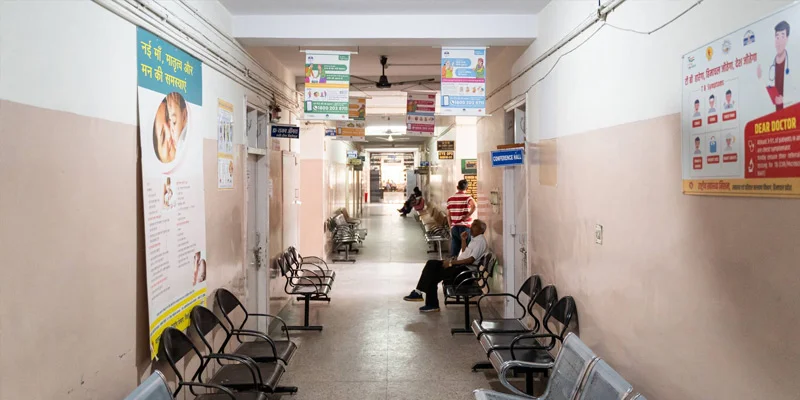
Where most of this is handled. A government hospital in India. For the large majority of patients, seasonal influenza resolves with rest, fluids and supportive care; the point of a national advisory is to separate that majority from the minority at real risk.
“Informed and vigilant, but not alarmed” is the Health Ministry’s phrase. For four groups of people, vigilance means a doctor rather than a wait.
At a Glance
• Who said it: Dr Rajiv Bahl, Secretary DHR and Director General, ICMR
• When: media briefing, New Delhi, 26 August 2026
• Finding: circulating strains consistent with recent seasonal patterns; no new threat indicated
• Higher risk: the elderly, children, and people with underlying medical conditions
• Common symptoms: fever, cough, sore throat, headache, body ache, fatigue, weakness
• Advice for most: supportive care, adequate rest and hydration
The exception clause names who should behave differently. Dr Bahl said that while seasonal influenza is generally mild, certain individuals face a higher risk of complications — elderly persons, children, and people with underlying medical conditions — and advised them to exercise greater caution and to seek timely medical advice if influenza-like symptoms appear. To that list every clinician would add pregnant women, who are treated as a priority group in influenza guidance worldwide. For these groups the operative word is timely: antiviral treatment and the management of complications work best early, and the common error in Indian households is to treat the third or fourth day of fever as the moment to consult rather than the first.
For everyone else the advice is ordinary and effective. Symptoms — fever, cough, sore throat, headache, body ache, fatigue and weakness — improve in most people with rest, fluids and supportive care. Stay home while feverish, cover coughs, wash hands, and do not press antibiotics into service against a virus they cannot touch. The Health Ministry’s formulation was that the public should remain informed and vigilant, but not alarmed. The constructive next step lies with the system rather than the citizen: publishing the surveillance network’s weekly strain and positivity data in a form a district hospital or a parent can read would turn an annual reassurance into a running public record, and running public records are what build trust in the reassurance when a season eventually is not normal.