Blitz Bureau
NEW DELHI: The Centre has asked every district in the country to produce two things by the end of September: one student visit to a village water scheme, and one published case study written by the students who went. It is a small instruction, and it addresses the largest unsolved problem in rural water.
The Department of Drinking Water and Sanitation, in the Ministry of Jal Shakti, wrote to all states and union territories on 28 August 2026 asking them to facilitate the participation of students from local academic institutions in documenting and disseminating best practices under the second phase of the Jal Jeevan Mission. The instruction carries a figure and a deadline: at least one student tour and one published case study or best practice, with a local academic institution, in every district, by the end of September 2026.
Why documentation is the problem
The first phase of the Jal Jeevan Mission was a construction problem — pipes, pumps, source works, household taps. The second phase is not. It is a problem of keeping water flowing through what has been built, and that is a problem no engineering department can solve on its own, because the failures are local, various and rarely written down.
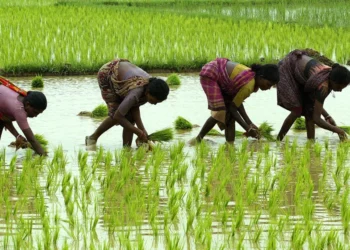
A pump that runs but draws from a falling source, a village water committee that collects tariff and one that does not, a scheme that works in the monsoon and fails in May — these are the facts that decide whether a tap keeps running. They are known in the village and almost never recorded anywhere a second village can read them. That is the gap the instruction is aimed at, and the choice of instrument is the interesting part: not a consultancy, not a national survey, but the college down the road.
The instruction, and what it asks for
| Parameter / Metric | Details |
|---|---|
| Issuing office | Department of Drinking Water and Sanitation, Ministry of Jal Shakti |
| Date of the communication | 28 August 2026 |
| Addressed to | All states and union territories |
| What is asked | Facilitate student participation from local academic institutions |
| Purpose | Documenting and disseminating best practices under JJM 2.0 |
| Minimum per district | One student tour |
| Also per district | One published case study or best practice |
| Deadline | End of September 2026 |
| Institutions named | Local colleges, universities and other educational institutions |
What a tour does that inspection cannot
An inspection asks whether a scheme meets its specification. A case study asks why it works, and the second question is the one that travels. A student from a local college has three advantages over a visiting officer: the language, the time, and no stake in the answer. The work is also cheap in the way that matters — it costs a department nothing beyond facilitation, and it produces a written record that outlives the officer who ordered it.
There is a second gain, and the instruction does not claim it. A civil engineering or social work student who has spent a week on a village water scheme has learnt something the syllabus does not carry. India’s rural water sector will need people who understand operation and maintenance for the next two decades. This is, incidentally, a recruitment pipeline.
What is not stated, and one suggestion
The communication sets a target and a date. It does not, on the record this desk could reach, prescribe a common format for the case studies, name a repository where they will be lodged, or say who will read them. None of those is asserted here.
The suggestion follows from exactly that gap, and it is small. A case study that sits in a college file has documented nothing. If the Department were to publish, alongside this instruction, a two-page template — the scheme, the source, the tariff, what failed, what was done, what it cost — and a single national page where every district’s study is posted with its district name, then by October the country would have several hundred comparable accounts of what keeps a village tap running. The instruction has already done the hard part, which is getting students to the village. What remains is making sure the paper they bring back can be found.