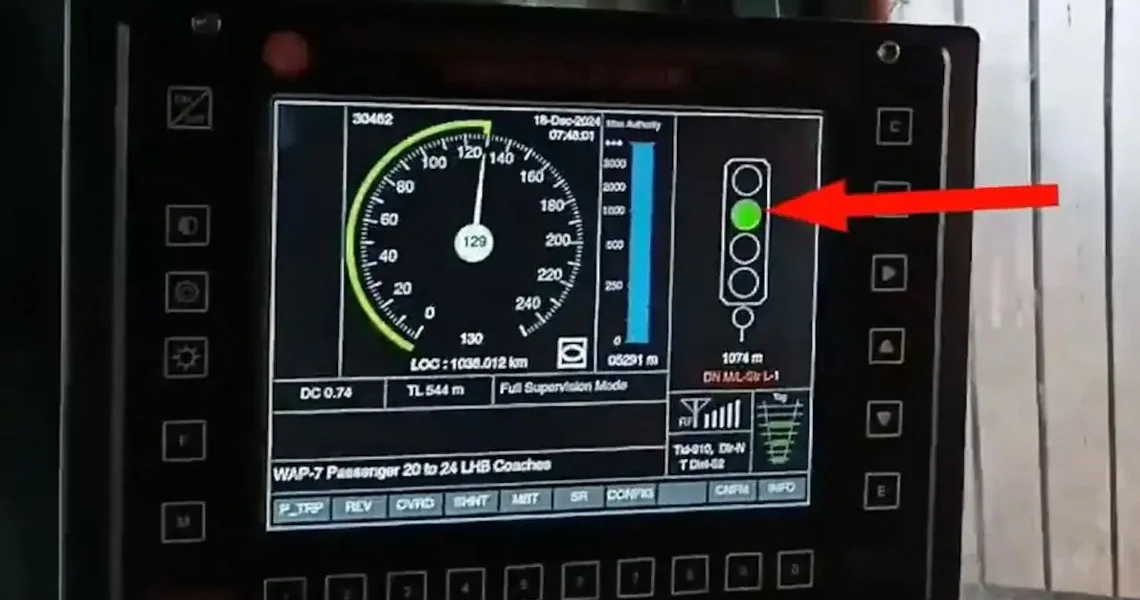
Hyderabad stretch becomes first to get KAVACH 4.0
NEW DELHI, 24 September : Indian Railways has commissioned KAVACH Version 4.0 for the first time on South Central Railway, strengthening India’s push towards safer and more technology-driven rail travel. The upgraded Automatic Train Protection system has been deployed across 108 route kilometres between Malkajgiri and Kamareddi in the Hyderabad Division.
The new version offers improved train-location accuracy, enhanced signal information in large railway yards and better integration with electronic interlocking systems. Indian Railways plans wider deployment of KAVACH 4.0, making indigenous technology an increasingly important component of railway safety and modernisation.
NSWS streamlines business approval maze
NEW DELHI, 24 September: India’s National Single Window System (NSWS) has completed five years as a major digital platform designed to simplify business approvals and improve the investment environment. Implemented by DPIIT, the system enables investors to identify, apply for and track government approvals through a common digital interface.
As of September 21, the platform was receiving an annual average of more than 3.06 lakh applications and facilitating over 2.26 lakh approvals annually. Integration of PAN as a Single Business ID, DigiLocker and multiple regulatory systems is helping reduce duplication and improve transparency for businesses and investors.
India Inc expands global supply chains
MUMBAI, 24 September: Indian companies are increasingly looking overseas for strategic acquisitions as they seek to secure critical resources and strengthen global supply chains. JPMorgan data cited by Reuters showed that overall Indian M&A crossed $100 billion in the first half of 2026, while outbound transactions had reached nearly $24 billion this year.
The trend reflects the growing financial capacity and international ambitions of Indian companies, particularly in sectors where access to energy, minerals, technology and resilient supply chains is strategically important.
Lohum builds global battery chain
NEW DELHI, 24 September: Indian critical-minerals company Lohum is looking to acquire nickel mines in Indonesia and the Philippines as it plans a major expansion of its battery-materials business. The company aims to raise its nickel production capacity from around 1,000 tonnes to 10,000 tonnes annually within 18 months.
Lohum is also developing lithium resources in Zimbabwe, a battery-recycling facility in Sharjah and a cathode active-material plant in Uttar Pradesh. The expansion highlights how Indian companies are building international supply chains around minerals essential for electric vehicles, batteries and the clean-energy transition.
SEMICON shifts focus to indigenous computing
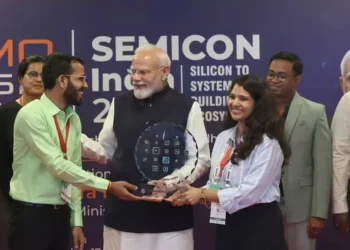
NEW DELHI, 24 September India’s semiconductor programme is moving beyond manufacturing capacity towards indigenous computing, research, talent and advanced technology. SEMICON India 2026 concluded with 15 announcements and collaborations spanning RISC-V processors, artificial intelligence, quantum technologies, fab automation and workforce development.
Among the initiatives, the Semi-Conductor Laboratory in Mohali launched an indigenous manufacturing-management system for wafer fabrication, while C-DAC announced collaborations aimed at developing indigenous high-performance computing, AI and sovereign data-centre capabilities. ⸻
Safer medicines, smarter healthcare
NEW DELHI, 24 September: India has strengthened its medicine-safety architecture with the launch of the 7th National Formulary of India 2026 and a new Biovigilance Programme. The National Formulary contains 653 drugs and is intended to support evidence-based and rational prescribing by healthcare professionals.
India now has around 1,150 adverse-drug-reaction reporting centres, while the Government plans to expand the network to the primary healthcare level. According to the Health Ministry, India has risen from 123rd to eighth globally in contributions to the WHO patient-safety database.
GCC boom brews in Chennai
CHENNAI, 24 Septmeber: India’s position as a global hub for Global Capability Centres (GCCs) is continuing to expand, with Starbucks planning a new technology centre in Chennai that is expected to employ around 800 technology professionals.
India now hosts more than 2,100 GCCs, employing approximately 2.36 million people and generating nearly $100 billion in annual revenue, according to a 2026 Nasscom-Zinnov report cited by Reuters. Increasingly, these centres are handling high-value work in software, finance, research and development rather than conventional back-office functions.
WAVES takes India’s stories global
NEW DELHI, 24 September India’s public-service broadcasting ecosystem is undergoing a major digital transformation through WAVES OTT and MyWAVES. WAVES now has around 1.2 crore registered users, more than 1.5 crore downloads and over 24,000 titles, while reaching audiences in more than 130 countries.
The platform combines television, radio, education, archival programmes and multilingual digital content. MyWAVES further opens the ecosystem to citizen creators, giving regional talent and local stories opportunities for national and international visibility.
UN General Assembly high-level week
UNITED NATIONS, 24 September: World leaders are gathered in New York for the 81st session of the United Nations General Assembly High-Level Week, with sustainable development, climate action, peace, dignity and international cooperation among the major themes.
September 24 also marks a high-level meeting commemorating the 40th anniversary of the UN Declaration on the Right to Development. The discussions underline the principle that economic progress should expand opportunity, participation and human well-being, while the UN’s SDG-focused events are bringing governments, businesses and civil society together around practical development solutions.
Powering the last mile to SDG7
UNITED NATIONS, 24 September Governments, international institutions, businesses and civil-society organisations are gathering during UN General Assembly High-Level Week for the ENERGYNOW SDG7 Action Forum, aimed at accelerating measurable progress towards affordable, reliable and sustainable energy for all by 2030.
The challenge remains substantial: UN information highlights that around 655 million people worldwide still live without electricity. Expanding clean-energy access can therefore simultaneously support economic development, education, healthcare, employment and climate objectives, making SDG7 one of the most consequential development priorities of this decade.