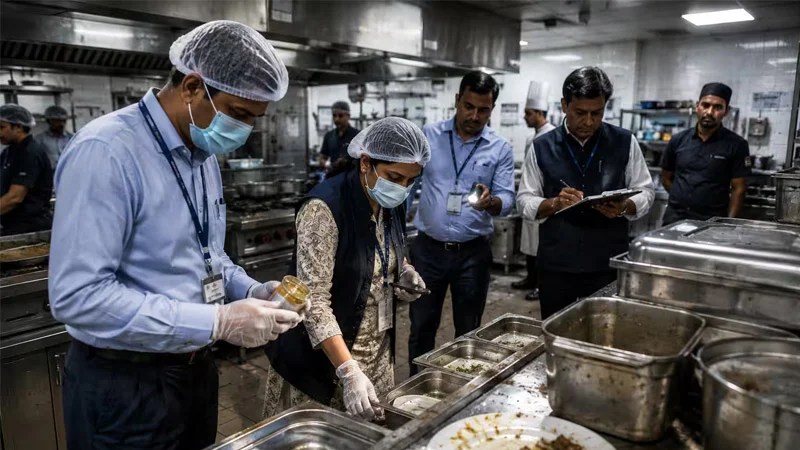
NEW DELHI: You may know what you are eating and where you bought it from, but do you know what happened to your food before it reached your plate? Maharashtra’s sweeping food-safety crackdown has exposed an uncomfortable truth – the journey from kitchen to consumer is often fraught with risks that neither labels nor brand names can reveal.
Under Food and Drug Administration Commissioner Tukaram Mundhe, the state has intensi¿ed inspections of restaurants, warehouses, factories, dairies and food outlets. Between June and August this year, the FDA conducted 12,083 inspections, issued 5,269 improvement notices, suspended 603 licences and arrested 875 people. Food stocks worth Rs 67.2 crore were seized. The scale of enforcement is striking, but the violations uncovered demand greater public scrutiny. The action has reached some of the biggest names in the food business. Four Domino’s Pizza outlets and one Pizza Hut establishment had their licences suspended.
Warehouses linked to Blinkit, Zepto and Swiggy Instamart were also targeted. Parle Agro’s warehouse faced action after expired beverages were reportedly found, while products bearing the names Maggi, Lay’s and Kurkure were seized in a suspected expiry-date manipulation racket. These actions concern speci¿c outlets, facilities or consignments; they do not establish that every product or outlet of these brands is unsafe. More recent inspections have brought Mumbai’s iconic eateries under scrutiny.
Kyani & Co. had its licence suspended after inspectors reportedly found pest infestation and other serious hygiene de¿ciencies. Gallops at Mahalaxmi Racecourse was also among the establishments facing action. Such cases underline that reputation and longevity cannot substitute for compliance with food-safety standards.
The problem extends far beyond individual establishments. Food passes through farms, processors, transporters, cold-storage facilities, wholesalers, restaurants and delivery warehouses. Every link creates opportunities for contamination, adulteration or improper storage. A lapse at any stage can put consumers at risk.
Maharashtra’s enforcement drive also exposes a structural weakness: the state has around 1.25 million registered food-business licences but only about 350 food-safety oႈ- cials. No campaign, however energetic, can compensate for such a glaring shortage of personnel. More inspectors, modern laboratories, regular testing and transparent disclosure of inspection ¿ndings are indispensable. Yet enforcement must be proportionate.
Small vendors and street-food businesses should receive practical guidance and reasonable opportunities to comply, while deliberate adulteration and repeated violations must attract meaningful penalties. Food safety must protect consumers without destroying livelihoods. Consumers deserve reliable information, but they cannot inspect a restaurant kitchen or a delivery warehouse before placing an order. That responsibility rests with regulators and food businesses.
Mundhe’s crackdown should, therefore, mark the beginning of a sustained national conversation, not a temporary enforcement spectacle. Safe food is a public-health necessity, not a privilege. The ultimate test of regulation is whether every Indian can trust the food on the plate.