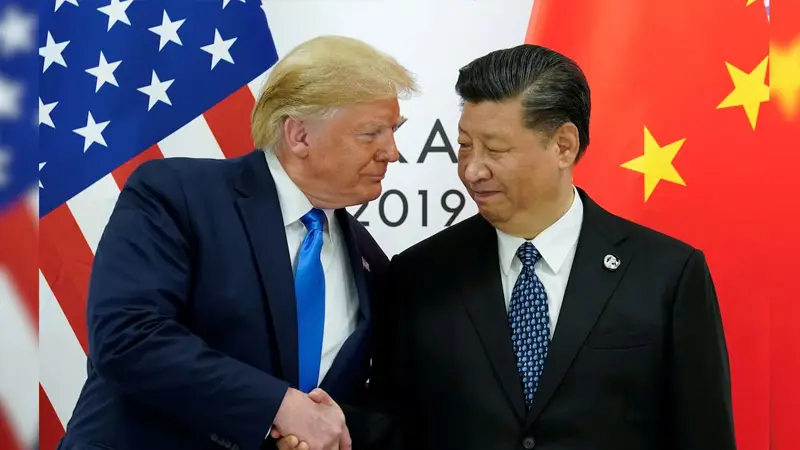
NEW DELHI: US President Donald Trump and Chinese president Xi Jinping wrapped up their Washington summit on September 25. The presidents discussed the wars in Iran and Ukraine and the status of Taiwan. Their biggest policy announcement was a modest twomonth extension of a trade truce, Reuters said.
The US secured an extension of its trade truce this week – but only a short one. US Treasury Secretary Scott Bessent said the two sides agreed to extend by two months a trade agreement that ended last year’s trade war and was due to expire in November. The extension would give Washington and Beijing “more time to see what we can do on the economic front,” he said.
The extension appears to push the central questions — tariႇs, Chinese purchases, rare-earth supplies and technology restrictions — into the next round of negotiations.
Taiwan issue
Xi pressed Trump on the Taiwan issue, saying, according to China’s offcial news agency, that China hoped the US would “handle the Taiwan question with prudence.”
Xi argued that both nations stand to gain from cooperation and lose from confrontation, and he called for regular military dialogue and stronger crisis-prevention mechanisms. The two leaders expressed diverging views about arti¿cial intelligence.
Trump, who has declared that AI should be called super intelligence, or SI, said in a social media post that he wants to “to leave it exactly where it is” and rely on the US Department of Justice rather than impose any new guardrails.
But Xi said on September 24 that, as leading nations on AI, China and the US must manage its growth.
Despite the presence of top tech executives at a White House state dinner on September 24 night, Trump and Xi failed to deliver the AI breakthrough that some experts and foreign governments had hoped for amid warnings that the technology could pose an existential threat to humanity. It was the ¿rst visit to the White House by a Chinese president in more than a decade and Xi’s second state visit to the US.