From start-ups to solar, India’s power to empower story
NEW DELHI, 13 October — India had a few hundred start-ups before 2014. It now has more than 250,000, nearly half of them from small cities and towns, Prime Minister Narendra Modi told the Bloomberg New Economy Forum in New Delhi on 13 October.
The forum, an invitation-only gathering of more than 500 leaders from government and business, is meeting in India for the first time in its eight editions. It runs until 15 October.
“The real question is not who possesses power,” the Prime Minister said. “Rather, the question is how that power is being used.” He called his answer “Power to Empower”.
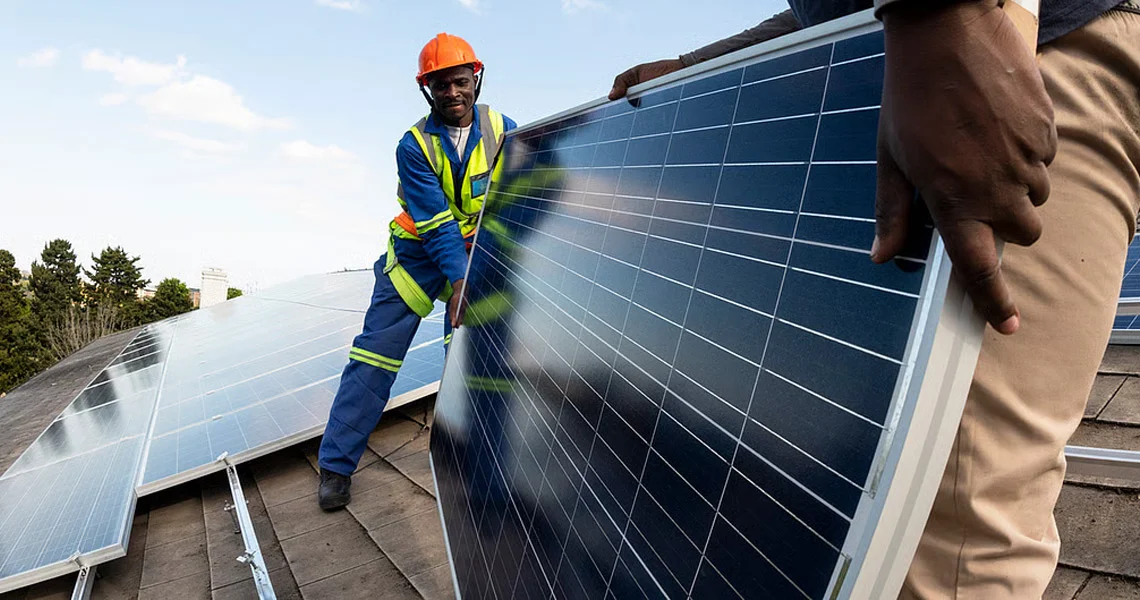
He set out the case sector by sector. Renewable capacity has grown from about 75 gigawatts in 2014 to about 300 gigawatts now, four times the 2014 level. Non-fossil sources reached 40% of installed electricity capacity in November 2021, nine years ahead of the 2030 target.
At a glance
Start-ups: a few hundred before 2014 → more than 250,000 now
Renewable capacity: about 75 GW (2014) → about 300 GW now
Current account deficit: more than 4% of GDP (12–13 years ago) → 0.61% (last year)
Foreign exchange reserves: above $700 billion
Growth, April–June quarter: 7.8%
How it compares
Renewable capacity now: about 300 GW — four times 2014
Renewable capacity, 2014: about 75 GW — the reference
Nearly half of all start-ups now come from small cities and towns.
What India gains
A first-time global economic forum on Indian soil, and a data-led pitch to the investors in the room.
India –UK trade pact opens Britain’s doors to Indian exporters
NEW DELHI, 13 October — The day the India–UK trade agreement came into force, Indian exporters sent more than 50 consignments to Britain, from smartphones and turbojets to tea, coffee and woollen yarn. This was what Commerce and Industry Minister Piyush Goyal had to say adding that that the flow had doubled now, He was speaking at the 16th India–UK Joint Economic and Trade Committee in New Delhi
“This agreement opens the doors businesses have to walk through,” Mr Goyal said. He noted that about 1,500 days remain until the end of 2030.
What India gains
A duty-free entry to Britain for most of its exports, and a formal channel to find and fix the gaps that keep small Indian exporters from using it.
Indians use more data, talk less on their phones
NEW DELHI, 13 October — The average Indian mobile data user consumed 28.39 gigabytes a month in April–June 2026, up from 26.70 GB in the previous quarter, according to the Telecom Regulatory Authority of India’s. That is close to a gigabyte a day, by Blitz arithmetic: 0.95 GB.
At the same time, the minutes each subscriber spent on calls fell to 933 a month from 959. The phone is becoming a screen first and a telephone second.
At a glance
Data per wireless user a month: 26.70 GB (Jan–Mar) → 28.39 GB (Apr–Jun 2026)
Internet subscribers: 1,092.79 million → 1,114.17 million
Telephone subscribers: 1,330.58 million → 1,348.08 million
Call minutes per subscriber a month: 959 → 933
Wireless revenue per user a month: ₹184.91 → ₹187.12
What India gains
A connected population large enough to carry public services online.
Tarang Shakti brings 39 air forces together in Jodhpur
JODHPUR, 13 October — Air forces from Australia, Bangladesh, France, Germany, Sri Lanka, the United Arab Emirates and the United States flew with the Indian Air Force at Air Force Station Jodhpur in Exercise Tarang Shakti 2026. These joint exercises were held from 26 September to 12 October, according to the Ministry of Defence Thirty-two more nations sent observers.
What India gains
A showroom for its own fighter and attack helicopter in front of 39 foreign air forces, and the habit of working with partners before a crisis rather than during one.
India’s language AI finds a global voice in Mussoorie
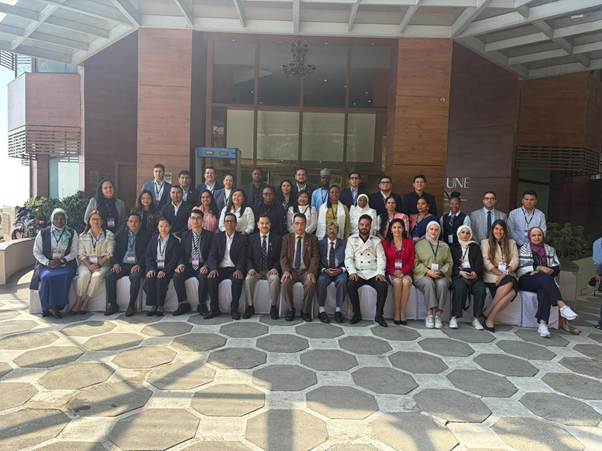
MUSSOORIE, 13 October — Civil servants from Peru, Ecuador, Spain, Cambodia, Nigeria, Kenya, The Gambia, Lebanon and Palestine are hearing their lessons through an Indian translator. BHASHINI, the Government’s language-AI platform, has deployed its Shrutlekh tool for real-time English–Spanish translation at a programme of the National Centre for Good Governance in Mussoorie running from 12 to 23 October.
What India gains
A home-built language technology now working for foreign governments, a quiet export of India’s digital public infrastructure.
Khadi turns village craft into a Rs 1.87 lakh crore industry
NEW DELHI, 13 October — Sales of khadi and village industries products reached ₹1.87 lakh crore in 2025-26, the highest on record, according to a PIB release. Employment in the sector has grown 56% to 2.04 crore people.
The Prime Minister’s Employment Generation Programme, run through the commission, has created nearly 97.95 lakh jobs since March 2008. Under the Khadi Vikas Yojana, ₹245 crore went to 1,097 khadi institutions in 2024-25, reaching 1,45,484 artisans.
What India gains
:
A village craft that has become a business, with income reaching women spinners and weavers in their own homes.