
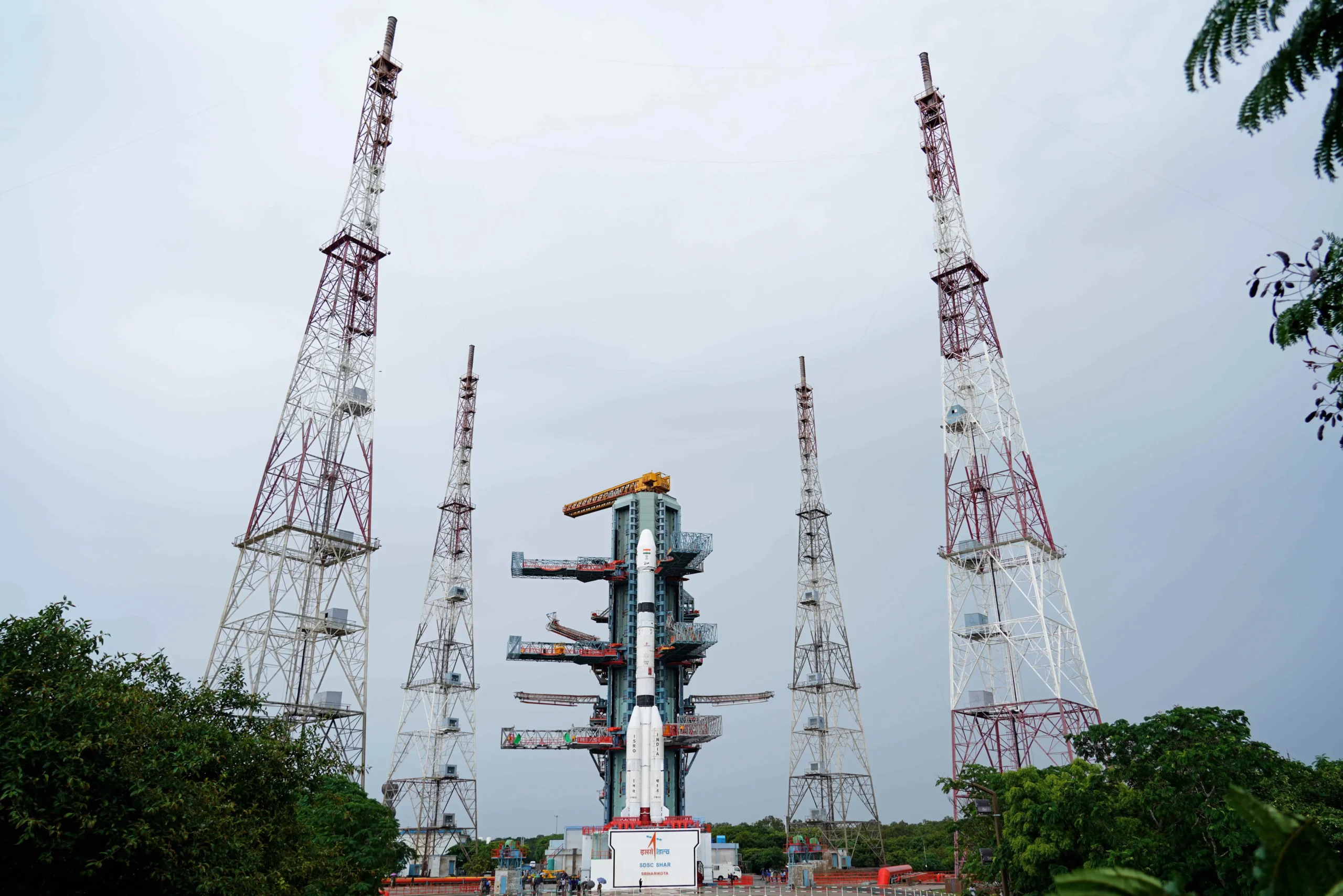
SRIHARIKOTA, November 3 India’s own satellite navigation system has a new heartbeat in orbit. The Indian Space Research Organisation (ISRO) said its GSLV-F18 rocket lifted off from the Second Launch Pad at Satish Dhawan Space Centre on October 30 and placed the NVS-03 satellite in its intended orbit.
The next day the satellite fired its own engine. ISRO reported on October 31 that a burn of 2,174.8 seconds at 16:48 hours lifted the low point of its orbit from 170.3 km to about 5,477.6 km. Satellite health is normal, and further manoeuvres will park it in geosynchronous orbit at 111.75° East.
What India gains
A navigation signal that answers to Indian control, not to another country’s — for fishermen at sea, for rail and road fleets, for timing in power grids and banks, and for the armed forces. With L1 on board, ordinary phones come a step closer to reading India’s own constellation.
GST collections surge 23pc to record Rs 2.31 lakh crore
NEW DELHI, November 3 The festive month showed up in the tax ledger. Gross Goods and Services Tax collections rose 22.9% to ₹2,31,290 crore in October, against ₹1,88,125 crore a year earlier, according to provisional figures released by the Goods and Services Tax Network on November 1.
Refunds rose a modest 6.5% to ₹27,934 crore, so net collections climbed faster than gross — up 25.6% to ₹2,03,356 crore.
What India gains: a widening tax base in states once at the edge of the formal economy — revenue that funds roads, schools and hospitals without new borrowing. GSTN cautions that the numbers are provisional and may shift slightly on finalisation.
What India gains: a public payments rail built at home that now carries the country’s everyday commerce — and that India is offering to other countries as a model.
Centre unveils Rs 7, 396 crore five-year plan for Gram Panchayats
NEW DELHI, November 3 India’s 2.55 lakh village councils are getting a five-year plan of their own. The Union Cabinet chaired by Prime Minister Narendra Modi has approved the Pradhan Mantri Viksit Gram Swaraj Yojana, a centrally sponsored scheme with an outlay of ₹7,395.55 crore for 2026-27 to 2030-31, according to the government’s release of October 28.
The Centre bears ₹4,869.48 crore — 65.8% of the total — and the states ₹2,526.07 crore. The period matches that of the Sixteenth Finance Commission.
What India gains: a village council that plans, audits and earns for itself is the base on which every national scheme stands. Annual action plans from states, appraised by a central committee, decide how the money moves.
Factory output grows 6.7pc as industrial engine stays strong
NEW DELHI, November 3 India’s factories kept the industrial engine running in September. The Index of Industrial Production rose 6.7% over September 2025, with manufacturing up 7.6% and electricity up 11.2%, according to quick estimates released on October 28 (base year 2022-23).
What India gains: when capital goods grow faster than consumer goods, factories are building capacity for tomorrow — the signal of an economy investing in itself.