
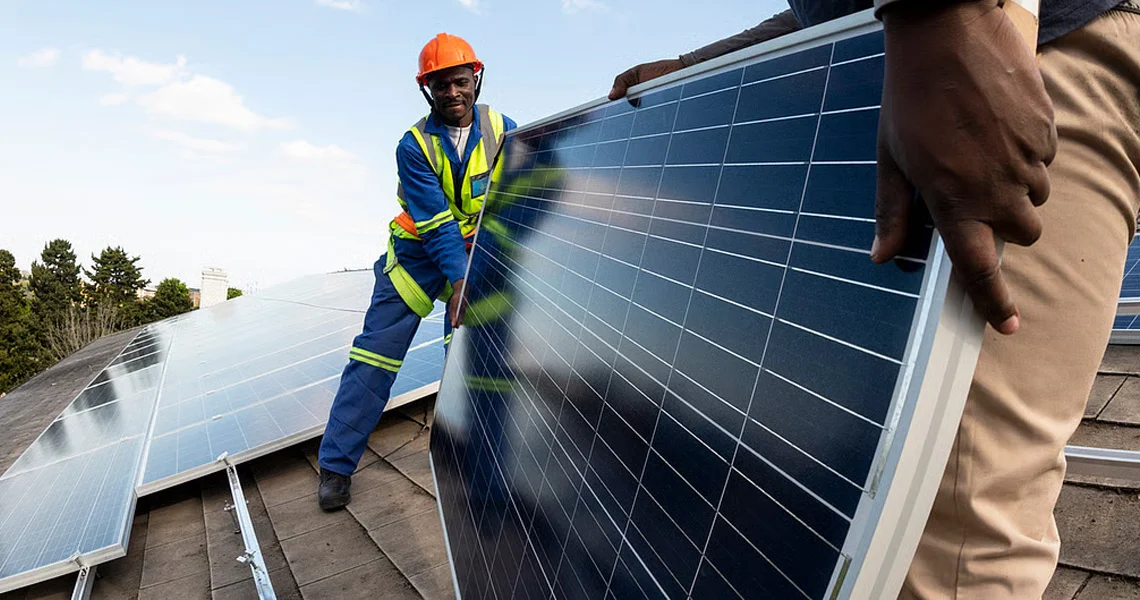
NEW DELHI, 3 November: Ten years ago India could make about 2 GW of solar modules a year and imported most of the panels on its rooftops. It can now make more than 200 GW, Prime Minister Narendra Modi told the Bharat Renewable Energy Summit and Expo at Bharat Mandapam on 2 November. That is a hundredfold rise, and it means India’s factories can now turn out modules faster than the country can install them.
What India gains: Is a manufacturing base that can supply its own energy transition and export to the Global South, and a convening role at the head of the International Solar Alliance.
At a glance
Solar module capacity: more than 200 GW (about 2 GW a decade ago)
Solar cell capacity: about 40 GW
Non-fossil power capacity: about 300 GW, over half of installed capacity; target 500 GW by 2030
PM Surya Ghar: 65 lakh homes joined; 21 lakh+ with zero bills
India signs Rs 53, 880 crore deal for eight next-gen Navy corvettes
NEW DELHI, 3 November: The Ministry of Defence has signed contracts worth more than ₹53,880 crore for eight Next-Generation Corvettes for the Indian Navy.
The ships are designed in-house by the Navy. Garden Reach Shipbuilders and Engineers in Kolkata will build five and Goa Shipyard Limited three. ANI, reporting the Cabinet Committee on Security clearance on 30 October, described them as ships of about 2,000 tonnes with a speed of about 30 knots and first delivery targeted by 2030.
What India gains: warships designed by Indian naval architects and built in Indian yards, with the supplier base that comes with them.
Pune opens Hinjewadi-Shivajinagar metro line
PUNE, 3 November: Prime Minister Narendra Modi opened the Hinjewadi–Shivajinagar metro line and laid foundation stones for further metro work in Pune.
The line links Hinjewadi, the IT hub on the city’s western edge, to the centre, and was built on a public–private partnership model. Maharashtra now has about 175 km of metro in service and more than 680 km under construction, with over ₹2.5 lakh crore invested in metro infrastructure, the Prime Minister said.
What India gains:
Is a template for building urban rail with private capital, in one of the country’s main software cities.
Local highway toll pass for nearby car owners starts at Rs 1,500
NEW DELHI, 3 November: Car owners living within 20 km of a National Highway fee plaza can now buy an annual local pass for ₹1,500, or ₹3,000 where the plaza lies inside town limits, This new schemewas brought into force at plazas on 1 November.
The pass is for non-commercial vehicles with a working FASTag, is valid only at the plaza where it is issued and cannot be transferred. It will be available on the Rajmargyatra app from 1 December. It does not apply on closed-toll expressways or where a service road exists.
Quad to put $10 million into critical-mineral recycling in India
NEW DELHI, 3 November The United States will commit US$10 million for facilities in India and ASEAN countries that recover critical minerals from waste, according to the joint statement of the Quad Foreign Ministers’ meeting held in Atlanta on 31 October.
External Affairs Minister S. Jaishankar met his US, Japanese and Australian counterparts on the sidelines of the G20 Foreign Ministers’ Meeting.
What India gains: partner money for recycling the lithium, cobalt and rare earths that India’s battery and electronics plans depend on.
India, Canada target year-end pact as trade talks gain momentum
ATLANTA, 3 November 2026: Canada’s Foreign Minister Anita Anand welcomed progress towards a Comprehensive Economic Partnership Agreement with India targeted by the end of the year. She met Foreign Minister, S Jaishankar and the two ministers noted growing momentum in the renewed strategic partnership, building on her visit to India in October.
What India gains:
Is a trade agreement with a G7 economy that is home to one of the largest Indian diasporas.
Coal India October output hits record of 67.2 million tonnes
KOLKATA, 3 November: Coal India produced a record 67.2 million tonnes in October, 19% more than a year earlier, and supplied 57.1 million tonnes to power plants, also a record, This was reported by Indian Masterminds on 2 November from the company’s figures.
Captive and commercial mines added 22.03 million tonnes, up 42%, from 87 operating mines, according to Coal Ministry data.
What India gains: fuel stocks at power stations ahead of winter demand, from domestic mines rather than imports.