Blitz Bureau
NEW DELHI: An Indian laboratory that wants European research money has, until now, had to join someone else’s project. That is about to change.
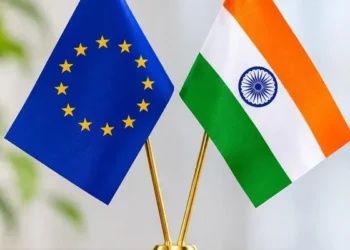
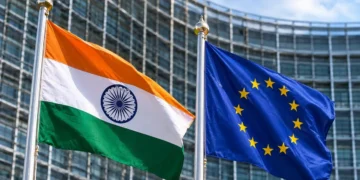
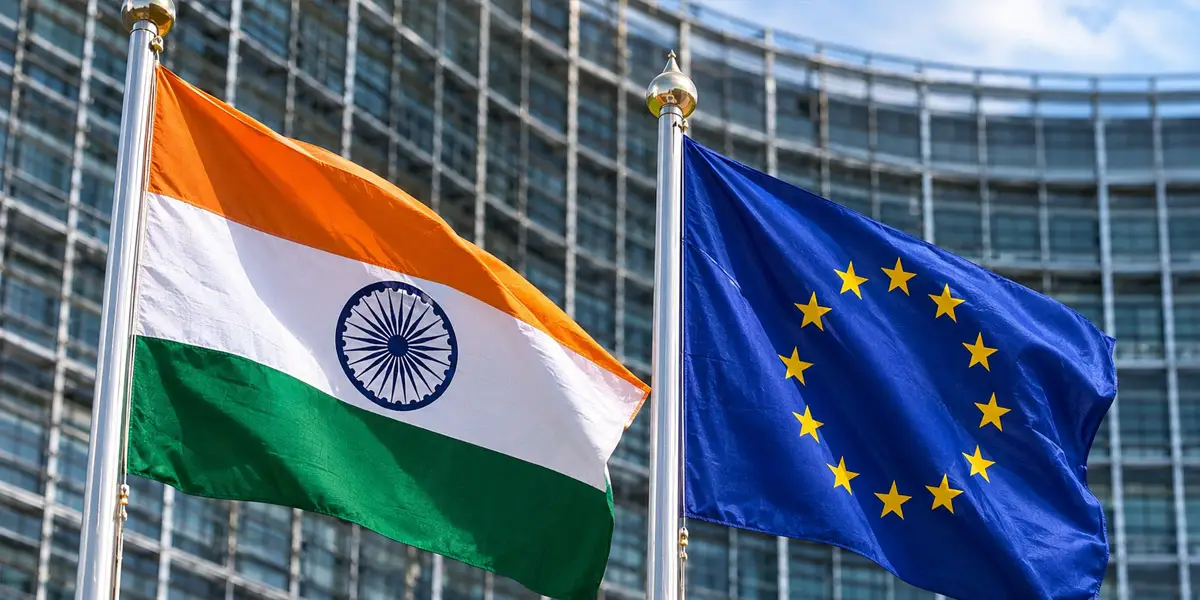
The European Commission and India concluded negotiations on November 6 for India to associate with Horizon Europe, the European Union’s flagship research and innovation programme, with a budget of €93.5 billion, according to the Commission’s announcement reported by Eunews in Brussels and by All India Radio on November 7. Once the agreement is signed and ratified, association is expected to begin in January 2027.
WHAT ASSOCIATION CHANGES
Association is a status, not a grant. It lets researchers, universities and companies from a non-EU country take part in Horizon Europe on terms close to those for EU members — applying for funding directly and leading projects rather than joining them as junior partners.
For India the operative part is Pillar II, the programme’s large collaborative strand. It is where the money goes to multi-country consortia working on health, digital technology and industry, climate and energy, and food and natural resources. Indian institutions will be able to lead those consortia, the Commission said.
India will be one of 23 non-EU countries associated with the programme, All India Radio reported.
“We want Europe and India to be partners in developing the technologies that will shape our future.” — Ekaterina Zaharieva, EU Commissioner for Startups, Research and Innovation, on the conclusion of talks, November 6, as reported by ANI from Brussels.
HOW FAST IT MOVED
Exploratory talks began on February 6 this year and formal negotiations on July 17, ANI reported. Concluding an association deal in under four months of formal talks is quick by Brussels standards.
It also lands alongside the larger India–EU free trade agreement. Commerce Secretary Rajesh Agrawal was in Brussels on November 1 working through customs and implementation questions with three Commission directors-general ahead of the signing due in December, the Ministry of Commerce and Industry said. Trade and research are moving on parallel tracks, and in the same direction.
WHAT INDIA GAINS
Three things, concretely.
Indian scientists gain direct access to one of the largest competitive research funds in the world, judged on merit against European applicants.
Indian start-ups and deep-tech companies gain a route into European supply chains through the projects themselves. A consortium that builds a battery-recycling process or a medical device creates partnerships that outlast the grant.
And India’s standing changes. It moves from a country that collaborates with Europe project by project to one that sits inside Europe’s research system as an associate.
WHAT IS NOT YET KNOWN
Two things a reader should hold in mind.
Associated countries pay into the programme, and India’s contribution has not been published. The balance between what India pays and what Indian teams win is the number that will decide how good this deal is.
And timing matters. Horizon Europe’s current cycle ends in 2027, the year India’s association is due to begin. What happens to India’s status under the successor programme has not been stated by either side.
BLITZ VIEWS
The Department of Science and Technology and the Anusandhan National Research Foundation could publish, before January, a single Indian contact point and a calendar of the Pillar II calls that open in 2027. Indian universities that start forming consortia now will be the ones whose names appear on the first awards.
Cabinet funds 92 GWh of storage
India’s solar plants go quiet at sunset. The Union Cabinet on November 4 approved a ₹14,500 crore Viability Gap Funding (VGF) scheme to build 92 gigawatt-hours (GWh) of grid-scale storage that will keep that daytime power flowing into the evening peak.
The scheme runs from 2026-27 to 2030-31. Of the 92 GWh, 60 GWh will come from pumped hydro, 30 GWh from battery energy storage systems (BESS) and 2 GWh from emerging technologies, according to the Cabinet decision published on the Prime Minister’s website on November 4. The government estimates it will draw ₹97,600 crore of investment.
That is about ₹6.7 of investment for every rupee of public support, on the desk’s arithmetic. The new capacity equals roughly 170% of the grid-scale storage India now has.
Battery projects must carry at least 40% domestic content. That clause is where Indian manufacturers gain: a guaranteed order book for cells, packs and power electronics made at home.
The scale of the task is set out in the same decision. India needs 411 GWh of storage by 2031-32. This scheme covers about 22.4% of it, so more rounds will be needed.
Union Minister Ashwini Vaishnaw told reporters after the meeting that about 52% of India’s generation capacity is now non-fossil. Storage is what lets that capacity serve the evening, when demand peaks and the sun has set.
No per-unit support rate has been published yet. The bidding documents will show how far the money stretches.
GST takes ₹2.31 lakh crore in October
Festive shopping and a surge in imports lifted India’s gross Goods and Services Tax (GST) collection to ₹2,31,290 crore in October, 22.9% more than ₹1,88,125 crore a year earlier, according to provisional government data reported by All India Radio on November 2.
The import side did the heavy lifting. GST on imports rose 42.2% to ₹72,246 crore, nearly one rupee in every three collected. Domestic collections grew a steadier 15.8% to ₹1,59,044 crore.
Refunds rose 6.5% to ₹27,934 crore, leaving net revenue of ₹2,03,356 crore, up 25.6%.
For the first seven months of 2026-27, gross collections reached ₹14.78 lakh crore, up 13.2% on ₹13.05 lakh crore.
The gain matters because it arrives after the GST rate cuts. Lower rates have not shrunk the pot; wider spending has filled it.
One caution on the comparison. Last October’s headline figure was reported on a different basis, so the 22.9% should be read against the matched base in the current release rather than old headlines.
Railways set October freight record
Indian Railways moved 145.07 million tonnes of freight in October, its highest ever for the month and 8.32% more than 133.93 million tonnes a year earlier, according to Ministry of Railways figures reported on November 4.
Coal for power stations led the climb. Railways ran 469.8 coal rakes a day against 393.2 last October, about 19.5% more trains a day heading into winter demand. Foodgrain loading rose 26.3% and domestic coal 16%.
From April to October the network carried 978.78 million tonnes, up 4.67%.
Passenger journeys rose to 64.72 crore from 63.52 crore.
Every tonne that moves by rail rather than road cuts fuel use and freight cost. October’s numbers show the shift is holding.
The ministry has not yet published October freight earnings.
Cancer drugs get cheaper from November 9
Families paying for cancer treatment out of their own pockets will pay less from November 9. Revised prices for 137 anti-cancer drugs take effect that day, the Ministry of Chemicals and Fertilizers said on November 7, National Cancer Awareness Day. The cuts follow the National Pharmaceutical Pricing Authority (NPPA) capping trade margins on these medicines. In all, 76 companies have reported revised maximum retail prices for 1,225 formulations covering 121 drugs, and more than 1,000 of those formulations now cost less, All India Radio reported.
The margin cap is 30% of the maximum retail price, and some prices fall by up to 70%, Bloomberg reported on October 18 when the decision was first set out.
Estimates of the annual saving to patients differ between official statements, so Blitz is not printing a figure until the ministry publishes one. Retailers, dealers and hospitals must display the revised price list on their premises and websites, All India Radio reported. A patient buying on November 9 can check the printed price against that list at the counter.
UPI crosses ₹30 lakh crore
Indians moved ₹31.53 lakh crore through the Unified Payments Interface (UPI) in October, the first month above ₹30 lakh crore, according to National Payments Corporation of India (NPCI) data reported on November 2.
Volume reached 25.47 billion transactions, 23% more than a year earlier. Value rose 16%. The previous monthly high was ₹29.90 lakh crore, set in May 2026.
On an average day, UPI carried 822 million transactions worth ₹1,01,707 crore. That is the first month in which daily value went past ₹1 lakh crore.
The desk’s arithmetic shows how small the typical payment is. The average October transaction was about ₹1,238, against ₹1,220 in September. Volume growing faster than value over the year means UPI keeps winning the small, everyday payment that once went by cash.
Pune Metro reaches Hinjawadi
Software engineers in Hinjawadi now have a metro to central Pune. Prime Minister Narendra Modi opened Line 3, from Hinjawadi to Shivajinagar, by video link on November 3. Passenger service began the next day, UNI reported.
The corridor is 23.2 km long with 23 stations, of which 17 open in the first phase, All India Radio reported on October 31.
The Prime Minister also laid the foundation stone for Pune Metro Phase-II, estimated at about ₹13,500 crore, the Free Press Journal reported. Phase-II includes Line 4 at about 25.52 km, Lines 2A and 2B at about 12.75 km, and Line 4A at 6.12 km.
India now has about 1,200 km of metro in 26 cities, against 248 km in five cities in 2014, the Prime Minister said in his address. That is close to five times the network in a little over a decade.
The remaining six stations of Line 3 will open in a later phase; no date has been announced.
Coal output climbs before winter
Two sets of October figures point the same way: more Indian coal, mined at home, ahead of the winter power peak.
Captive and commercial mines, those run by power, steel and cement companies or auctioned to private miners, produced 22.03 million tonnes in October against 15.49 million tonnes a year earlier, about 42% more, the Ministry of Coal said on November 2. India now has 87 such mines operating, after the Lohari mine in Jharkhand received permission to open.
Coal India Ltd produced 67.2 million tonnes in October against 56.4 million tonnes, according to its stock-exchange filing of November 1. The company reported growth of 19.3%; on the rounded tonnages the desk computes about 19.1%. Offtake rose to 70.3 million tonnes.
Together the two segments mined about 89.2 million tonnes in the month.
The year-to-date picture is more modest for Coal India. Its April–October output is 388.2 million tonnes, up only 0.7%. The October jump is a recovery after the monsoon, not yet a new trend. Captive mines, up 11.3% over the same seven months, are growing faster.
India extends $500 million credit to Guyana
India will lend Guyana US$500 million for roads, health and defence projects, External Affairs Minister S Jaishankar announced after meeting Guyana’s President Irfaan Ali on the sidelines of the Commonwealth summit in Antigua and Barbuda, the Guyana Chronicle reported on November 5.
“India has decided to extend a Line of Credit of US$500 million to Guyana,” Jaishankar said in a video posted on X after the talks, ANI reported.
The two countries also signed three agreements: a grant for quick-impact community projects, cooperation on micro and small enterprise manufacturing, and work on digital public infrastructure, including a UPI-style payment system for Guyana, according to the Guyana Chronicle and PTI.
Guyana is now one of the world’s fastest-growing oil producers and a member of the Caribbean Community (CARICOM). The credit line gives Indian contractors and suppliers a way into its building boom, and the payments agreement takes India’s digital model to another continent.
The interest rate and terms of the credit line have not been published.
India sets its COP31 terms
India goes to the United Nations climate summit in Antalya, Türkiye, as the voice of countries that still need room to grow. COP31 runs from November 9 to November 20.
Environment Minister Bhupender Yadav, who leads the delegation, set out India’s position at a briefing in New Delhi on November 3, ThePrint and Odisha Diary reported. Climate action must be fair to the Global South and keep the principle of common but differentiated responsibilities. Indicators for adaptation should stay voluntary and not be tied to finance. Taking part in carbon markets should remain a choice. Transferring technology is an obligation of developed countries.
“India has always said that we will be the part of the solution and never the problem,” Yadav said, ThePrint reported.
India will coordinate with the G-77 and China, the Like-Minded Developing Countries and the BASIC group of Brazil, South Africa, India and China.
The minister also pointed to India’s commitment to restore more than 26 million hectares of degraded land by 2030, Odisha Diary reported.
The Prime Minister is not expected to attend, officials said.
PM marks Diwali in Bastar
WHY The PIB page carries only branding images; no credited photograph of the visit was found at filing.
INSTEAD Recheck pmindia.gov.in photo gallery and PIB Photos for 8 November; a PMO photograph of the Bastar visit is the image to use. Until then, Blitz data card: 15,000 km roads · 9,500 towers · 175 Eklavya schools.
Prime Minister Narendra Modi spent Diwali with security forces in Bastar, Chhattisgarh, on November 8 and told them that this is the first Diwali on which every district in the country is free of Naxalism, according to the text of his address released by the Prime Minister’s Office through PIB. ANI placed him at the CoBRA operations base at Karanpur.
The Prime Minister set the change against what the region once faced. At its peak, he said, the insurgency touched about 20 states and more than 230 districts. He recalled 2010 in Dantewada, when 76 CRPF personnel were killed in a single encounter and 44 civilians in a separate attack, and said more than 1,000 jawans had been lost in Chhattisgarh over the decades.
Development followed security, he said: more than 15,000 km of roads in affected areas, more than 9,500 mobile towers, about 175 Eklavya model schools and about 50 industrial training institutes.
The Prime Minister also said that in the past year no CRPF jawan had died on duty, the first such year in 47 years.
He cautioned that the ideological strand of the movement remains, and that vigilance must continue.
The figures are from the Prime Minister’s address. The Ministry of Home Affairs has not yet issued a district-wise notification.
Pralay missile clears user trial
WHY The AIR image is probably a DRDO handout but its source is not stated on the page; MoD release not reached.
INSTEAD Check the DRDO and PIB Defence wing releases of November 5 for the launch photograph, and run it only with DRDO credit.
The Defence Research and Development Organisation (DRDO) flight-tested Pralay, India’s quasi-ballistic tactical missile, from Dr APJ Abdul Kalam Island off the Odisha coast on November 5, and all test objectives were met, the Ministry of Defence said, according to All India Radio.
The launch, at about 11.10 am, was a user-evaluation trial, UNI reported. That makes it a test run for the armed forces who will field it, not the designers. The missile was developed by Research Centre Imarat, Hyderabad, with other DRDO laboratories, and tracked by the Integrated Test Range at Chandipur.
A user trial is the last gate before induction. Bharat Dynamics Ltd is the production partner, so a cleared trial turns a laboratory programme into factory orders at home.
The ministry has not published range or payload figures for this test, and Blitz is not printing unofficial ones.
Agniveers get a longer road
WHY AIR image 6-1.jpg carries no credit; Cabinet decision, no event.
INSTEAD Blitz data card: top 25% regular after year four · 75% may serve years five and six.
Agniveers who are not among the first quarter selected for regular service will no longer have to leave after four years. The Union Cabinet on November 4 approved a revised framework that lets them serve two more years and then seek regular enrolment, All India Radio, UNI and ANI reported.
The top 25% on merit still move to regular service after year four. The remaining 75% can now opt for a two-year additional engagement, years five and six, with higher pay, an enhanced Seva Nidhi and seniority that counts, according to the decision. After that, they can be enrolled as regulars, subject to their willingness and selection.
The first batch was 18,300 Agniveers, so the change reaches thousands of trained soldiers before their first exit date.
What the forces keep is experience: two more years of trained soldiers in the ranks. What the young soldier gains is a clearer path to a full career.
The revised pay and Seva Nidhi amounts have not yet been published.
Fast-track courts extended to 2031
WHY Cabinet decision; AIR image is an uncredited graphic.
INSTEAD Blitz data card: 779 courts now → 850 · ₹3,788.04 crore · 4,02,457 cases disposed.
Survivors of rape and child sexual abuse will keep their dedicated courts. The Union Cabinet on November 4 extended the scheme for Fast Track Special Courts (FTSCs) for five years, from April 1, 2026 to March 31, 2031, according to the decision published on the Prime Minister’s website.
The outlay is ₹3,788.04 crore. The Centre pays ₹2,353.15 crore from the Nirbhaya Fund and states and Union Territories ₹1,434.89 crore.
India now has 779 functioning FTSCs, including 399 courts exclusively for cases under the Protection of Children from Sexual Offences (POCSO) Act. The scheme will grow to 850 courts, about 71 more. Since the scheme began in 2019, these courts have disposed of 4,02,457 cases. Twenty-nine states and Union Territories take part.
The release does not give the number of cases still pending, which is the figure that will show how far the new courts need to go.
#FastTrackCourts #POCSO #NirbhayaFund #BlitzIndia
Bad medicines may lose licences instantly
WHY Draft rules; no event, and a pill or factory stock photo is barred.
INSTEAD Blitz data card: the five critical tests — assay, dissolution, related substances, impurities, sterility.
A drug-maker whose medicine fails a critical quality test could lose its manufacturing licence at once under draft rules published by the Union Health Ministry, PTI reported on November 4 and All India Radio on November 5.
The draft amends the Drugs Rules, 1945. Suspension would follow when a drug is found not of standard quality on critical parameters. PTI listed five: assay, dissolution, related substances, impurities and sterility. These are the tests that show whether a tablet holds the right dose, releases it in the body, and is free of contamination.
For a patient, the point is speed: a batch that fails on these counts could be stopped at the factory before more of it reaches a chemist’s shelf.
The public has 30 days to send objections after the draft is published in the Gazette. The rules are not yet in force.