

MJ Akbar
The military-bureaucrat complex which seized power in 1951 has never surrendered it. When suicidal mistakes made army despots or their civilian dummies untenable, outsiders like Benazir Bhutto got brief spells of authority before being removed, and then killed.
The first military dictatorship ended in the misadventure of 1965, when Ayub Khan, encouraged by his egregious Foreign Minister, a young Zulfikar Ali Bhutto, lost the Kashmir war he had started. The people, fed up with lies, turned against him. Ayub Khan transferred power to the Army Chief, General Yahya Khan, who promised elections to assuage public opinion and could not survive the consequences. When Bengalis, denied their elected place in Government, sought freedom, he ordered massacres, provoking a war with India in 1971 which ended in the triumphant emergence of Bangladesh.
Bhutto, once described by Suhrawardy as “a dock-side bully”, took over in what was now a moth-eaten Pakistan. Bhutto would go on to make more than one mistake but his fatal error was to believe that he had made the Army subservient by appointing a seeming sycophant as chief.
Brilliant thespian
General Zia-ul-Haq was a brilliant thespian, hiding his true ideology and intentions behind a mask of submission. In July 1977 he seized the opportunity offered by Bhutto’s growing unpopularity. Blessed with a subdued sense of humour, he called the second coup in Pakistan ‘Operation Fairplay’. His version of fair play was hanging Bhutto after a farcical trial.
The Zia chapter ended in 1988 in an inexplicable plane crash. Mystery has become endemic in Pakistan. General Mirza Aslam Beg was the formal Army chief in 1988, reporting to Zia. Just before take-off, Zia asked Beg to accompany him. Beg, never known to say anything but yes to the Big Chief, declined. The inquiry into this crash was little more than an infructuous farce. The truth is clearly too injurious to the health of successors. It is remarkable how quickly a despot is forgotten. No one celebrated Zia’s 100th birth anniversary in 2024, not even the Pakistan Army.
Zia had nurtured a young protégé, Mian Muhammad Nawaz Sharif, as the civilian face of Army rule. Sharif was appointed Finance Minister of Punjab in 1981 and Chief Minister in April 1985. Benazir Bhutto inherited her father Zulfikar’s legacy; her tussle with the Army and its acolytes like Nawaz Sharif consumed two decades of political upmanship after Zia’s death.
Short honeymoon
Aslam Beg, helped by fellow Generals Hamid Gul and Asad Durrani, propelled Sharif to office by rigging the elections of August 1990. In 2012 they confessed from the comfort of retirement and sanctuary of old age that the polls had been manipulated. The 1990 honeymoon with Sharif was short. Sharif resigned in 1993. Benazir Bhutto won enough seats in the ensuing election to become Prime Minister. She could hardly last without the support of the cantonment although she did try to accommodate the Generals. Sharif was back by 1997.
If this sounds complicated it is only because it is.
Sharif lost office through folly. He should have known that the Generals were masters, not friends. In the spring of 1999, his Army Chief General Pervez Musharraf started a clandestine war with India by an offensive on Kargil in Kashmir. When, once again, Pakistan was defeated, Sharif presumed that he could hold a weakened military leadership accountable.
On October 12, 1999, Musharraf’s troops climbed the walls of the Prime Minister’s residence and that was that. The third coup took Sharif to prison. He survived a death penalty only because of American President Bill Clinton’s intervention. King Fahd then brokered a deal by which Sharif was exiled to Saudi Arabia after promising to abandon politics. Naturally, that was easier promised than done.
Benazir challenge
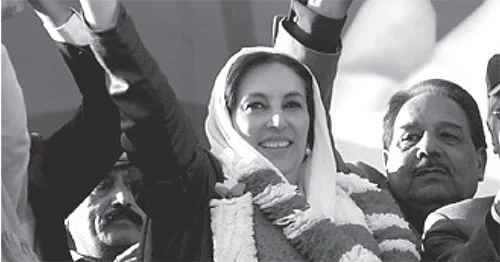
The challenge to Musharraf, who led Pakistan into a putrid mess, came from Benazir Bhutto. In 2007 she was 54 years old. The people were elated by her return; the Generals apprehensive. The unprecedented crowds at her rallies sent shivers across the officers’ club. She escaped an attempt on her life on October 18. Benazir told colleagues and journalists that if she lost her life, the true assassin would be Musharraf.
Rawalpindi is a cantonment city, home to the general headquarters of the Pakistan Army. Two men, one armed with a gun and the other with bombs, killed Benazir Bhutto on the evening of December 27, 2007 while she was campaigning for the January 8 elections.
No one knows their names, and no one will. The street on which her blood was spilt was hosed clean with water soon after the attack. No traces. No evidence.