Blitz Bureau
NEW DELHI: EVERY few decades, the global economy reshapes itself decisively – new technologies rise, old industries fade and economic leadership shifts. Nearly a century ago, economist Nikolai Kondratiev described these moments as long waves of growth, each lasting 40-60 years and driven by clusters of transformative technologies. As the digital economy matures and a new convergence of frontier technologies gathers pace, another wave is taking shape and India appears well positioned to ride it.
This new Kondratiev-wave (or K-wave), expected to gather momentum beyond 2030, will be driven by digital deep technologies: artificial intelligence, quantum computing, biotechnology, advanced materials, space systems and clean energy. Unlike earlier cycles, these technologies are convergent. AI is accelerating drug discovery, materials design, manufacturing optimisation and climate modelling. Medical technology is fusing with data and automation. Energy systems are becoming digital.
The new K-wave will be driven by digital deep technologies
One early signal is visible in digital finance. By the end of 2024, the Unified Payments Interface had processed approximately 172 billion transactions, growing to around 228 billion in 2025, functioning as a general-purpose economic rail. It underpins everything from everyday payments to emerging AIdriven analytics for credit and fraud insights. In earlier K-waves, railways and electricity served as platforms on which industries scaled. Today, digital public infrastructure is beginning to play that role in India.
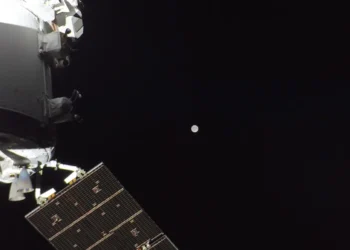
A comparable transition is visible in the space sector. India’s recent lunar mission captured public imagination, but the more consequential shift has been institutional and economic. Long anchored by ISRO and now opened up through IN-SPACe, the space sector has moved beyond a Governmentled model. Policy liberalisation has enabled private firms to enter launch services, satellite manufacturing and downstream analytics at the intersection of AI, advanced materials and precision manufacturing. Space is moving into a viable economic domain with integration into global innovation networks.
Clean energy offers another indicator. In green hydrogen, mission-led coordination across energy, industry and scientific agencies has accelerated pilots in manufacturing and mobility, compressing what would otherwise have been a decades-long adoption curve. India’s push on hydrogen is not merely about decarbonisation; it is about building integrated industrial value chains. Among the early signals are electrolyser-based hydrogen production projects in Haryana and the country’s first hydrogen-powered train prototype. If carried through, hydrogen could play for India the role petrochemicals played for the fourth-wave economies.
Policy architecture is beginning to reflect this moment. Across public fora, the Prime Minister has emphasised that reforms will remain central to India’s economic agenda, with the long-term vision to build an Atmanirbhar and Viksit Bharat by 2047. This continuity matters for deep-tech sectors, where long investment cycles depend much on regulatory predictability.
The National Quantum Mission, India AI Mission, National Semiconductor Mission, National Electric Mobility Mission, spacesector reforms and clean energy initiatives point in the same direction – recognition that frontier technologies will determine competitiveness. Their impact, however, will depend on convergence. AI must accelerate materials discovery; clean energy must integrate with digital grids and storage; biotechnology must link data, automation and manufacturing. Every successful K-wave has been defined not by isolated inventions, but by clusters of technologies reinforcing each other.
By 2047, success will be measured by whether deep technology is embedded in national economic infrastructure, reshaping productivity, sovereignty and economic gravitas. India approaches this transition with scale, platforms, talent and policy intent broadly aligned.