Arun Arora
In the lively lanes of Delhi, young Aarav lived a world of his own. At two, he rarely met his mother’s eyes when she called his name. He arranged his toy cars in endless, perfect lines but crumbled into tears if anyone moved them. His parents, like so many families, first brushed it off.
As months slipped by and Aarav remained silent, didn’t join park games, or respond to simple questions, his mother Priya’s worry deepened. She recalled neighbours’ tales of children who ‘outgrew’ such quirks, but instinct told her otherwise.
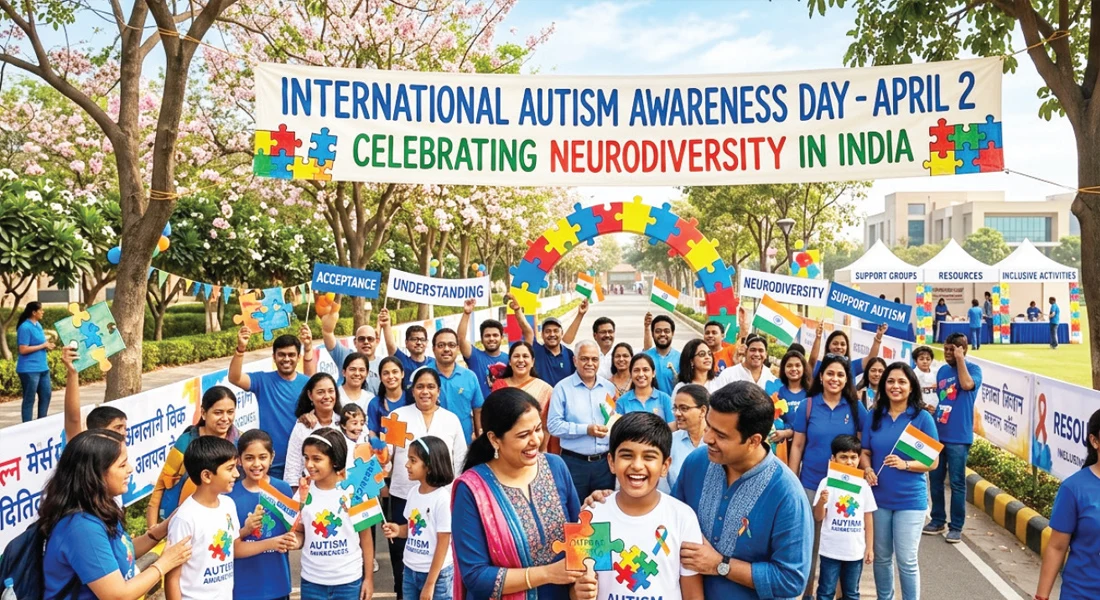
On International Autism Awareness Day, April 2, with the world reminding us that every life holds value, Priya’s story mirrors a growing reality across India. Diagnoses of Autism Spectrum Disorder (ASD) are rising – not from a sudden surge, but thanks to greater awareness and better tools.
Boys outnumber girls
Studies, like the International Clinical Epidemiology Network report, estimate about 1 in 68 to 100 children aged 2-9 – roughly 1.12 pc of young ones – being affected. Boys are diagnosed three times more often than girls.
Priya’s breakthrough came with a paediatrician’s suggestion: screen using M-CHAT, a simple checklist for toddlers. Questions like “Does your child point to share interest?” or “Does he respond to his name?” flagged concerns. A referral to a child development centre led to a diagnosis at two-and-a-half.
Experts emphasise timely action. Dr Praveen Mehta, Director of the Child Development Centre at Sir Ganga Ram Hospital (SGRH), stresses family involvement: parents are encouraged to support therapies at home for positive outcomes as children spend most of their time with them.
Genetics play a big role – up to 90 pc of risk – with environment secondary. Dr Veronica Arora, Consultant Clinical Geneticist, Institute of Medical Genetics & Genomics at SGRH, advocates prenatal strategies. Genetic testing of affected children identifies causes, NIPT (non-invasive prenatal testing), and IVF with PGT (pre-implantation genetic) testing to prevent recurrence in siblings. Full genome sequencing reveals variations, empowering families to plan healthier pregnancies.
Early neuroplasticity
Dr. Ashima Mehta, Associate Consultant, Child Development, Sir Ganga Ram Hospital, shared: “The earlier we diagnose and start interventions, the greater is the brain’s capacity to adapt and learn as we are utilising the window of neuroplasticity in early childhood.”
The Rights of Persons with Disabilities (RPWD) Act mandates inclusive education. In mainstream schools, trained teachers offer quiet zones and visual aids, while peer programmes build empathy. “Inclusion enriches all students, but we face untrained staff and rigid curricula,” notes Nishi Rai, Special Educator at a renowned convent school in Delhi. “Without IEPs and peer sensitisation, meltdowns disrupt classes – yet with support, our autistic kids thrive alongside peers.”
For Aarav, early intervention transformed everything. Today, he attends a preschool with support. He still loves patterns and shies from loud noises, but he’s connecting, learning, and smiling more.
On the International Autism Awareness Day, let’s embrace this truth: autism is a difference, not a shadow to hide. Trust instincts, screen early, seek multidisciplinary help, and join support groups to shatter stigma. Denial dims light; awareness ignites potential. Every child like Aarav deserves to be seen, supported, and celebrated.
Diagnoses of Autism Spectrum Disorder (ASD) are rising – not from a sudden surge, but thanks to greater awareness and better tools